

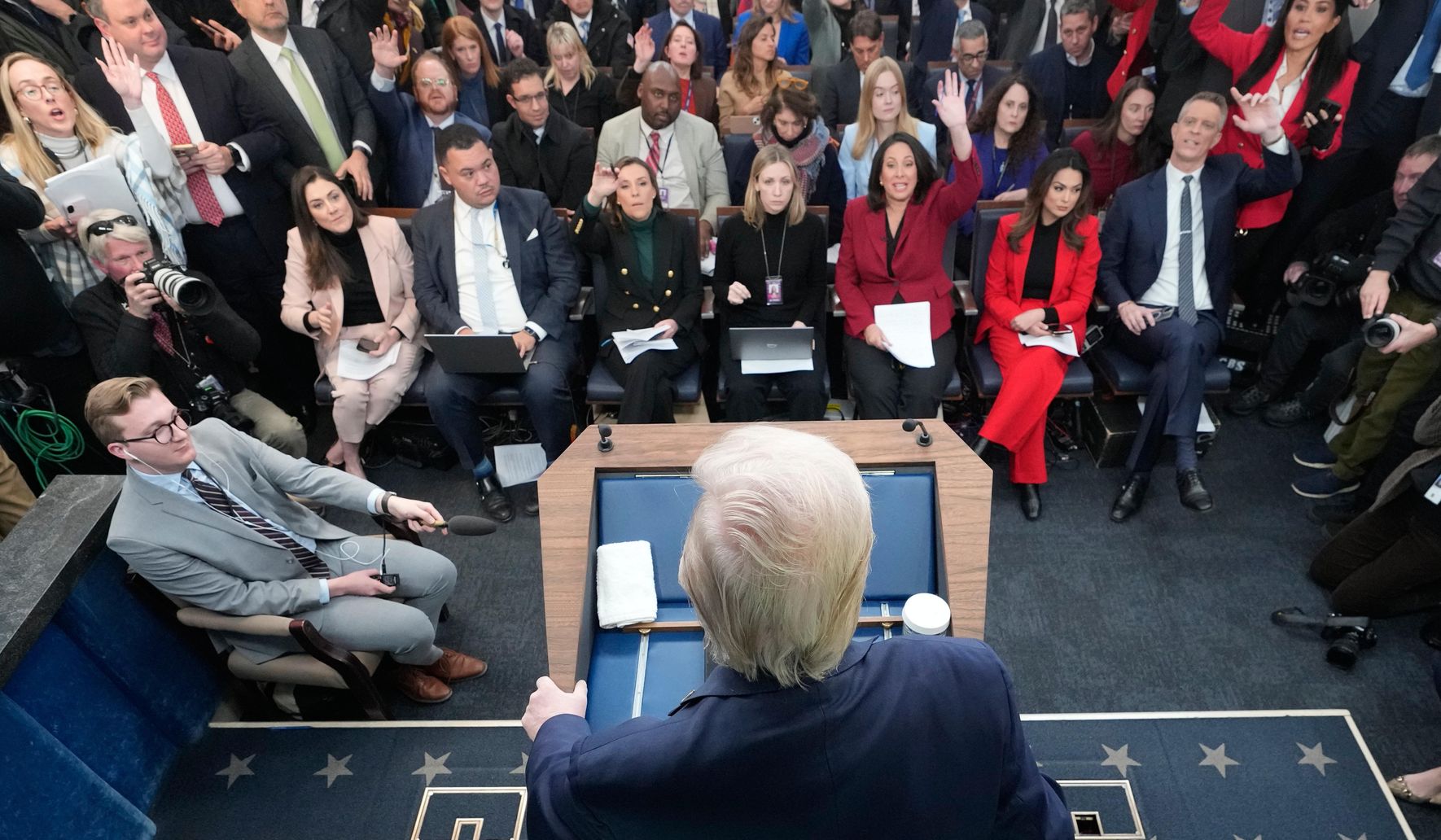
President Trump’s first year of a second term has kept him front and center, unwilling to back away from confrontations and quick to use White House appearances to go after critics, shaping the political fight with a direct, unapologetic style.
A year in his second term in office has done little to cool President Trump’s yen for settling scores with opponents, as he used a White House news conference Tuesday to lash his opponents left a. That moment summed up a pattern: he takes the podium, sets the agenda, and rallies his base by calling out adversaries by name, refusing the usual political softening. Supporters hear clarity and strength; opponents hear confrontation and spectacle.
He frames these confrontations as necessary corrections to what he calls a biased system and media narrative, and he keeps returning to that theme with the same blunt language that propelled him into office. From the podium he offers policy touches and pointed attacks in the same breath, blending governance and campaign-style combat. For many Republicans, that blend is deliberate, showing resolve in the face of entrenched opposition and signaling that political pushback will be aggressive.
At the news conference and in follow-up remarks, he sought to turn criticism into a tool of momentum, daring opponents to define him on his own terms rather than theirs. That strategy forces the press cycle to replay his frames, giving his coalition repeated touchpoints to rally behind. The result is a leadership style where messaging and confrontation are interchangeable; governing and campaigning operate on the same stage.
Republican defenders argue this approach is not about petty revenge but about accountability and correcting perceived institutional failures, insisting that a robust response to critics is part of reasserting authority. They point to policy accomplishments and use moments of confrontation to highlight contrasts with the opposition’s priorities and rhetoric. The calculation is simple: clear, forceful language energizes supporters and compels undecided voters to see clear differences on issues like the economy, immigration, and national security.
Critics across the aisle will call the tone divisive, but the administration treats that charge as expected collateral; toughness in rhetoric is offered as a necessary counterweight to what they portray as an entrenched establishment. That posture also makes the White House less predictable and harder for critics to box into a single narrative, since each appearance blends policy, personality, and political timing. For Republicans watching closely, it’s a style that translates into durable political advantages when paired with legislative and executive achievements.
The campaign-style White House appearance also functions as a message discipline tool, concentrating attention on chosen targets and claims while deprioritizing distractions. By repeatedly framing opponents as obstructionists or bad actors, the president seeks to lower the political cost for bold actions and to condition the base to accept decisive moves. That tactic relies on repetition and spectacle, making each news conference its own event with immediate, measurable political impact.
Still, the tactic carries risks: constant confrontation can fatigue some voters and give opponents ammunition on character and tone, even if they struggle to undercut policy outcomes. The administration counters that risk by keeping policy wins visible and by leaning into the optics of strength as a selling point to suburban and working-class voters alike. For conservatives who favor firmness, the message is that this approach is a practical means to deliver results while reshaping the political terrain for the foreseeable future.
Whether observers applaud or bristle, the priority for the president and his allies is clear: stay in command of the conversation, use the bully pulpit to set terms, and turn attacks into political capital wherever possible. That posture has defined a year of second-term governance so far, with the White House news conference serving as a recurring mechanism to keep allies energized and opponents off balance.

