

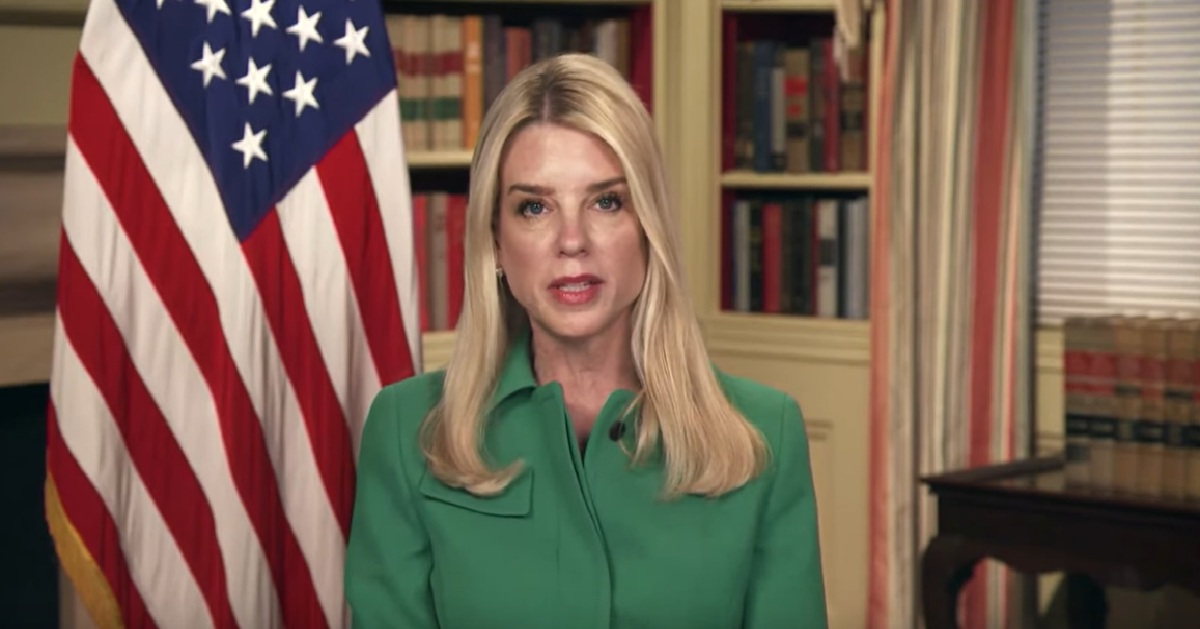
Lindsey Halligan, who was named interim U.S. attorney for the Eastern District of Virginia by President Donald Trump, is stepping down after about four months amid legal rulings that found her appointment unlawful and ordered her to stop using the U.S. attorney title.
Lindsey Halligan’s short stint as interim U.S. attorney ended quickly after federal judges concluded her appointment lacked proper authority. Attorney General Pam Bondi announced Halligan’s departure on social media, noting the contentious legal fallout. Those rulings forced a confrontation between the Justice Department and the federal bench over who gets to decide who serves as a U.S. attorney.
Halligan was named to the post in September and she came in from the White House ranks as a former White House aide. Her time in the office was notable for swift, high-profile indictments aimed at public figures such as former FBI Director James Comey and New York Attorney General Letitia James. Those cases were dramatic but short-lived because of questions about whether she had the authority to bring them.
The indictments secured during Halligan’s tenure were dismissed in November after U.S. District Judge Cameron McGowan Currie ruled the appointment improper. Judge Currie found the appointment lacked the necessary Senate confirmation or judicial backing, which undercut the legal foundation for the prosecutions. That ruling set the stage for the next round of judicial scrutiny and procedural orders.
Federal scrutiny intensified when U.S. District Judge David Novak demanded an explanation for Halligan’s continued use of the U.S. attorney title after the earlier decision. Novak warned that persisting in that title would violate a binding court order and could trigger disciplinary action. The judge’s language underscored how seriously the courts view adherence to their orders and the separation of appointment powers.
A spokesperson for the U.S. attorney’s office in the Eastern District of Virginia declined to comment on the matter when contacted by ABC News earlier Tuesday. Public silence from the office left much of the practical fallout unclear until Bondi’s announcement. Meanwhile, the Eastern District of Virginia posted a job opening to fill the vacancy left by the contested appointment.
Bondi defended Halligan in her social media statement, saying, “The circumstances that led to this outcome are deeply misguided.” That exact wording underscores the Justice Department faction that supported the appointment despite the court decisions. From a Republican perspective, the defense reads as a protest against what supporters see as overreach or misinterpretation by the judiciary.
Judge Novak did not hold back in his rebuke, writing, “The Court finds it inconceivable that the Department of Justice, which holds a duty to faithfully execute the laws of the United States even those with which it may have disagreement would repeatedly ignore court orders, while simultaneously prosecuting citizens for breaking the law.” His quotation lands hard and frames the dispute as not just procedural but foundational to legal accountability. That kind of judicial condemnation raises the stakes beyond a single appointment.
The clash has opened a broader dispute over presidential appointment power and the judiciary’s role in policing those moves. Republican-leaning observers will see this episode as evidence that legal fights over appointments are often fought in courtrooms rather than in the political branches. At the same time, critics argue the Justice Department miscalculated by pushing an appointment that federal judges found indefensible.
Halligan’s departure may close one chapter, but the mechanics that produced the contested appointment remain unresolved. The posting for a permanent U.S. attorney in the Eastern District of Virginia signals the office will move on administratively even as court rulings continue to shape the legal landscape. Expect continued debate about how far the executive branch can stretch temporary appointment powers before courts step in.

