

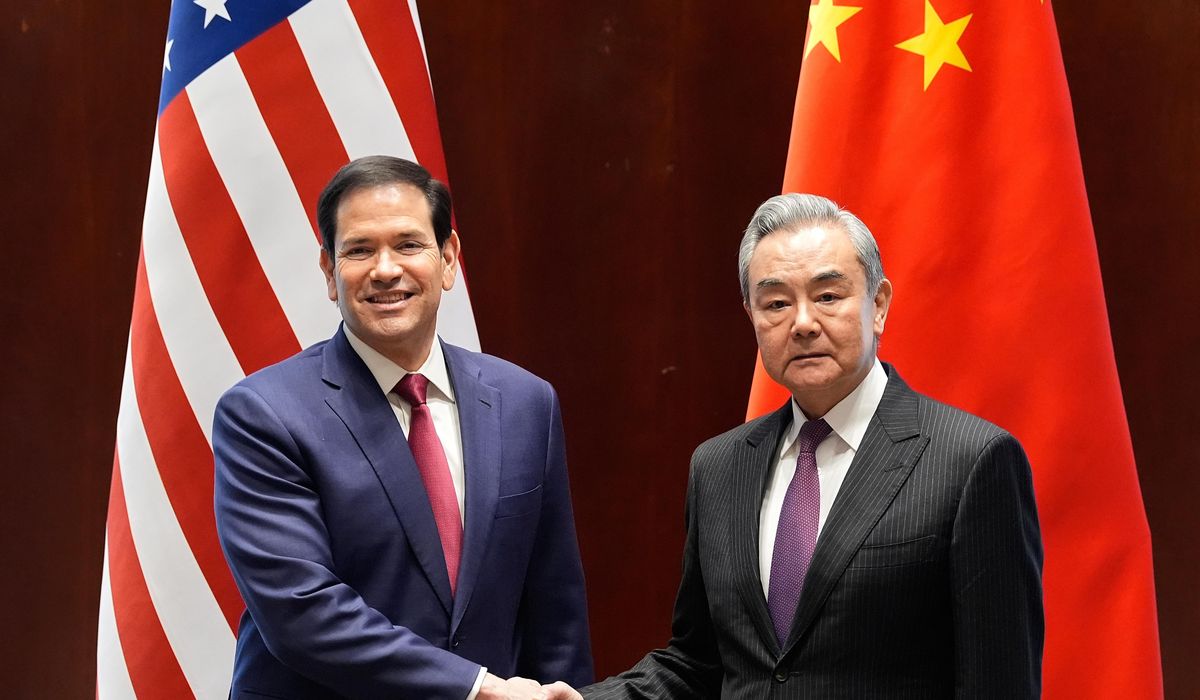
Marco Rubio’s private meeting with Chinese Foreign Minister Wang Yi at the Munich Security Conference drew attention for its secrecy, leaving questions about what was discussed and what it means for U.S. policy toward Beijing.
Secretary of State Marco Rubio met Friday with Chinese Foreign Minister Wang Yi on the sidelines of the Munich Security Conference, but few details were publicly released about what the two diplomats
The meeting itself was brief and tightly controlled, the kind of diplomatic exchange that raises more questions than it answers. From a Republican vantage point, limited transparency around talks with a strategic competitor is a problem, not a comfort. Voters and lawmakers deserve clear information when senior officials meet with Chinese leaders.
Munich has become a stage where major powers test each other and try to manage tensions without drama. For conservatives, that setting underscores two priorities: firm defense of American interests and clear, public accountability for diplomatic encounters. When officials downplay or withhold details, it fuels skepticism and generates speculation about concessions or mixed signals.
China’s behavior on trade, technology theft, coercion in the Indo-Pacific, and human rights remains central to Washington’s strategic calculus. Republicans argue those realities demand a robust posture, not backroom ambiguity. A meeting without a public readout risks signaling weakness and gives Beijing room to shape the narrative to its advantage.
Rubio’s role as Secretary of State, as presented in reports, frames him as a top diplomat responsible for articulating a coherent policy. That description raises the bar for accountability: high-level talks should produce clear takeaways, even if some details remain private for diplomatic reasons. The American public and Congress need enough information to assess whether U.S. posture and commitments align with national security interests.
The Munich Security Conference routinely draws criticism for soft exchanges that fail to address strategic threats, and this meeting fits that pattern for some observers. Republicans are pushing for policies that combine deterrence and diplomacy, with no compromise on core security commitments. Public doubt over what was said only strengthens calls for tougher on-the-record stances.
Concrete steps matter more than private assurances, so the focus will now be on policy actions and congressional oversight. Will there be new sanctions, clearer export controls, or firmer moves to protect sensitive technology and allies in the region? Without visible follow-up, any closed-door meeting risks being dismissed as talk without consequence.
Diplomacy still has value when it reduces miscalculation and keeps channels open, but that value must be weighed against the need for clarity and resolve. Republicans typically favor transparency that allows legislative scrutiny and public debate, especially on relationships with nations that challenge U.S. interests. That approach aims to keep America strong while avoiding naive engagement.
Observers will watch subsequent statements, policy shifts, and congressional questions to gauge the meeting’s impact. The record should show whether the conversation produced meaningful commitments or merely polite exchanges. For critics on the right, evidence of clear, enforceable outcomes will be the only thing that turns a private meeting into real progress.
The Munich encounter is a reminder that high-level diplomacy cannot substitute for strategy and results. Officials must translate talks into policy actions that protect American workers, technology, and allies. Until then, guarded meetings with Chinese officials will continue to invite scrutiny and skepticism from those who insist on a tough, accountable foreign policy approach.

