

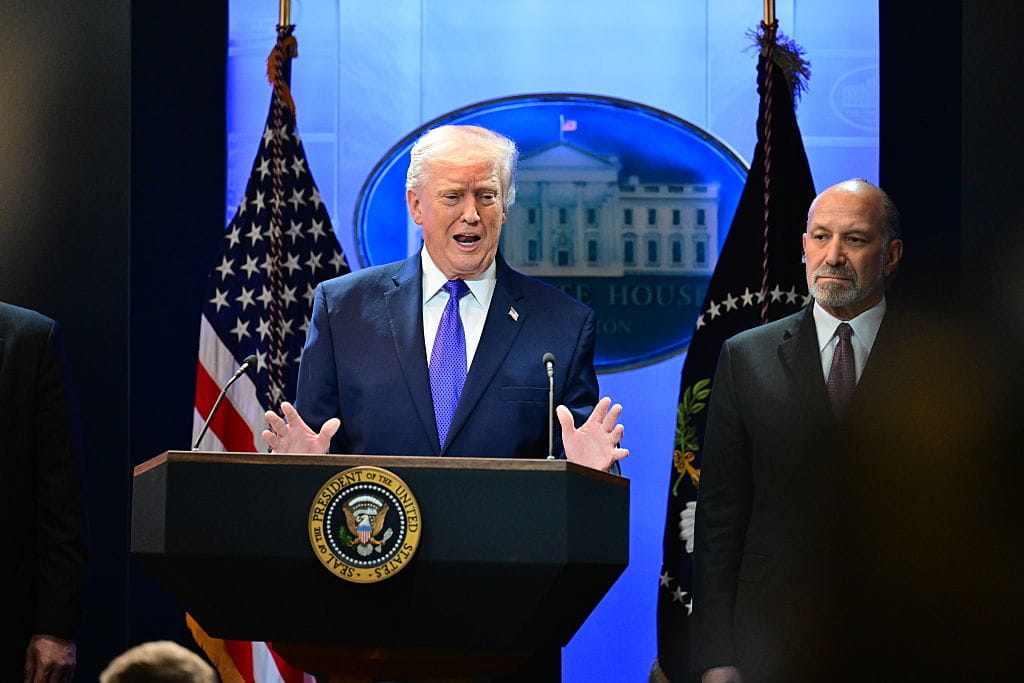
The Supreme Court, in Learning Resources, Inc. v. Trump on February 20, issued a 6-3 decision rejecting President Trump’s use of the International Emergency Economic Powers Act to impose tariffs, with Chief Justice John Roberts writing that the IEEPA “cannot bear such weight”.
The Court’s ruling cuts to the core of executive power over trade and national security. Chief Justice John Roberts delivered the opinion in a 6-3 split, a clear signal that the majority found the statutory basis for those tariffs insufficient. That line, “cannot bear such weight”, will be quoted repeatedly in the legal debates that follow.
IEEPA has long been a blunt instrument in the federal toolkit for sanctions and emergency measures, but the majority concluded it was never meant to authorize wide economic measures like tariffs without clearer congressional authorization. Republicans should be alarmed by how this creates uncertainty for future presidents who act on time-sensitive security threats. The decision shifts responsibility back toward Congress, which now faces pressure to provide the clarity the Court says is missing.
From a conservative standpoint, the ruling is a mixed bag. On one hand, limiting executive overreach is consistent with separation of powers, and a guarded approach to emergency authority can protect civil liberties. On the other hand, practical national security choices require speed and decisiveness, and taking a major tool out of the president’s hands can hamstring responses to foreign threats and economic coercion.
Practical fallout will show up fast in trade policy and in how administrations plan for crises. The administration that used the tariffs will need new strategies, possibly turning to traditional trade statutes like Section 232 or seeking faster legislative fixes. Those options are politically harder, and the market will watch for waves of uncertainty as businesses recalculate the risk of sudden tariff actions that might later be undone.
Congress now has two clear roles: one is to draft a statute that cleanly authorizes targeted economic tools for genuine national security emergencies, and the other is to reclaim political accountability for trade coercion. Republicans should press for narrow, specific authority that protects legitimate emergency responses while preventing broad unilateral economic policy driven solely by the executive branch. That puts the burden where it belongs: on lawmakers to set the rules and answer voters for them.
The dissenters in a 6-3 split will matter for the next round of litigation and legislation, and Republicans can use that minority opinion to argue for a different balance. Courts interpret statutes, but lawmaking remains with Congress. If Republicans want a strong presidency that can act swiftly in true emergencies, they must provide the legal scaffolding rather than leave it to judicial interpretation after the fact.
There are also immediate political angles. Opponents will claim the Court curtailed a president acting to defend American interests, while supporters of the ruling will applaud judicial restraint. For Republicans, the smarter line is to point out the practical problem created by cloudy laws and demand real reform, rather than simply criticizing the justices or the administration.
Businesses hit by the tariffs will press for certainty, and that pressure should push members of Congress to negotiate workable language. The GOP can lead by proposing clear guardrails that authorize narrow emergency tariffs for narrowly defined threats, with sunset clauses and congressional review. That approach would preserve presidential agility while restoring democratic oversight and reducing the risk of contentious court fights down the line.
How the White House responds will matter politically and legally. Options will include narrow rulemaking, use of alternative statutes, or a push for fast-track legislation that supplies the missing authority. Republicans should frame any response as a responsible effort to restore predictable, lawful tools for defending American economic and security interests without inviting unchecked unilateral action.

