

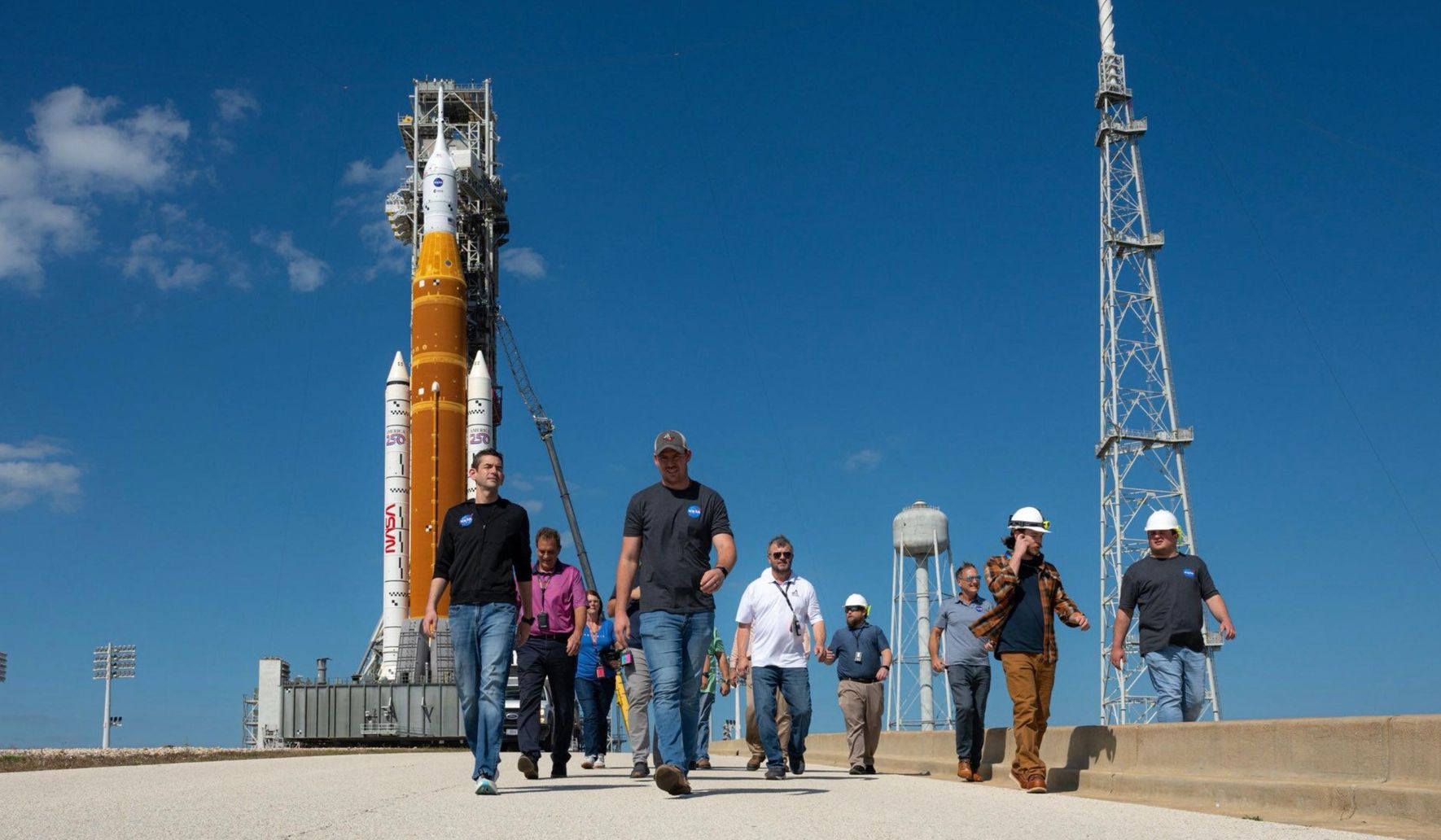
NASA’s massive moon rocket has been grounded and is heading back into the hangar for repairs, delaying the countdown and adding more preflight work before astronauts will ride it to the launch pad.
Grounded until at least April, NASA’s giant moon rocket is headed back to the hangar this week for more repairs before astronauts climb aboard. That line captures the simple, immediate fact driving this update: the vehicle will return to a protected facility for additional work instead of staying on the pad. Moving the rocket back inside gives engineers room to diagnose and fix problems away from the weather and the tight timeline of launch operations.
Large rockets live or die on meticulous checks, and taking one back to a hangar is a normal but disruptive step. The hangar environment lets technicians run tests, swap components, and reseal systems without the constraints of pad logistics. For a vehicle designed to carry people beyond low Earth orbit, those extra steps are nonnegotiable.
Expectations will shift as the calendar moves, and a hold that stretches into April means teams must reshuffle work streams. Scheduling a crewed launch involves not just hardware readiness but crew training, mission planning, and range availability. Each delay ripples through those elements and forces managers to prioritize safety over sticking to a previous date.
Repairs in a hangar often focus on plumbing, avionics, seals, and ground-support equipment rather than the big structural bits. Those subsystems can be finicky and take time to test thoroughly, especially when engineers push a complex machine to meet human-rating standards. Returning to a controlled environment reduces variables and helps avoid surprises when the stack finally goes back to the pad.
For the public and stakeholders, the news can feel anticlimactic: a rocket built for bold goals parked while technicians work on small, invisible issues. That’s actually how safe spaceflight happens; the attention to detail that looks like delay from the outside is what prevents dangerous failures. Transparency about changes in schedule helps set realistic expectations without overselling timelines.
Operationally, moving a launch vehicle back to a hangar is a logistical exercise involving cranes, platforms, and a carefully sequenced plan. It isn’t as simple as rolling a truck into a garage; teams must preserve delicate sensors and propellant lines while protecting the vehicle’s layers of insulation and electronics. The process also gives teams a chance to inspect for wear that only shows up during pad exposures.
Crew and mission planners will continue to train and simulate while hardware teams work, so the human side of the mission doesn’t stall entirely. Astronaut readiness includes rehearsal of emergencies and nominal procedures that can proceed independently of the rocket’s exact launch date. Maintaining that parallel progress keeps the overall program nimble once the rocket is cleared to return to the pad.
Budget and politics inevitably come into play when high-profile missions slip their dates, but technical fixes remain the core concern for engineers and technicians. The priority is to ensure the vehicle meets flightworthiness criteria, which include redundant checks and objective test results. A short-term schedule cost can be a long-term saving if it prevents a costly failure.
Communications from program managers tend to emphasize safety and routine nature when work returns to a hangar, and that framing helps steady expectations. Engineers rely on iterative testing and often discover additional work that’s easier to complete inside. That’s a pragmatic approach: take the time now to get it right rather than rush and risk bigger setbacks.
When the rocket does finally move back out, teams will recreate pad conditions and run full systems checks before committing to a launch date. Those final rehearsals validate repairs and ensure that interfaces between the vehicle and ground systems behave as expected. Only after those end-to-end verifications will a new launch window be put forward and the countdown resume.
The decision to return to a hangar underscores a simple truth about human spaceflight: progress isn’t always linear, and success depends on patient, methodical work. Moving a rocket off the pad to complete repairs can be a setback in schedule but a necessary step toward a safe, crewed mission. The next chapters will depend on the results of those hangar inspections and the follow-up testing they enable.

