

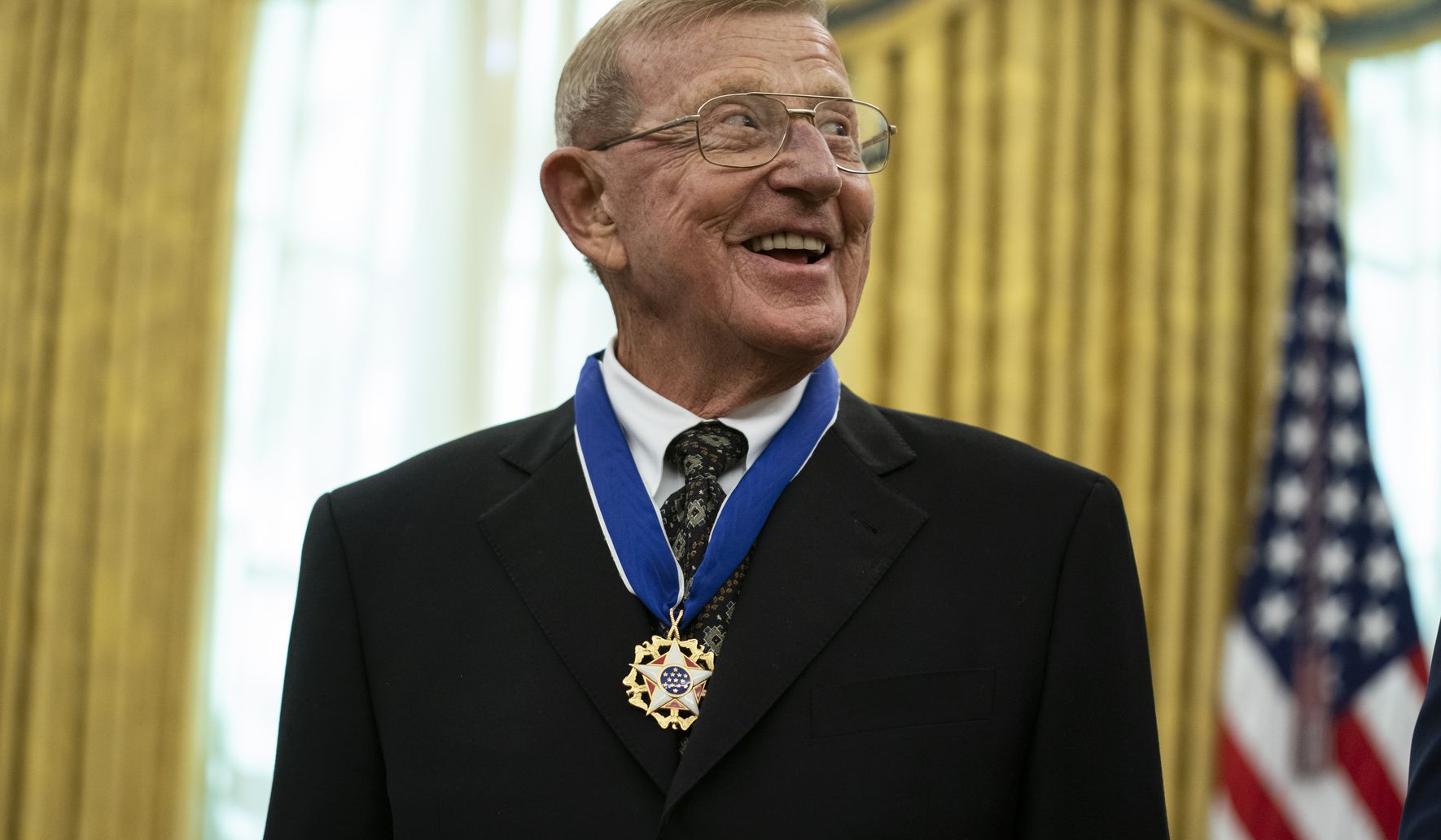
Lou Holtz reshaped college football culture by turning multiple struggling teams into consistent winners over a long, decorated coaching career.
Lou Holtz’s career is a study in program construction rather than flash. Rather than riding one golden era, he repeatedly rebuilt and retooled, proving success could be replicated with culture, discipline, and coaching savvy. That steady pattern made him a different kind of coaching legend, one defined by renewal and consistency. The results were visible year after year in tougher schedules and postseason appearances.
Lou Holtz did not build one great program. He built six. Across 33 seasons, Mr. Holtz turned losing rosters into bowl contenders at every stop he made. It’s a record no coach in NCAA history has
What stands out about Holtz is method more than magic. He emphasized fundamentals, made clear demands, and adjusted schemes to fit the players he had rather than forcing personnel into a single style. That practical flexibility meant teams improved quickly and stayed competitive as rosters shifted. Players learned roles and bought into systems that were designed to win now and sustain success later.
Recruiting under Holtz mixed hard-nosed evaluation with a focus on character. He sought players who could handle pressure and buy into a team-first identity, traits that mattered as much as raw ability. Coaches he hired mirrored that philosophy, building staffs that could execute his plan and translate it across different campuses. The result was a chain reaction: recruits bought in, coaches stayed aligned, and programs moved forward together.
Game management and preparation were another hallmark. Holtz expected meticulous preparation from his staff and players—the kind that shows up on third down and in late-game situations. Practices were organized with purpose and clarity so execution became second nature. Over time that attention to detail produced fewer mistakes and more clutch performances in tight games.
Holtz also had a knack for adapting to changing college football landscapes. He navigated rule changes, different conference expectations, and evolving offenses while keeping teams focused on fundamentals. That adaptability let him win in different eras and maintain relevance as schemes and recruiting pipelines shifted. In turned programs, stability and identity arrived quickly and stuck.
Beyond Xs and Os, his leadership style produced measurable buy-in. Players responded to direct, no-nonsense coaching that also offered clear support and mentorship. That blend of toughness and guidance built cohesion and trust, which translated into better on-field results. When a coach creates a reliable culture, winning becomes the byproduct of shared standards.
Holtz’s legacy is also visible in the coaches and players who moved on and carried lessons with them. Former assistants and proteges have referenced his influence in shaping their own approaches to leadership and preparation. That ripple effect multiplied his impact across college football far beyond his own sideline. The programs he touched still reflect traces of his methods and expectations.
Measuring his career by the simple metric of program turnarounds misses the broader significance. Holtz showed that repeatable systems, clear standards, and adaptive leadership can rebuild a team faster than many expect. His record of turning underperforming rosters into postseason teams speaks to an organized, consistent blueprint for success. For any coach facing a rebuild, his career provides a practical model rather than a one-off triumph.
Players, fans, and administrators saw the payoff in bowl appearances, tougher schedules, and programs that regained pride and stability. Those tangible outcomes reinforced the intangible elements he prioritized: discipline, accountability, and unity. Holtz crafted not just wins but institutional changes that lasted beyond his departures. That kind of workmanship is rare in a profession often focused on short-term results.

