

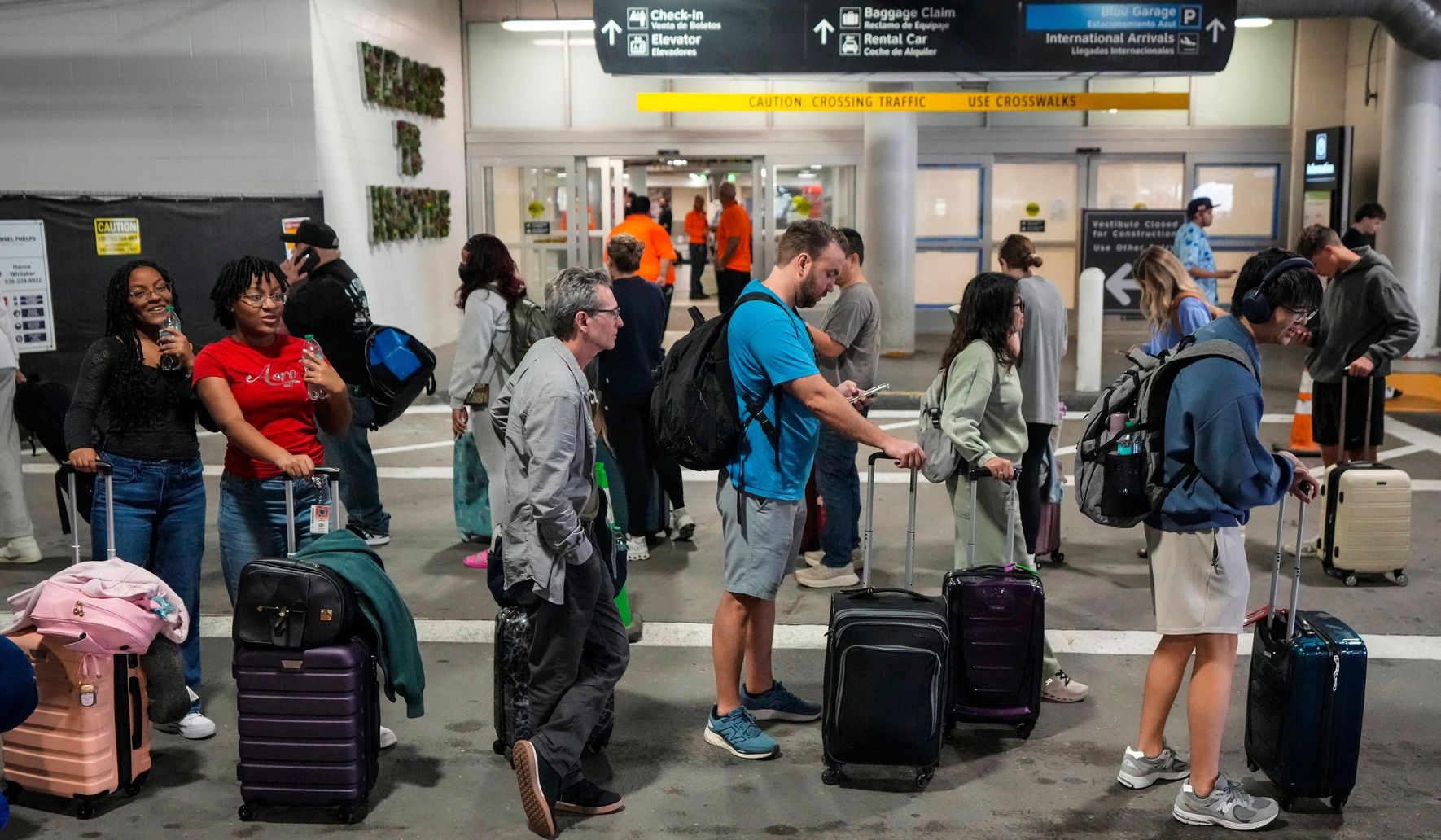
The hourslong security lines at a handful of U.S. airports this week highlight the potential problems when a government shutdown coincides with the busy spring break travel season. This piece looks at how screening slowdowns ripple through travel, the strain on workers, the economic hit for local businesses, and the political responsibility for keeping airports running.
Travelers hit airport lines that stretched for hours, and the immediate fallout was visible in missed flights and frayed tempers. Airports operate on tight schedules where a few delayed checkpoints clog the entire system. When the government falters, ordinary people feel it first at the gate.
“The hourslong security lines at a handful of U.S. airports this week highlight the potential problems when a government shutdown coincides with the busy spring break travel season.” That exact situation unfolded as staff shortages and furlough threats undercut typical processing flows. The result was a mix of longer waits and a scramble to reassign limited resources.
TSA agents and other federal workers are on the front lines of this disruption, balancing heavy volumes with the uncertainty of payroll and staffing. Those employees are public servants doing a tough job under pressure, but they also need clear leadership and stable funding. A patchwork approach to staffing only prolongs the pain for travelers and crews alike.
Airlines felt the squeeze too, juggling rebookings and crew scheduling headaches when checkpoints lagged. Delays cascade: one busy terminal feeds congestion into the next, and airports that rely on tourism see immediate revenue dips. Small businesses near airports lose foot traffic when travelers cut plans short or skip layovers.
For local economies that count on spring break, the timing could not be worse. Hotels, restaurants, and rental services operate on narrow margins and seasonal peaks, so an interruption during a high-demand window means lost income that doesn’t come back. That makes keeping federal services funded less about politics and more about livelihoods.
From a policy angle, this is where Republican priorities of fiscal discipline and efficient government should matter in practical terms. Conservatives argue that government must be lean and predictable so critical services continue without brinkmanship. Stable funding mechanisms reduce the chance that routine travel becomes chaotic every time Washington stalls.
There’s also a security angle that gets overlooked when debates focus only on budgets. Screening and surveillance require continuity, training, and oversight, none of which thrive amid uncertainty. Ensuring the safety of passengers means Congress needs to consider how shutdowns degrade operational readiness in real time.
Officials on the ground improvised to ease the worst bottlenecks, calling in overtime, shifting personnel, and prioritizing checkpoints by demand. Those fixes helped some lines move faster but came at an often-hidden cost in staff morale and overtime pay. Short-term triage is not the same as a reliable plan.
Travelers, meanwhile, adapted with apps, early arrivals, and checks of alternate airports, but not everyone can rearrange a tight itinerary. Families with young children, retirees on fixed schedules, and small groups traveling for business absorb the brunt of delays. That uneven burden matters politically and practically.
Industry groups and airport managers urged lawmakers to find a stable path forward that protects essential functions even during funding fights. The private sector can only shoulder so much risk before broader service breakdowns start to affect national commerce. A dependable baseline of federal support keeps commerce moving and confidence high.
At its heart, this is a question of priorities: keep government running where it matters most and avoid letting partisan battles create real-world chaos. Voters notice airports when lines balloon and flights are missed, and they hold elected leaders accountable for disruption. Practical governance means preventing these predictable failures.
Officials will sort through staffing and funding choices in the weeks ahead while travelers plan around uncertainty. The immediate pressure is operational, but the longer-term lesson is structural: critical services need resilience against political stalemate. That resilience protects jobs, businesses, and the everyday routines people rely on.

