

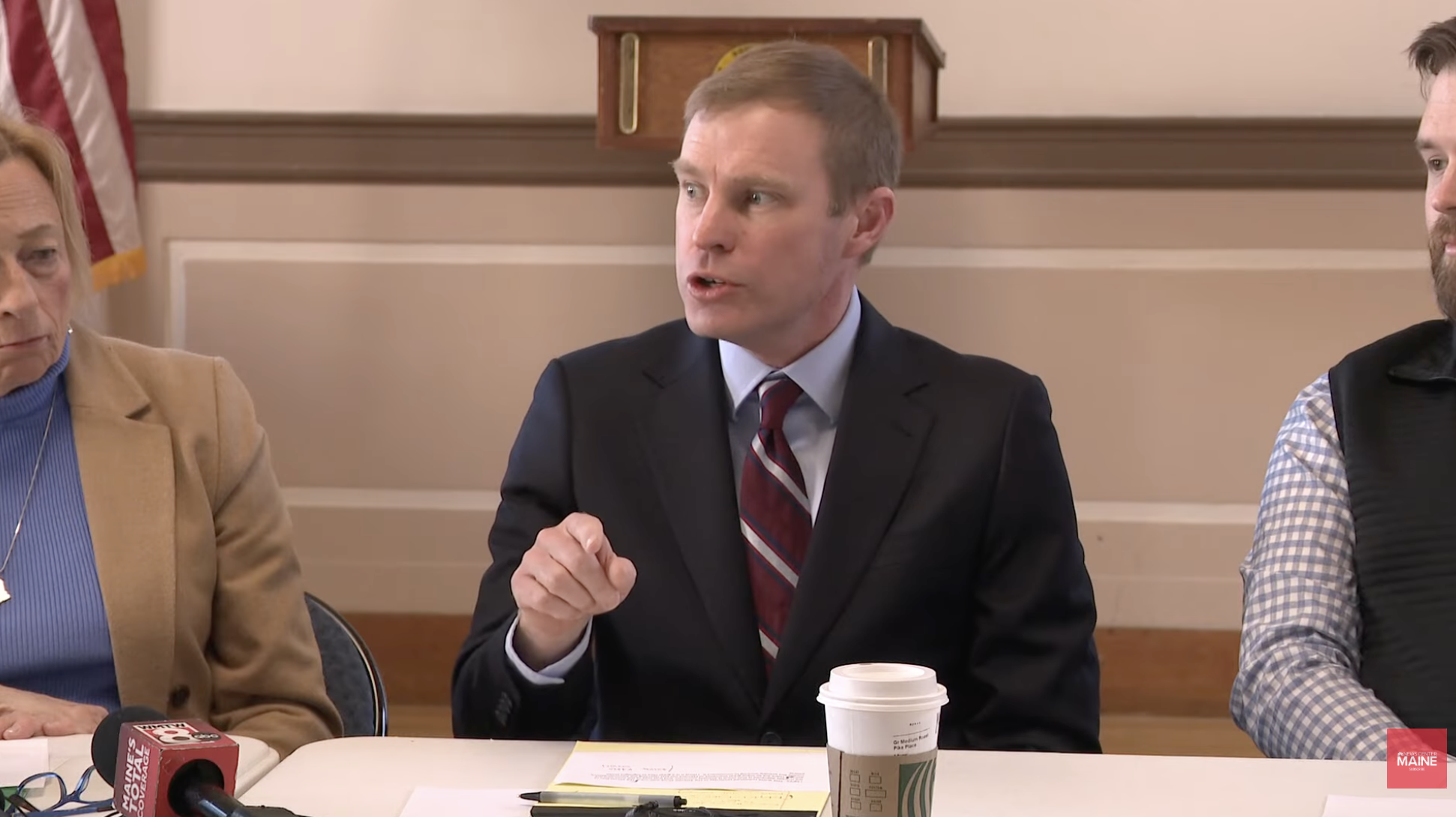
A clear challenge in Maine’s courts has put a state constitutional question front and center after Attorney General Aaron Frey filed a brief arguing the expansion at issue conflicts with the state constitution, prompting a sharp debate over judicial interpretation, legislative authority, and accountability.
Attorney General Aaron Frey, a Democrat, has taken a formal step by filing a brief in the Maine Supreme Court asserting that the expansion does not align with the state’s constitution. That filing shifts the dispute from political back-and-forth to a legal test where constitutional language and precedent will matter most. Republicans see the move as an important line of defense for constitutional limits on government action.
The core dispute here is about where authority properly resides: with the legislature that makes policy or with courts that enforce the constitution. From a Republican viewpoint, the state constitution sets clear boundaries that should constrain overreach regardless of political motives. When executive or administrative actions push beyond those boundaries, the courts have a duty to step in and restore the proper balance.
Conservatives argue this case is about more than one policy change; it’s about guarding the rule of law and protecting voters’ intentions. If statutory or administrative expansions slip past constitutional restraints, it sets a precedent for further unilateral shifts by officeholders. That undermines accountability because elected lawmakers and the public lose the chance to debate and decide on major changes.
Legal arguments in the Maine Supreme Court will depend on the text of the constitution, historical practice, and judicial precedent. Republicans prefer a textualist approach—reading the constitution as written and applying it to the present dispute. That approach resists broad, elastic interpretations that allow officials to stretch authority beyond what the framers or voters intended.
There’s also a practical side to this fight. Expansions carried out without clear constitutional backing can create uncertainty for citizens, businesses, and local governments. Courts resolving this issue can provide clarity and stability by drawing clear lines about what officials may and may not do under state law. That kind of clarity matters in daily life and in future policy debates.
Political context will shape how the public responds, but the legal outcome should rest on neutral principles rather than partisan preferences. Republicans insist the rule of law should not be a tool for one party to achieve aims the electorate did not approve. A court decision that enforces constitutional limits would reinforce the principle that no official stands above the document that creates and constrains government.
The process itself is a reminder that democracy includes checks and balances. Filing a brief in the state’s highest court is an appropriate method for resolving constitutional disputes, and the litigation will let judges examine the arguments, evidence, and legal history. Republicans expect the court to apply the constitution faithfully and to resist pressure to validate expansions that lack a constitutional foundation.
What happens next is procedural but consequential: the court will consider briefs, allow argument, and issue a decision that will matter beyond this single case. A ruling that upholds constitutional limits could curb similar efforts elsewhere and protect the separation of powers. Conversely, a decision that permits broad expansions could open the door to more unilateral changes by officials of any party.
At stake is a basic principle: elected officials must operate within the framework citizens set for them. The Maine Supreme Court now has the chance to reaffirm that principle and to remind state government that constitutional limits are not optional. For Republicans, that outcome is essential to preserving accountable, restrained government.

