

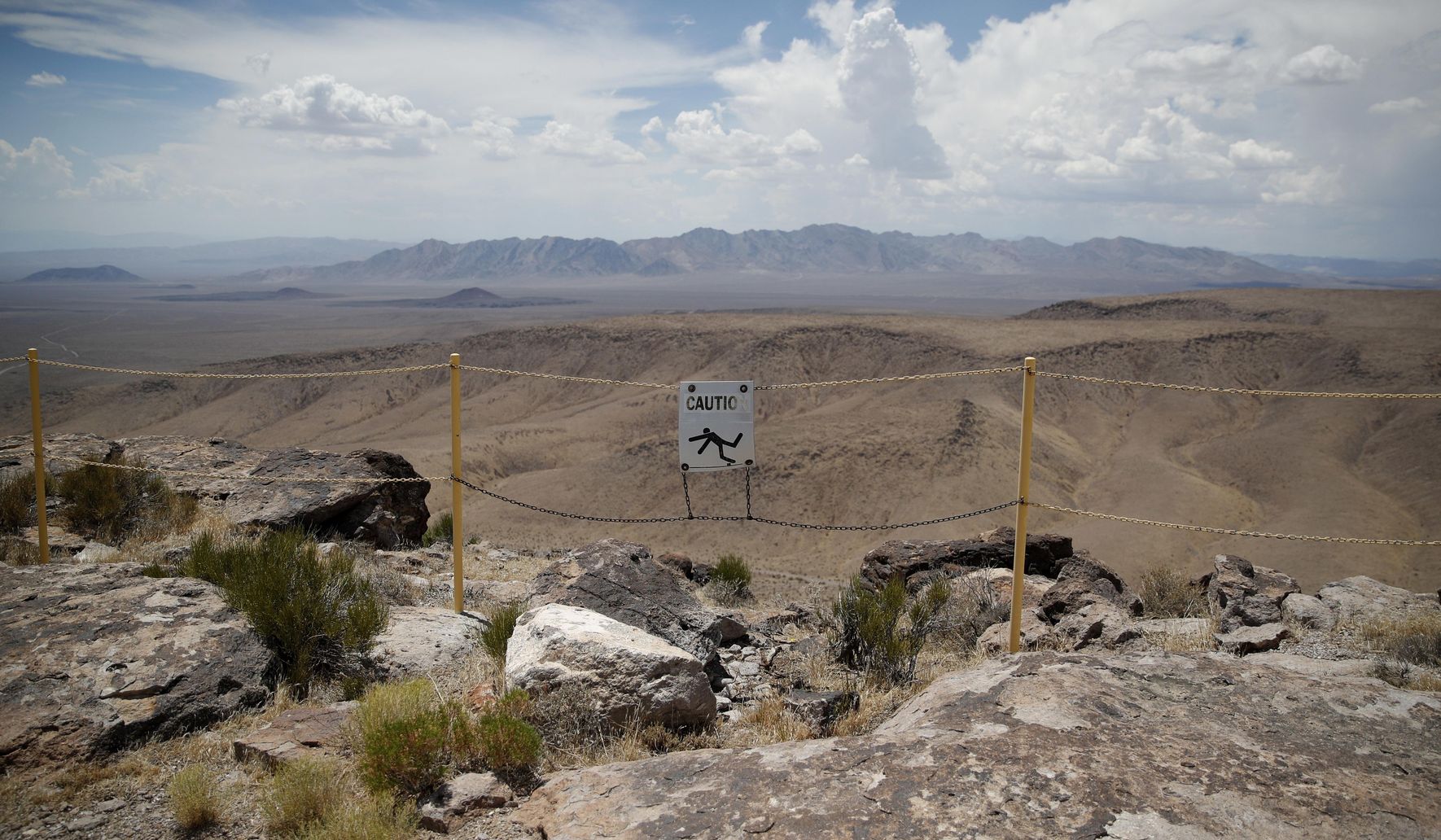
The stalled plan to bury America’s nuclear waste at Yucca Mountain is officially sidelined, and a combination of private innovation, smarter regulation, and advances in artificial intelligence is reshaping how conservatives think about handling spent fuel and radioactive leftovers.
The Yucca Mountain project sunk under decades of politics, legal fights, and local resistance, leaving the nation with piles of spent fuel at reactor sites. That reality has forced Republican policymakers and industry leaders to look for practical alternatives that protect communities and promote energy security. The tone has shifted from blame to building solutions that align with conservative priorities: safety, state involvement, and market-driven innovation.
One clear change is the embrace of modern technology as an enabler, not an enemy. Machine learning and advanced simulations can model geologic behavior, predict containment performance, and optimize transportation routes with far more precision than the old one-size-fits-all plans. Those tools help reduce uncertainty, which is the main technical argument opponents used for so long.
Private-sector players are already pushing alternatives: consolidated interim storage, deeper engineering at smaller sites, and new approaches to waste treatment and recycling. These options fit a conservative playbook by leveraging private capital, creating jobs, and cutting the federal government’s bureaucratic choke points. They also give states and local communities stronger voices in how projects are designed and managed.
AI can speed licensing and environmental reviews by automating analysis of massive datasets, spotting anomalies, and flagging risks earlier in the process. Faster, cleaner assessments translate to lower costs and fewer legal roadblocks, which is exactly what proponents of energy independence want. That does not remove oversight, but it makes oversight smarter and more narrowly targeted.
On the technical front, improvements in materials science and robotics are changing what a safe repository looks like. Corrosion-resistant alloys, advanced concrete formulations, and remote inspection robots extend containment lifetimes and cut human exposure during maintenance. When you pair those advances with predictive models driven by machine learning, you get a much more reliable safety case than the static studies of decades past.
Reprocessing and advanced reactors also factor into the emerging picture. Recovering usable isotopes reduces the volume and radioactivity of material that ultimately needs long-term disposal. Small modular reactors and other next-gen designs can close fuel cycles, turning waste into energy while shrinking stockpiles. That approach appeals to conservatives who favor technology that expands energy options without relying on endless federal subsidies.
Transportation of waste remains a political and logistical challenge, but AI helps here too. Optimized routing, dynamic risk assessments, and predictive maintenance for casks reduce exposure windows and lessen disruption for communities along supply lines. The better the data, the easier it is to win local buy-in and to demonstrate that safety is being managed at every step.
Regulatory reform is essential if these innovations are to scale. Republicans pushing for regulatory certainty want clear timelines, predictable standards, and a streamlined process that still protects public health. Smart rules that incorporate modern modeling and validated AI outputs can speed deployment while keeping watchdogs satisfied that safety is uncompromised.
Politics will never be absent from this debate, but the dynamics have changed. Instead of a single national repository dictated from Washington, the likely path forward combines multiple options: interim storage, targeted permanent sites, treatment technologies, and tighter state-federal partnerships. That patchwork approach aligns with conservative principles and makes practical sense given technical and political realities.
This is not about abandoning responsibility for nuclear waste. It is about doing the job better and faster, using tools and markets that were not available when Yucca Mountain was first proposed. The end of that one plan opens the door to a suite of safer, smarter, and politically viable strategies that can move the nation forward on an issue Republicans have long said needs solving.

