

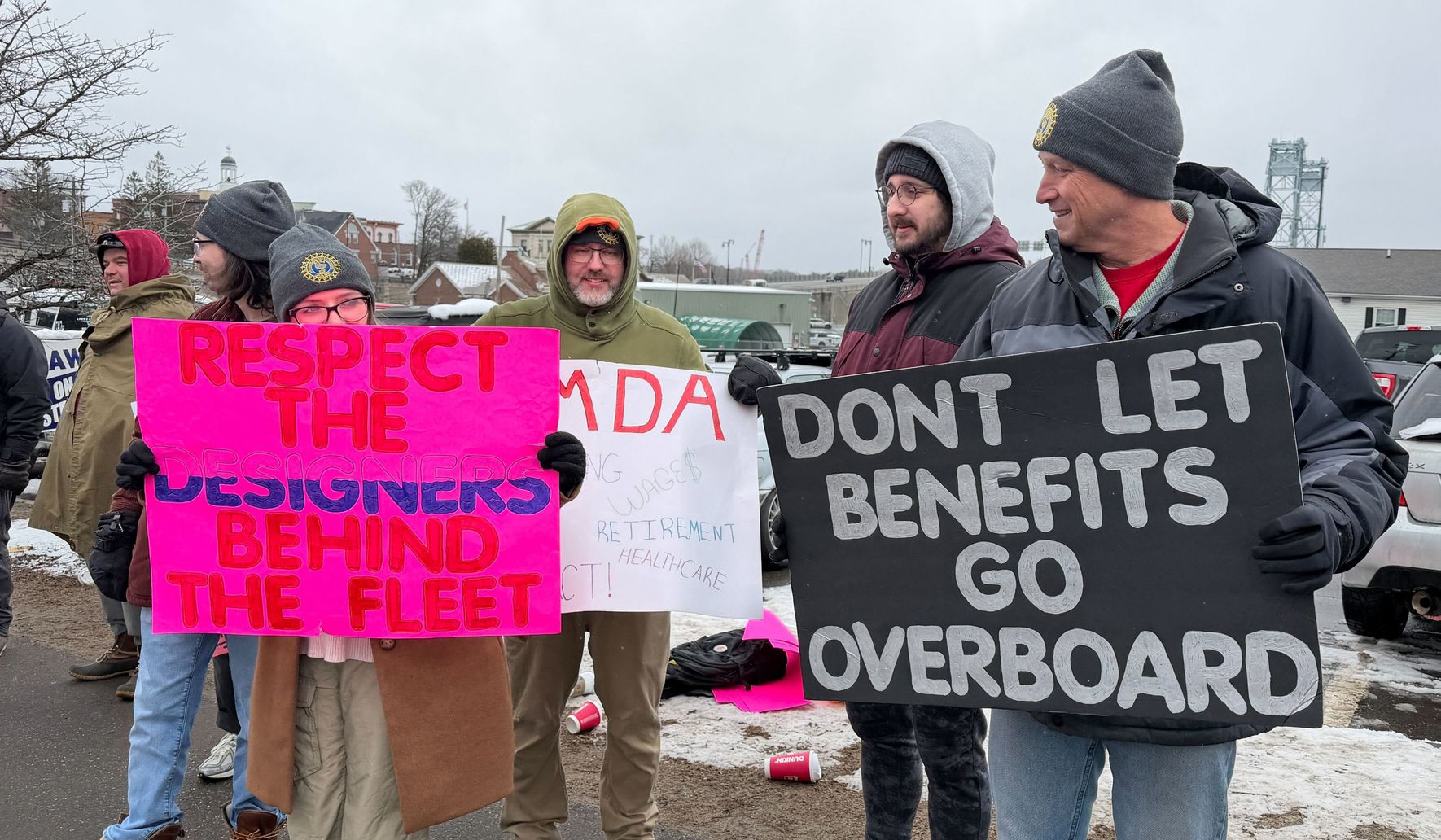
Hundreds of designers, clerks and technicians walked off the job Monday in Maine at one of the U.S. Navy’s largest shipbuilding contractors, triggering an immediate slowdown in work and fresh uncertainty for local communities and federal schedules.
The walkout involved a broad swath of white-collar shopfloor staff, including designers, clerks and technicians, who stepped away from their duties to press demands over pay, staffing and working conditions. It was staged at a facility that plays a significant role in building and maintaining ships for the U.S. Navy, so the disruption drew attention beyond the plant gates. Local leaders and company officials warned early on that the stoppage could ripple through production timelines and subcontractor schedules.
Union representatives framed the action as a response to stalled negotiations and rising workplace pressures, saying members had little choice but to strike to be heard. Management officials acknowledged the walkout but stressed they remain committed to bargaining and resuming normal operations as quickly as possible. Both sides emphasized a desire to avoid a protracted dispute, yet neither offered an immediate resolution in the first 48 hours.
The workforce involved is a mix of technical and support roles that keep design teams and assembly lines moving, meaning delays affect more than just manual labor output. Engineering drawings, procurement paperwork and technical support all feed into shipbuilding milestones, so interruptions in those areas can push back milestone dates. Company sources noted contingency plans are being used to cover critical tasks, but those measures are not a long-term substitute for full staffing.
For the local economy, the strike adds another layer of stress. Towns surrounding major shipyards often depend on steady payrolls and subcontractor activity to sustain restaurants, shops and service providers. Small businesses reported fewer customers within a day of the walkout, and municipal officials said they were monitoring tax receipts and unemployment filings for signs of broader fallout. Community leaders stressed the importance of a quick settlement for neighborhood stability.
On the federal side, a pause in work at one of the Navy’s main private shipbuilders carries programmatic risks, especially for classes of ships where schedules are tight. Defense planners typically build some slack into long-term procurement timelines, but unplanned stoppages erode that buffer and could complicate delivery windows. Pentagon procurement staff are usually engaged when major contractors experience labor disruptions, seeking to assess schedule impacts and potential ripple effects on fleet readiness.
Rank-and-file participants described mounting frustration over what they called inadequate staffing and compensation that hasn’t kept pace with workload increases. Company management countered that they must balance competitive pay with contract obligations and long-term financial health. Those competing narratives laid the groundwork for a high-stakes bargaining atmosphere, with each side signaling the other to make concessions if the shutdown is to end quickly.
Past labor actions in shipbuilding have sometimes produced rapid settlements and other times dragged on, depending on bargaining dynamics and political pressure. In those precedents, mediator involvement or government attention often helped break impasses, while extended disputes tended to escalate costs and delay projects. Observers in Maine noted that local, state and federal stakeholders could play roles in nudging both sides back to the table.
As the strike continued, both parties began triaging the most critical programs and reallocating resources to limit damage. Work on urgent repairs and time-sensitive milestones received priority, while less critical tasks were deferred. For employees, the choice to strike carried personal financial costs, but many said the long-term goal was a contract that stabilized pay and workload for years to come.
Expectations for a resolution hinge on the pace of negotiations and whether an outside mediator or political pressure alters incentives. In the meantime, the shipyard’s output will be closely watched by suppliers, naval planners and local officials who depend on steady production. The longer the walkout lasts, the more consequential the downstream effects will become for schedules, budgets and the communities tied to the yard.

