

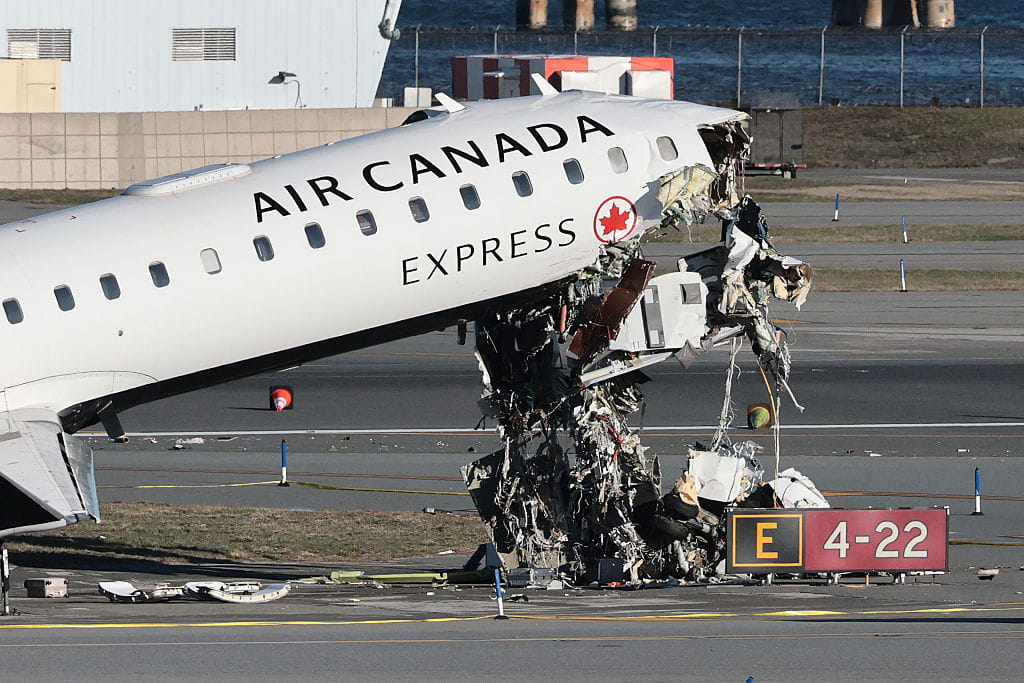
LaGuardia reopened Monday and resumed flights after a Sunday Air Canada crash that killed both pilots and injured dozens; federal investigators are on the scene and officials are urging travelers to wear seatbelts.
LaGuardia Airport reopened to operations on Monday following a fatal crash that occurred the previous day, and flights resumed under tightened oversight as teams worked to restore normal service. The accident involved an aircraft operated by Air Canada and resulted in the deaths of the plane’s two pilots and injuries to dozens of passengers and crew. Local authorities and airport staff coordinated to clear the scene and allow limited operations to continue while keeping parts of the facility closed for safety checks and debris removal. Passengers returning to LaGuardia faced extra screening and schedule changes while carriers adjusted their plans.
Federal investigators from the National Transportation Safety Board arrived quickly to take charge of the technical probe, examining aircraft systems, maintenance records, and crew performance to determine what led to the crash. Officials emphasized that a thorough investigation can take time, and preliminary findings will be released only after careful analysis of flight data recorders, air traffic communications, and witness statements. The Transportation Security Administration and the Federal Aviation Administration also provided personnel to assist with operational continuity and passenger safety. That coordinated response aims to keep the airport functioning while ensuring investigators can follow every line of inquiry.
US Transportation Secretary Sean Duffy spoke with reporters on site, noting that investigators were already engaged and highlighting the staffing capacity of LaGuardia as officials worked through recovery steps. He urged travelers to “wear seatbelts when they travel by air,” restating a basic safety practice that can reduce injuries in unexpected events. The reminder came as airport managers and airlines reviewed boarding procedures, seatbelt compliance, and passenger briefings to look for any measures that might mitigate harm in an emergency. Regulators and carriers will likely revisit safety communications to ensure clear, consistent messages reach every passenger.
Air Canada confirmed the aircraft was an airline-operated flight and pledged cooperation with investigators, focusing on supporting affected families and the injured while providing information to authorities. The airline activated its response teams to assist with family notifications, medical coordination, and arranging transportation for travelers impacted by cancellations and diversions. Crew support specialists and company liaisons worked alongside airport personnel to manage logistics, including rebooking, lost baggage issues, and accommodation for stranded passengers. Public statements stressed a commitment to transparency and assistance during the investigation.
Emergency responders and hospital systems in the New York area mobilized to treat the injured, and several hospitals reported receiving patients with a range of injuries from minor to serious. Medical teams coordinated triage and transport at the scene before moving patients to trauma centers, and agencies continued to update the public on the status of those hospitalized. First responders also worked with crash investigators to preserve critical evidence at the scene while carrying out search, rescue, and recovery tasks. That balance between immediate care and investigative integrity is a routine but delicate part of handling an aviation incident.
For travelers and loved ones watching events unfold, airport communication channels offered frequent updates on flight status and reunification points, and airlines set up hotlines and online portals to assist with claims and information requests. Disruptions included delays and cancellations that rippled through schedules, prompting some carriers to adjust aircraft rotations and crew assignments to maintain network stability. Passengers advised staying in touch with their airline for the latest gate and baggage information, and to allow extra time for check-in and security due to increased operational checks. Airport staff also increased visible assistance to guide travelers through the recovery period.
Regulatory and industry stakeholders will examine findings from the NTSB probe to recommend any safety changes that emerge from the evidence, and that process may involve updates to procedures, equipment standards, or crew training requirements depending on what investigators identify. Aviation safety improvements often follow rigorous review and testing before new protocols are adopted, and lessons from past incidents have driven significant advances in aircraft design and operational safeguards. Meanwhile, analysts expect airlines and airports to review internal practices to reinforce compliance and preparedness ahead of any formal regulatory action.
The human toll from the crash remains central to the response, with support services and counseling made available to survivors, families, and airport staff who witnessed the event. Community and airline outreach efforts aim to provide practical and emotional assistance as the investigation progresses and as those affected begin recovery and rebuilding. Authorities continue to collect information, and public updates will follow as investigators analyze flight data, maintenance history, and other evidence needed to establish a clear picture of what happened. Safety reminders and careful operational oversight will remain in place as LaGuardia restores full service.

