

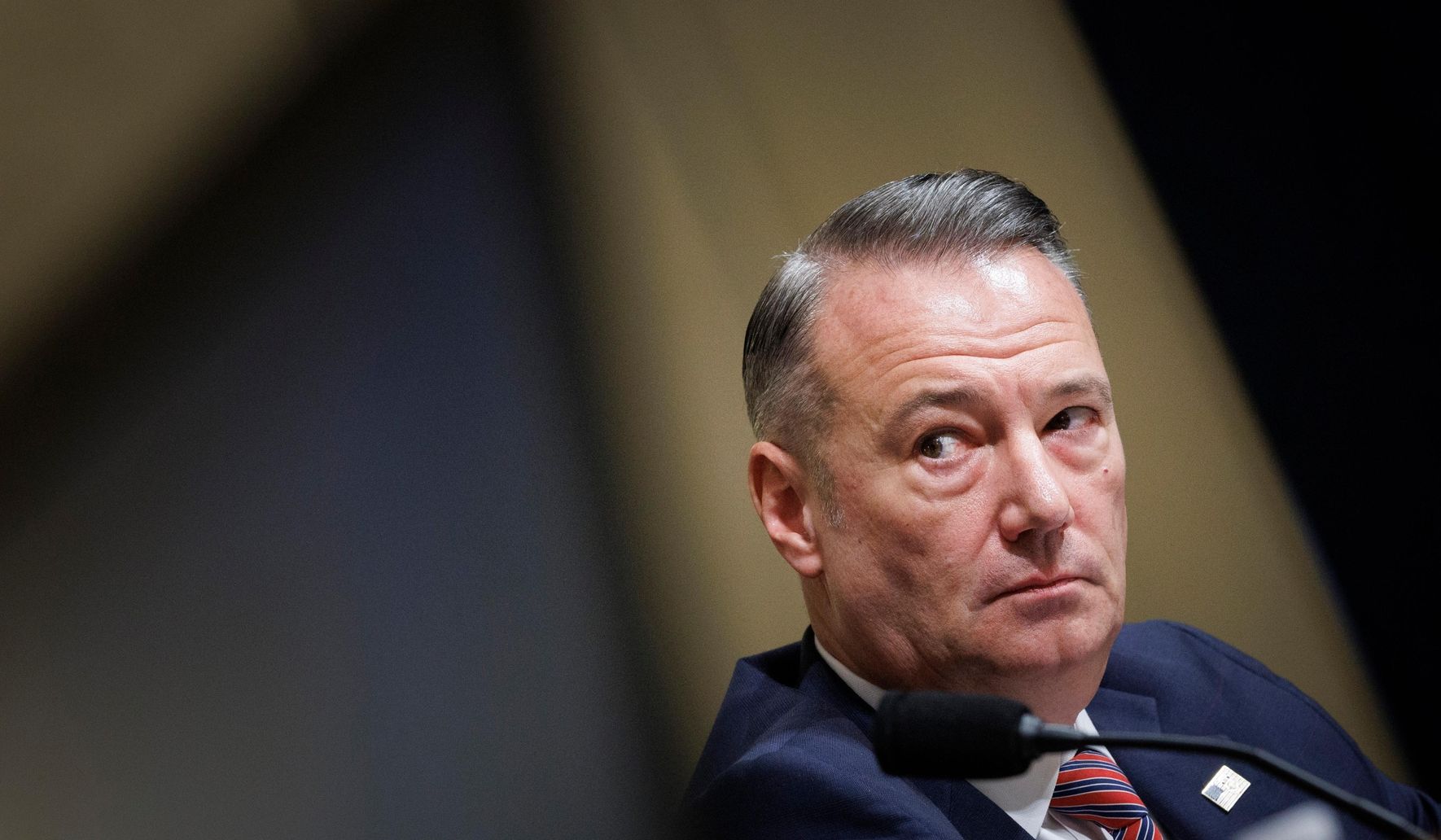
Todd Lyons, the acting director of U.S. Immigration and Customs Enforcement, will step down at the end of May, federal officials announced, after serving as a central figure in President Donald Trump’s mass deportations agenda.
Todd Lyons has been the face of a hardline interior enforcement push that prioritized removals and aggressive deportation operations. His name became linked with steady enforcement actions and frequent public briefings during an administration that focused on removing unauthorized immigrants. Federal officials confirmed his planned departure at the end of May without providing a full explanation.
Lyons served as acting director while ICE carried out expanded arrests and targeted removals in cities across the country. Supporters saw his tenure as a restoration of order and enforcement after years of lax interior policy. Opponents criticized the tactics, but the agency under his watch moved aggressively to execute deportation orders.
Republican officials and law enforcement advocates framed Lyons’ work as necessary for upholding the rule of law and securing communities against those who flout immigration statutes. They argued that vigorous interior enforcement is a logical complement to stronger border control. That view held that consistent removal policies deter illegal entry and protect American workers and neighborhoods.
Critics pointed to the humanitarian and legal controversies that followed some operations, saying the tactics strained community trust and legal resources. Legal groups filed suits and local officials pushed back on enforcement sweeps in sensitive areas. Lyons often defended ICE practices by emphasizing legal warrants, court orders, and prioritization of criminal aliens.
Operationally, Lyons oversaw an ICE that had to balance detention capacity, court timelines, and coordination with Homeland Security and the Department of Justice. Backlogs in immigration courts and limits on detention space shaped which cases moved forward. Agency leaders frequently had to make pragmatic decisions about whom to detain and when to remove individuals to maintain momentum.
The timing of Lyons’ departure comes as immigration remains a high-profile issue in national debates and in midterm politics. Leadership transitions at ICE will be watched closely by both enforcement advocates and humanitarian groups. Whoever follows must navigate the same legal, logistical, and public relations challenges that defined Lyons’ time in charge.
Within ICE, Lyons’ resignation is likely to prompt discussions about continuity and morale among career staff charged with carrying out deportation orders. Career officers are used to shifting directives and temporary leadership, but the clarity of a permanent policy agenda matters for long term planning. Staffers who backed the administration’s enforcement priorities will be keen to see a successor who maintains steady operations.
Outside Washington, Lyons’ record will shape local conversations about cooperation between federal agents and municipal authorities. Some mayors reiterated long standing opposition to aggressive interior enforcement, arguing it undermines community policing and drives immigrants away from reporting crimes. Law enforcement proponents countered that federal removal of serious criminals remains a core public safety mission.
Political leaders will also weigh the optics and policy implications of a leadership change at ICE ahead of upcoming election cycles. Republican lawmakers who supported Lyons highlighted deportations as tangible action on immigration promises. Democrats and immigration advocates used his tenure to spotlight abuses they say require oversight and reform.
As Lyons prepares to leave, the agency faces the same practical dilemmas that marked his stint: limited detention and removal capacity, case backlogs, and the complex interplay of federal, state, and local law. The next leader will inherit an agency shaped by recent policies and legal challenges and will have to make tough calls under public scrutiny. For now, Lyons’ resignation closes a chapter defined by aggressive enforcement that mirrored the administration’s priorities.

