

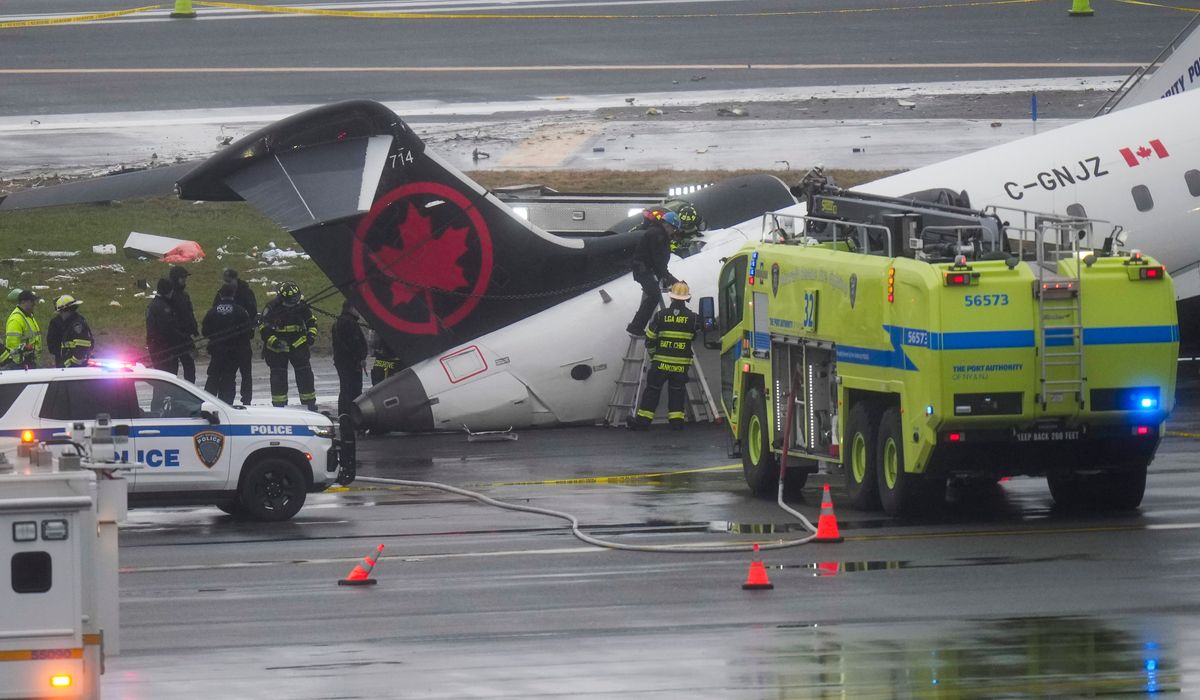
Federal investigators on Thursday detailed a series of issues and failures that led up to last month’s deadly collision between a regional jet and a fire truck at New York’s LaGuardia Airport.
Investigators say the accident was not the result of a single mistake but a chain of shortcomings across operations, communications, and oversight. They laid out how small problems stacked up and allowed a high-risk situation to develop. The report frames the crash as a system failure rather than an isolated event.
The timeline examined by the team highlights how routine procedures diverged from best practice in the minutes before impact. Dispatching, vehicle positioning, and aircraft sequencing all drew scrutiny, with particular attention on how crews and controllers communicated. Those gaps, investigators found, increased the chance that vehicles would be on or near active taxiways when aircraft were moving.
Human factors feature prominently in the findings, including decision fatigue, ambiguous radio calls, and unclear role assignments during an emergency. The report connects these human elements to management and training shortfalls that made those human errors more likely. Investigators emphasize that improving training and clarifying responsibilities can reduce, but not eliminate, the risk posed by human fallibility.
Equipment and infrastructure also came under review, with notes about visibility, markings, and the ways emergency crews and air traffic control monitor movement on the field. While no single equipment failure was named as the direct cause, investigators pointed out design and layout issues that complicated situational awareness. That combination of imperfect tools and stressed personnel erodes the margin for safe operations.
Regulatory context appears throughout the report, with attention to how existing rules and oversight frameworks either did or did not prevent the lapses that occurred. Investigators raise questions about whether current inspection cycles, reporting protocols, and interagency coordination are sufficient to catch weak links before they lead to tragedy. The report suggests stronger, clearer standards for shared responsibilities at busy airports.
Responses from the airport, carriers, and emergency services have been studied to see how immediate decisions shaped the outcome and how post-crash procedures performed. The investigators examined how control centers logged movements, how crews verified clearances, and how emergency responders positioned themselves during an unfolding incident. Those operational snapshots informed several of the practical recommendations aimed at tightening processes.
Recommendations in the report focus on improving communication, tightening procedural compliance, and enhancing training for both airside workers and controllers. They call for better documentation of movement authorizations, cross-agency drills that reflect real-world stressors, and clearer checklists that reduce ambiguity in critical moments. The investigators stress that those steps are preventive: they aim to rebuild buffers that can stop small errors from cascading into deadly events.
Accountability and follow-through are central themes, with the report urging both immediate fixes and longer-term monitoring to ensure changes stick. Officials are asked to track implementation closely and report back on whether new measures actually reduce risk in daily operations. The investigators make it clear that without measurable follow-up, recommendations risk becoming well-intentioned paperwork rather than real safety improvements.
The document also points to lessons for other busy hubs that juggle high traffic, short runways, and mixed vehicle activity nearby. Investigators suggest the LaGuardia case should prompt a broader look at how airports manage ground risks when complexity and time pressures are high. Learning from this report could shape policies and practices well beyond a single field or operator.

