

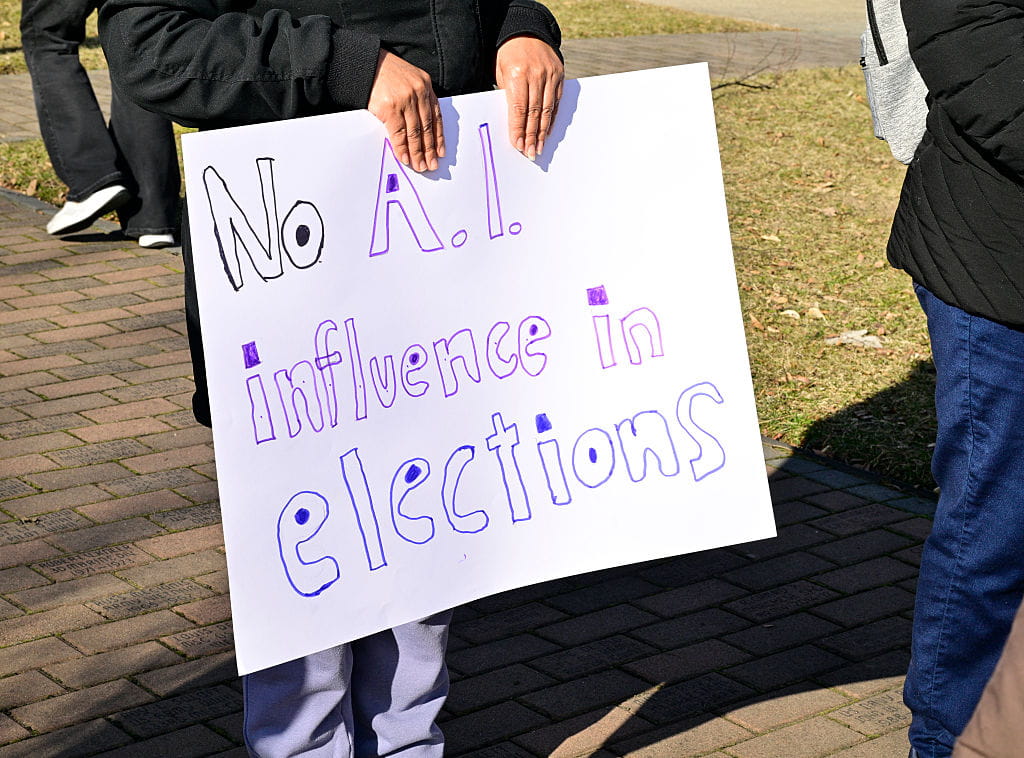
AI can crunch mountains of data, but predicting who will follow Donald Trump into the White House is a different kind of problem.
AI promises breakthroughs in medicine, logistics, and even household chores, which is why some expect it to forecast political outcomes with equal ease. The reality is messier: elections hinge on voters, court rulings, campaign fights, and last-minute shocks that models struggle to account for.
From a Republican viewpoint, the most important limits of AI are not technical but human. Voter sentiment can swing based on a single debate line, a local issue, or a news cycle, and those human reactions aren’t always visible in the datasets AI trains on. Machines spot patterns, but they do not feel loyalty, outrage, or the kind of grassroots energy that drives turnout.
Data quality itself is a problem. Polls can undercount key demographics, social media samples skew younger, and fundraising numbers hide dark money or in-kind support. An AI fed only imperfect inputs will give imperfect answers, and overconfidence in those answers can mislead campaigns and voters alike.
There’s also the political reality Republicans understand: the rules of the game can change quickly. Court decisions, ballot-access fights, and state-level administration choices reshape the playing field in ways raw analytics often miss. Predictive models rarely capture legal maneuvers or sudden shifts in election law that can determine who actually appears on the ballot.
AI can, however, be a powerful tool for campaigns when used right. It helps target persuasion ads, spot turnout gaps, and optimize resource allocation, which can strengthen a candidate’s edge. But using AI to claim a crystal-ball certainty about who will succeed Donald Trump confuses tactical advantage with inevitability.
Another blind spot is adversarial behavior; opponents can change tactics to exploit model weaknesses as soon as those weaknesses are exposed. Campaigns, foreign actors, and media outlets can all influence the signals AI depends on, which makes any single model brittle under pressure. Political forecasting needs humility alongside clever algorithms.
Finally, the Republican stance values human judgment in the loop. Party strategists, local organizers, and voters bring context that data alone won’t supply. Combining human insight with machine analysis offers a practical path forward without pretending the machines know the future.

