

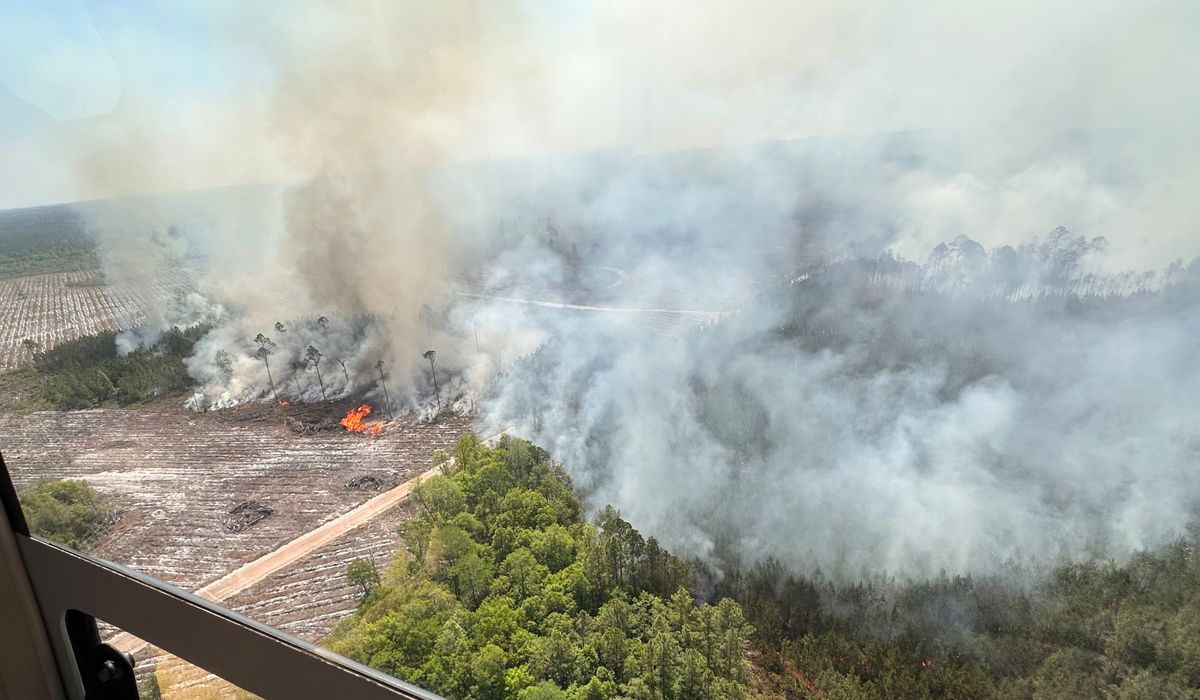
Two wildfires in southeastern Georgia kept threatening homes and lives on Saturday as officials warned that strong winds could spread the flames and complicate containment efforts.
Two separate blazes burning across southeastern Georgia remained active Saturday, pushing flames through dry timber and brush while threatening nearby neighborhoods. Officials said the fires were close enough to populated areas that evacuation notices and shelter options were put in place for residents at risk. Emergency teams worked to prioritize people and property as weather conditions shifted.
Fire behavior picked up where tinder-dry undergrowth and stands of pine trees provided easy fuel for flames to move rapidly. Spotting — where embers jump ahead of the main fire and start new blazes — was reported as a driving concern because shifting winds could carry hot material into new pockets of vegetation. That combination of fuels and wind makes containment lines fragile and firefighting plans subject to rapid change.
Local fire departments and forestry crews have been coordinating response efforts through mutual aid agreements, deploying engines, dozers and hand crews to establish control lines. Aircraft were used where conditions allowed to slow the fire’s spread, dropping water or retardant to protect strategic points near homes and roads. Incident commanders focused on defending structures while trying to keep access routes open for crews and evacuations.
Officials specifically warned that strong winds could spread the flames, raising the risk to communities downwind of the fires. Those gusts can push fire fronts faster than crews can construct barriers, and they help embers reach new fuels farther away. Forecasts of gusty afternoons were a primary reason managers raised alert levels and expanded areas for evacuation advisories.
Evacuation orders and voluntary sheltering were implemented in several neighborhoods to move people out of harm’s way quickly and reduce the burden on firefighters working near homes. Local authorities established temporary reception centers for displaced residents and their pets, and community groups organized to provide basic supplies. Residents were urged to follow official instructions, keep evacuation routes clear and avoid returning until liaisons confirmed it was safe.
Smoke from the fires reduced visibility and degraded air quality across a broader area, creating hazards on roadways and health risks for sensitive people. Drivers reported hazy conditions along some county roads and state routes, and officials cautioned that visibility could change suddenly as banks of smoke shifted with the wind. People with respiratory issues, the elderly and young children were advised to limit outdoor activity and close windows where practical.
Utility infrastructure and other critical services were monitored as the blazes advanced, with crews standing by to respond to downed lines or damaged equipment. Power companies coordinated with incident managers to de-energize lines near active fire zones when necessary to protect crews and reduce ignition sources. This kind of coordination helped reduce secondary risks and allowed restoration work to begin quickly once conditions permitted.
Community volunteers and local organizations mobilized to support evacuees and first responders, offering food, temporary lodging and supplies for families forced to leave their homes. Donations and volunteer efforts were organized through local emergency management channels to ensure resources reached the people who needed them most. These grassroots responses often become a lifeline during prolonged incidents, supplementing official aid without getting in the way of critical operations.
Containment efforts hinge on several variables: fuel moisture, terrain, crew access and, crucially, the weather over the next 48 to 72 hours. Officials continued to monitor the situation closely, adjusting tactics as conditions evolved and prioritizing the safety of residents and firefighters above all else. While progress can be uneven and setbacks possible, managers kept pushing to stabilize perimeters and reduce immediate threats to communities in the path of the fires.
Authorities reminded anyone in affected areas to stay informed through official channels, heed evacuation instructions and prepare basic emergency kits when ordered to leave. Small preparations — grabbing essential documents, medicines and pet supplies — can make evacuations smoother and free emergency personnel to focus on containment. With winds expected to remain a factor, officials said vigilance would be necessary until the fires were fully under control.

