

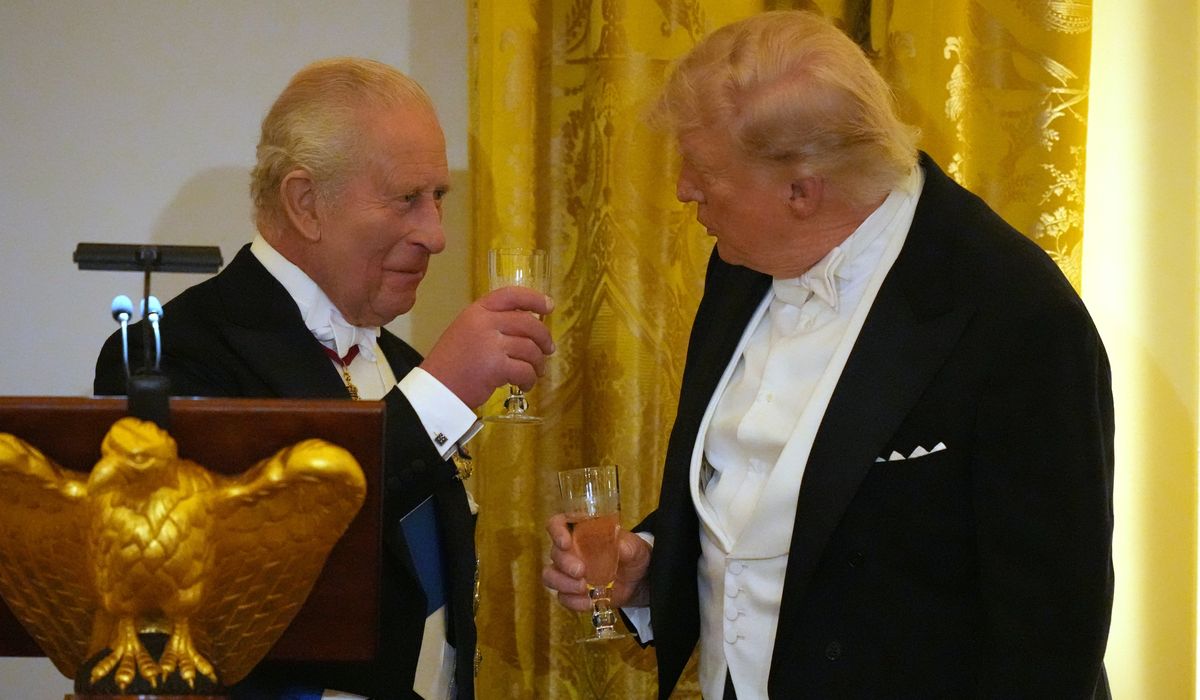
President Trump said Tuesday that King Charles III of Britain agrees with his efforts to prevent Iran from having a nuclear weapon, drawing the traditionally apolitical monarchy into the diplomatic conversation.
President Trump framed this as a shared priority with an allied monarch, highlighting the urgency of stopping Iran from getting a nuclear weapon. He presented the agreement as part of a broader push to keep hostile regimes from acquiring devastating capabilities. For Republicans, that kind of international alignment underscores a results-first approach to national security.
The involvement of King Charles III, even as reported by the president, challenges the usual expectation that the British monarchy stays clear of partisan or strategic diplomacy. Conservatives should recognize the practical value when partners line up behind a clear security goal. Working with respected global figures can strengthen leverage without turning every move into a political fight.
Preventing a nuclear-armed Iran remains one of the clearest national security priorities of our time. From a Republican perspective, deterrence and firm negotiating positions work better than wishful thinking. That means staying ready to impose costs and to act if diplomacy and sanctions do not succeed.
Trump’s statement also shifts the conversation from hand-wringing to a focus on outcomes. Instead of endless debates about tone or protocol, this approach demands a plan that actually stops Tehran from progressing. Republicans favor that kind of straight talk and measurable objectives over opaque international posturing.
Some critics will say the monarchy should not be drawn into these discussions, and protocol matters. But national security does not always follow neat rules when the stakes are survival and regional stability. Allies and informal partners often end up cooperating in ways that break with tradition when danger looms.
It is important to keep checking facts and sources, and to distinguish between a presidential claim and formal British government statements. Still, the rhetoric matters in diplomacy because it signals intent and can rally support among allies. Republicans tend to prefer clarity about intent rather than vague statements that allow adversaries to interpret weakness.
A firm stance against Iran’s nuclear ambitions also reassures regional partners who face direct threats. Israel and many Gulf states have publicly voiced alarm about a nuclear-capable Iran, and Republican foreign policy emphasizes standing with those partners. Demonstrating resolve prevents miscalculation and reduces the chances of escalation through surprise moves.
Economic pressure, intelligence cooperation, and military preparedness are the tools that have to work together. Republicans argue that sanctions must be relentless and that covert and overt measures must be coordinated. Breaking Iran’s ability to fund and fuel nuclear programs takes sustained, targeted action over time.
Bringing public figures into awareness campaigns can be useful when it increases diplomatic pressure. When allies and influential voices convey the same message, adversaries must take a harder look at their choices. This is part of the carrot and stick mix that has historically produced results against proliferators.
There will be debate about whether traditional institutions should be used in modern foreign policy messaging. Republican readers should weigh the practical gains against the appearance of politicization, but not let form trump substance. When national survival is on the line, policy effectiveness is the primary metric.
Those concerned about constitutional boundaries can push for clear, transparent channels of communication between governments. At the same time, Republicans expect leaders to seize opportunities to build coalitions that protect American interests. Global leaders who privately or publicly align on core security aims make it easier to act decisively when necessary.
Ultimately, the central question remains how best to stop Iran from acquiring nuclear weapons and the means to deliver them. A strategy that combines diplomatic unity, economic pressure, and credible military options seems most consistent with conservative principles. That mix preserves peace through strength while leaving room for negotiated solutions if Tehran changes its behavior.
Whether or not this particular claim leads to new British policy, it already underscores a point Republicans consider vital: clarity, resolve, and allied alignment matter. Bringing attention to the threat is a step toward forcing a clearer international response. Officials who prioritize concrete results over ceremony are the ones most likely to prevent a dangerous future scenario.

