

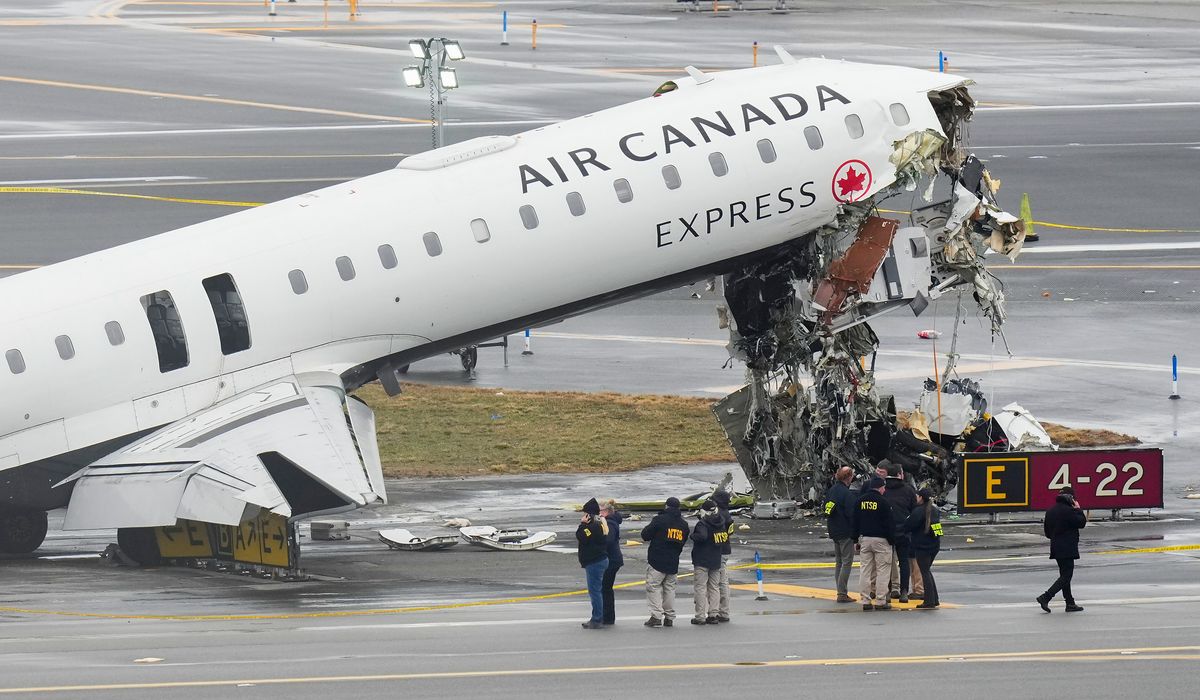
Transponders will be added to ground vehicles at the region’s three major airports after a fire truck collided with a landing Air Canada jet in New York, a move aimed at making vehicle locations clearer and runway operations safer.
Airport officials say transponders will soon be placed on ground vehicles across the region to improve visibility of their positions on air traffic and airport management screens. The decision comes after a fire truck struck an Air Canada jet as it was landing, an incident that exposed gaps in how ground vehicles are tracked during active runways and taxiways. Authorities believe better tracking could reduce confusion during busy operations.
The move is framed as a simple but effective step to prevent similar events, and it targets the three major New York-area airports where traffic density and complex ground movements increase risk. By equipping trucks, buses, maintenance vehicles and other mobile units with transponders, controllers and ramp supervisors will have clearer, real-time location data. That added layer of information can help separate aircraft on approach from unexpected ground traffic.
Investigators noted that transponders “might have helped pinpoint the location of a fire truck that collided with a landing Air Canada jet in New York,” which underscored the need for better situational awareness. Airport teams and federal safety agencies are treating the suggestion seriously, moving from review to concrete steps. The plan aims to close a gap where visual checks and radio calls alone may not be enough during high-workload moments.
Installing transponders on ground vehicles is not meant to replace existing safety practices but to reinforce them, giving controllers an extra tool for timely decisions. When a vehicle’s transponder shows up on radar-like displays, dispatchers can quickly confirm whether it is clear of active runways or moving into potential conflict zones. That confirmation is especially useful at night, in bad weather or when multiple operations overlap.
Logistics for rolling out transponders will include choosing compatible equipment, training personnel, and updating procedures to ensure data is monitored and acted upon. Airport operators plan to phase the program to keep disruption minimal while maximizing coverage of high-risk vehicle types and areas. The overall goal is a reliable, redundant system that works alongside visual monitoring and radio communication.
Beyond immediate safety benefits, officials see operational payoffs: fewer delays caused by runway closures for vehicle-related checks and quicker clearance for aircraft when controllers can verify ground positions. That could mean smoother traffic flow during peak hours and a more predictable schedule for airlines and ground crews. Planners caution, though, that technology alone won’t solve every issue; human oversight and disciplined procedures remain central.
Public safety advocates and industry representatives are watching how fast the installation moves from plan to practice and how well it integrates with existing infrastructure. Regulators will want proof the transponders are improving awareness without creating new distractions for controllers. For passengers and crew, the change should be largely invisible, but it is designed to reduce the odds of incidents that lead to evacuations, aircraft damage, or service disruptions.

