

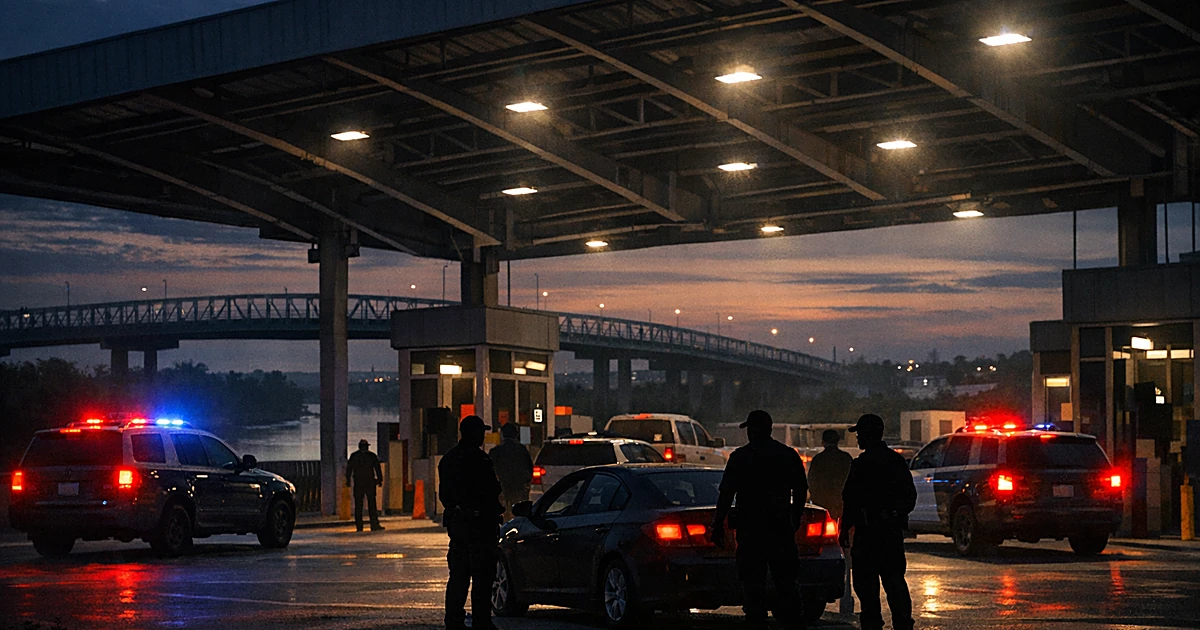
Customs and Border Protection officers arrested three men wanted on felony sex‑crime warrants at Texas international bridges on April 30, using biometric screening and federal databases to flag the suspects and prevent their entry.
Three men were stopped at two international bridges under CBP’s Laredo Field Office on April 30, and the arrests are part of a broader federal effort to intercept fugitives at ports of entry. Two of the men are foreign nationals and one is a U.S. citizen, and they face charges that range from sexual assault to predatory sexual assault against a child. The operation is tied to Homeland Security’s Operation Predator, the department’s flagship effort aimed at child sex predators. As of March, CBP recorded 5,313 arrests based on National Crime Information Center records.
Pedro Garcia Martinez, 44, a Mexican citizen, was taken into custody at Laredo’s Juarez-Lincoln Bridge after biometric verification and federal database checks matched active felony warrants out of New York. The charges listed against him include first-degree rape, first-degree sexual abuse, second-degree course of sexual conduct against a child, and second-degree predatory sexual assault against a child. Those are four felonies, and all involve alleged crimes against children. That kind of specificity is exactly what border screening is supposed to catch.
Allan Josue Cabrera Maradiaga, 49, a Honduran citizen, was also arrested after checks surfaced an active felony warrant for sexual assault from the St. Bernard Parish Sheriff’s Office in Chalmette, Louisiana. Jesus Hernandez Resendez, 53, a U.S. citizen, was stopped at the Anzalduas International Bridge while driving a vehicle and is charged with aggravated sexual assault of a child in Texas. Three separate jurisdictions—New York, Louisiana, and Texas—had warrants or charges that surfaced because databases were used at the port of entry.
Donald Kusser, director of field operations at Laredo, framed the arrests sharply and without euphemism. In his statement Kusser said:
“Put simply, you can run, but you can’t hide. These are among the most heinous offenses we encounter and apprehensions like these not only illustrate the importance of our border security mission but also drive home the important role we play in protecting our communities.”
The practical point is straightforward: biometric screening, fingerprints, facial recognition, and real-time checks against federal law enforcement databases are the tools that identified these men. Without those tools, each suspect could have presented at a bridge or driven across the border and slipped past local authorities. This was not a high-speed chase in the brush; it was routine processing that worked because officers used the systems available to them.
Homeland Security Secretary Markwayne Mullin has described enforcement as continuing in a “more quiet way,” and he said, “We’re still enforcing immigration laws. We’re still deporting illegals that shouldn’t be here. We’re still going after the worst of the worst, but we’re doing it in a more quiet way.” That approach still produced the 5,313 CBP arrests logged as of March, a figure drawn from National Crime Information Center records. The enforcement posture appears unchanged; only the tone has shifted.
The legal environment matters to how enforcement plays out on the ground. When courts and local authorities permit or cooperate with federal checks, fugitives are far more likely to be caught at ports of entry. Conversely, when injunctions or local noncooperation limit enforcement, dangerous people can vanish into communities instead of being transferred to the courts that issued warrants. That interplay between law and enforcement determines whether catches like these happen regularly or only sporadically.
Operation Predator remains the organizing framework for targeting child sex predators across agency lines, and it depends on centralized databases like the National Crime Information Center to connect local warrants to federal checkpoints. The three arrests on April 30 show how those systems act as connective tissue, matching biometric data at the border to records from distant jurisdictions. Without that link, each warrant could have stayed unknown to officers screening arrivals.
Several details about the April 30 arrests remain unclear, including what happened to the men after their apprehension and whether they were transferred to the issuing jurisdictions or held in federal custody. It is also not clear which Texas jurisdiction charged Resendez or whether the three arrests were part of a single coordinated effort or separate encounters at two bridges. Those unanswered items matter for ensuring suspects actually reach the courts that sought them.
The broader point for those who support firm border enforcement is plain: funding and directing the right systems and staffing at ports of entry produces tangible results. The border functions as a last line of defense when officers are equipped and ordered to use biometric screening and law enforcement databases. When those tools are weakened or underfunded, the communities that depend on them lose a critical safeguard.
Three men accused of sexual offenses against children were stopped at bridges in Texas because officers applied the available tools and followed up on database hits. That outcome reflects policy choices about resources, legal cooperation, and enforcement priorities, and it shows how a properly resourced border can prevent dangerous people from moving freely between jurisdictions.

