

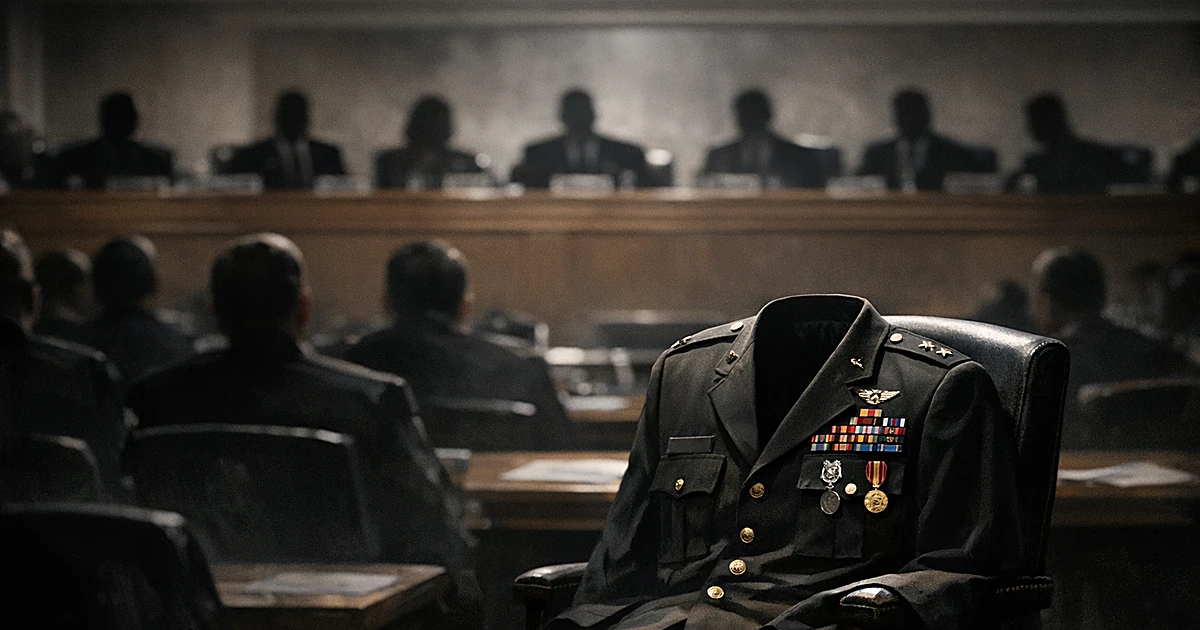
Defense Secretary Pete Hegseth publicly backed the Major Richard Star Act, a bipartisan measure to restore full benefits for roughly 54,000 combat-injured veterans, setting up a clash with Senate leaders who have blocked the bill on cost grounds and shifting momentum for veterans’ advocates.
Pete Hegseth told the Senate Armed Services Committee he supports the Major Richard Star Act during a hearing on the Pentagon’s fiscal 2027 budget request. That declaration puts him at odds with committee chairman Sen. Roger Wicker and Sen. Ron Johnson, both of whom have used procedural moves and fiscal arguments to keep the measure from reaching a floor vote.
The legislation addresses a narrow but painful problem: medically retired service members with combat injuries often lose retirement pay when their Department of Veterans Affairs disability payments are counted against it. The result is that some of the most seriously wounded receive less income than peers who completed 20 years of service.
The mechanics are straightforward and stark. Veterans rated above 50 percent can get both retirement pay and VA disability only if they earned full retirement through years of service; those medically retired earlier because of combat wounds do not get that protection. That offset can leave households hundreds or even thousands of dollars short each month.
“As I have said in the past to other organizations, we support the [Major] Richard Star Act.”
Advocates have been blunt about what concurrent receipt could mean for families. Jess Finucan of the Iraq and Afghanistan Veterans of America framed it in immediate terms: stable rent payments and financial footing for veterans still of working age. Veterans’ groups say the bill has nearly 80 Senate backers and more than 320 supporters in the House, yet it keeps running into roadblocks.
“I think the average that someone could earn back if they were able to have concurrent receipt would be almost $2,000 [per month]. That could be rent in some areas. That could be financial stability for you and your family. A lot of these folks are still of working age.”
The sticking point is dollars and process. Estimates on the bill’s cost vary wildly depending on the source, from about $11 billion over a decade to figures above $70 billion, with the Congressional Budget Office producing a high-end projection. Those gaps give opponents a large number to cite and leave the public guessing about the underlying math.
Senators arguing against immediate action frame it as a jurisdictional or fiscal matter rather than a question about fairness. Wicker told colleagues he views the change as legislation belonging to another committee and warned about tacking it onto a major defense bill. For fiscal conservatives, the national debt and long-term spending are the central objections.
“We’re talking between $9 billion and $10 billion on the Department of Defense Authorization Act and we’re talking about adding a bill, a piece of legislation that really belongs in another jurisdiction, as my friend acknowledged.”
Sen. Ron Johnson has been even more blunt about the debt numbers, blocking unanimous consent and a motion to bring the Star Act to the floor. He warned that affection for veterans must be balanced with fiscal reality, citing national debt figures as the reason for caution. He did leave a procedural opening if the bill goes through regular committee review.
“So, we can’t just come down here and talk about how much we love vets and how we want to support them. We also have to look at the reality [of the] situation, the dollars and cents. We’re $39 trillion in debt. Over the next decade, it could probably go to $60 trillion.”
Hegseth’s endorsement changes the dynamics inside Washington. For years veterans groups have pushed this narrowly targeted fix, and a defense secretary publicly backing the measure hands them a high-profile ally. VFW legislative director Kristina Keenan said trying to save on the backs of combat-injured veterans “doesn’t sit well” with their membership.
“To try to save money on the backs of veterans and combat-injured disabled veterans… doesn’t sit well with the VFW or with our members.”
The endorsement also comes as Hegseth has been a controversial figure on other personnel and policy decisions, attracting both praise and pushback for moves at the Pentagon. That background makes his willingness to take a stand on a legislative issue notable, since defense secretaries usually avoid direct involvement in congressional battles over specific bills.
Veterans advocates hope Hegseth’s support will translate into concrete momentum, pressuring leaders who have stalled the measure to act. Jess Finucan expressed guarded optimism that public backing from the secretary might push lawmakers to be more proactive in advancing the bill. If leaders allow a vote, the broad bipartisan tally suggests passage is possible.
“I think with the secretary’s comments and his public support, I do hope that that maybe doesn’t change anyone’s opinion, because I think we’re all on the same wavelength, but I do hope that it kind of pushes people to be more proactive and pushing it through.”
Sen. Richard Blumenthal called the commitment a “significant step” and plans to hold the administration accountable by Veterans Day. House cosponsor Rep. Jimmy Patronis described Hegseth’s backing as a “game changer” and signaled an aggressive push to get the bill to the president’s desk. Those moves set up a political test on whether process and spreadsheets will trump a policy that many lawmakers across the aisle call fair and necessary.
“Taking care of our veterans is a cost of war, and our nation has a moral imperative to act now to pass the Major Richard Star Act.”
Questions remain about whether the White House will throw its weight behind the change and whether procedural hurdles in the Senate can be cleared. The fiscal objections are real and deserve scrutiny, but the policy at issue directly affects a defined group of combat-injured veterans in a way few defend on principle. Hegseth’s public position makes it harder for leaders to hide behind process, and the coming weeks will show whether that pressure is enough to force a vote.


1 Comment
I’m not too sure about this relationship!!!!