

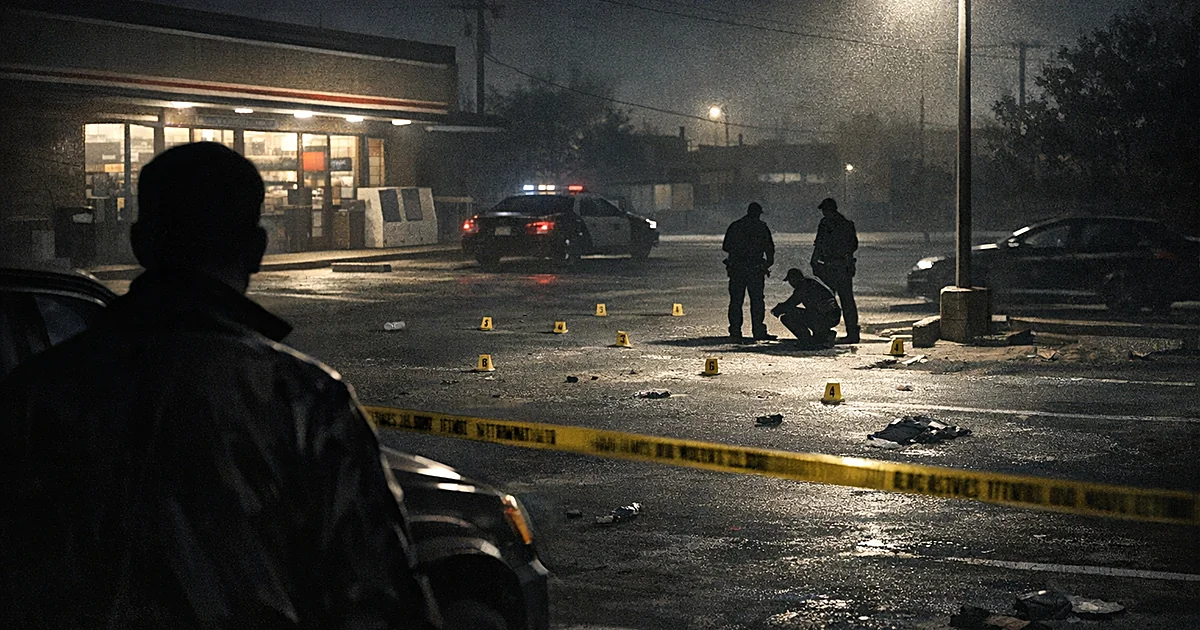
A pregnant 17-year-old was shot in Dallas after an argument in a convenience store parking lot; two men who entered the country illegally are charged with capital murder, and the case has ignited criticism over the city’s refusal to partner with federal immigration enforcement.
On May 3, 2026, around 12:40 a.m., a confrontation in a 7-Eleven parking lot escalated into a deadly drive-by shooting that struck a 17-year-old who was 22 weeks pregnant. The teen was rushed to Baylor Hospital, where doctors performed a cesarean section, but the baby did not survive. Authorities arrested Yeremy Alexander Zapata Aleman, 17, of Honduras, and Keyner Ariel Calero Jiron, 20, of Nicaragua; both are now booked into the Dallas County Jail on capital murder charges.
U.S. Immigration and Customs Enforcement has confirmed both men crossed the border illegally, and prosecutors say the two followed the victims from the lot before opening fire. If convicted on the capital murder counts, either defendant could face the death penalty under Texas law. Police allege a sequence that began with an argument and ended with gunfire, a chase, and a crash that left one unborn child dead.
Investigators reported finding cocaine, MDMA, and illegal weapons inside the vehicle Calero Jiron was driving when he crashed while fleeing officers. Calero Jiron faces five counts of felony aggravated assault, one count of possession of cocaine, and one count of unlawfully carrying a weapon in addition to the murder charge. Zapata Aleman is charged with five counts of felony aggravated assault and one count of possession of cocaine on top of his capital murder charge.
The evidence collected—drugs, weapons, and a reported drive-by—paints a picture prosecutors say is far beyond a simple dispute. Calero Jiron allegedly drove during the shooting and then led police on a pursuit ending in a crash that exposed a cache of contraband. Those alleged facts are now the basis for the most serious charges Texas allows, and they raise hard questions about how these men entered and moved around the country.
The timing of the arrests sharpened political arguments immediately. Last week, Dallas Police Chief Daniel Comeaux declined a $25 million offer from ICE to partner on immigration enforcement, a decision that drew public criticism from Dallas Mayor Eric Johnson. Republican critics argue the refusal to accept federal resources and cross-agency cooperation can leave dangerous individuals off law enforcement radar and exposed communities to harm.
Those critics point to this case as an example of consequences that follow when local officials treat federal immigration enforcement as optional. The argument is not theoretical: if coordination with federal authorities might have flagged these men earlier, then declining a partnership becomes a policy choice with tangible risk. City leaders who reject federal tools must answer whether that choice makes residents safer or more vulnerable.
Certain details remain undisclosed as the investigation proceeds, and officials have not identified which suspect allegedly fired the fatal shots. Authorities also have not released the names of the teen victim, her companion, or the driver of the other vehicle that was hit. Journalists and the public await further forensic and witness information that will shape the legal case and clarify the chain of events that night.
The broader pattern Republican voices are highlighting ties this shooting to questions about border control, local refusal to cooperate with federal agencies, and resource allocation by city governments. They contend that when cities prioritize progressive policy goals over basic enforcement tools, they may unintentionally create gaps that criminal actors exploit. That argument fuels calls for stronger collaboration between local police and ICE in major cities like Dallas.
From the facts alleged by investigators—illegal entry, drugs, weapons, a drive-by shooting, and a high-speed pursuit—Republican critics draw a straightforward line to enforcement failures. Zapata Aleman, only 17, now faces a capital trial; both men are accused of acts that ended a life that had not yet begun. The situation underscores tensions between local policy choices and federal enforcement responsibilities in a state that treats crimes against the unborn as among the most serious offenses.
As the legal process moves forward in the Dallas County Jail, residents and officials will debate whether different policies or partnerships could have altered the course of events. The situation already frames a larger political dispute about how cities should work with federal immigration authorities and which tools are necessary to keep neighborhoods safe. For now, two men sit charged with capital murder while a grieving family seeks answers and the community looks for accountability.


1 Comment
All of these illegals who commit violent crimes need to be convicted and immediately sent to the El Sal prison where they will NOT be pampered like here in US prisons! If they receive the death penalty, it needs to be carried out within a year. It is pure insanity to incarcerate them for 20+ years with the chance of parole.