

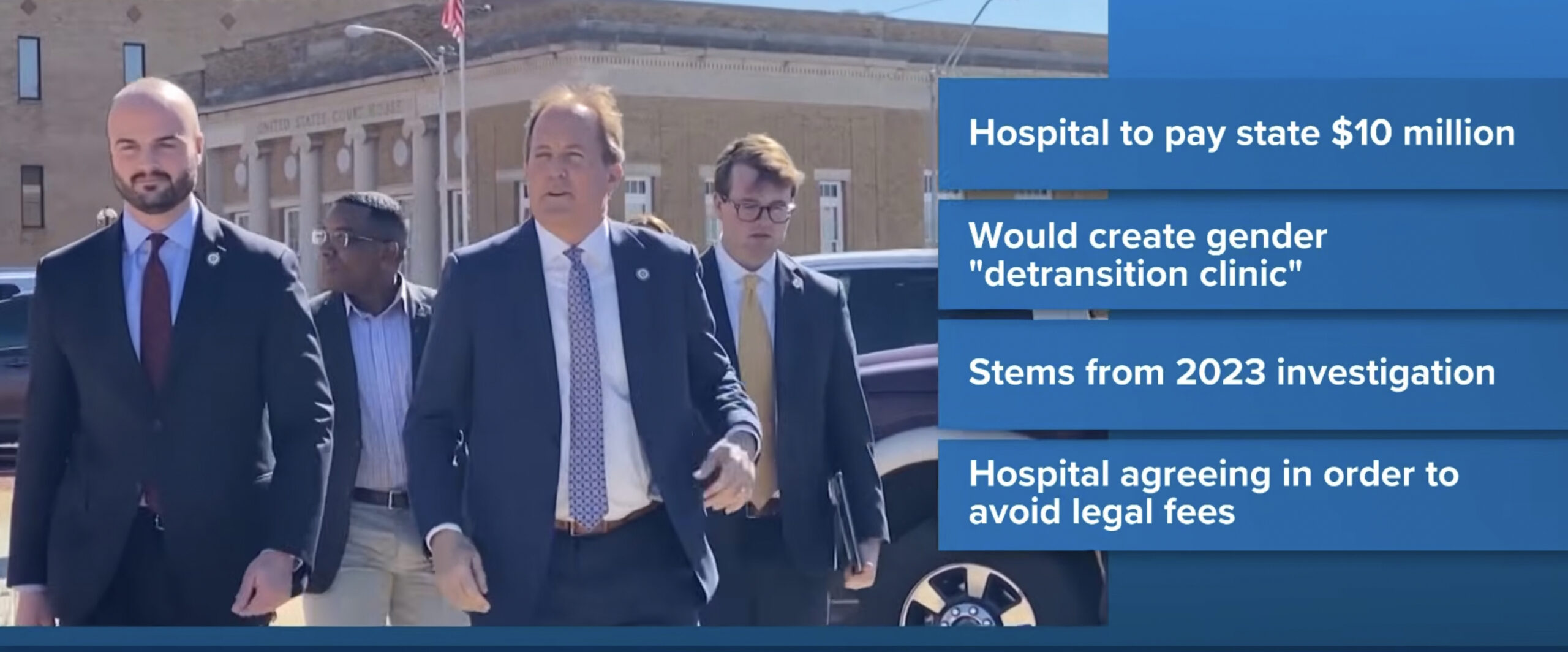
Texas Attorney General Ken Paxton announced a settlement with Texas Children’s Hospital in Houston over the hospital’s long practice of treating minors with cross-sex hormones and transgender surgeries, with the agreement centering on allegations of billing fraud and improper insurance claims.
The settlement announced by Texas Attorney General Ken Paxton targets a pattern the state says involved using insurance billing codes that did not match the care actually provided, a practice at the center of scrutiny for some transgender medical programs. State officials framed the case as more than a medical dispute, positioning it as a straightforward issue of insurance integrity and consumer protection. That focus turned the legal discussion toward financial accountability rather than purely clinical debate.
At issue is billing fraud, which the state alleges happened when providers described procedures and services in a way that enabled higher reimbursements or covered treatments that otherwise would not qualify. Insurers and taxpayers bear the cost when codes are misused, and regulators argue those costs are passed on to everyone through higher premiums and strained public programs. From the Republican perspective driving this enforcement, fraud of any kind is unacceptable, especially when it involves care for minors.
Republican lawmakers and officials have emphasized protecting children and families as central to the state’s intervention, arguing that medical decisions affecting minors should be transparent and accountable to parents and elected authorities. The Attorney General framed enforcement as a check against both medical overreach and financial deception, reflecting broader conservative concerns about the intersection of medicine, government funding, and parental rights. That combination of legal and moral language shaped public perception of the case from the start.
On the legal side, the settlement underscores how Medicaid rules and private-insurance regulations can be enforced to address alleged abuses, with penalties and corrective provisions available when billing practices violate state or federal standards. Investigations like this one often involve audits of claims, subpoenas for records, and negotiated remedies that can include restitution, compliance plans, and monitoring. For state officials, these tools are standard fare; for hospitals, they are disruptive and costly, prompting both internal reviews and public statements.
Clinicians and ethicists who question the state’s approach point to the complexity of treating gender dysphoria and the need for individualized care, but the state’s argument separates clinical judgment from billing practices, insisting that the latter be accurate regardless of the former. Parental consent and informed decision-making are hot-button issues in these debates, and Republicans have used them to argue for strict oversight when minors are involved. That framing appeals to voters who worry about both fiscal responsibility and the protection of children in medical settings.
Texas Children’s Hospital, long known as one of the largest pediatric centers in the country, has been under fire over what critics say was an extended pattern of care that included cross-sex hormones and surgical referrals for minors, coupled in the state’s view with billing that misrepresented those services. Officials say the settlement resolves claims tied to that pattern without turning the agreement into a determination of every clinical judgment made by individual providers. Hospitals generally deny wrongdoing while negotiating to limit financial exposure, and this case followed that well-worn path.
Beyond the immediate parties, the settlement sends a message to other providers nationwide: billing accuracy is enforceable, and state attorneys general can use fraud statutes to compel changes in practice and recordkeeping. If compliance measures are imposed, they may reshuffle how pediatric gender care is documented and reimbursed, potentially making some clinics more cautious about certain treatments for minors. That ripple effect is exactly what proponents of tougher oversight hope to achieve.
The political stakes are high because this issue sits at the confluence of medical practice, parental authority, and state power, and Republicans see enforcement as a way to reclaim decision-making for families and taxpayers rather than institutional actors. Elected officials who back the Attorney General’s move argue that accountability promotes better medicine and protects public funds, while critics warn against politicizing clinical care. Still, the conservative case rests on the claim that safeguarding children and public dollars justifies robust legal action.
Practically speaking, the settlement may require Texas Children’s Hospital to change billing procedures, cooperate with audits, and perhaps make restitution where the state proves improper claims, while avoiding a prolonged court battle that could further polarize the issue. The agreement also keeps the conversation alive about appropriate care for minors, how it is financed, and who gets to decide. As enforcement and policy debates continue, both legal standards and medical protocols are likely to face renewed public scrutiny.

