

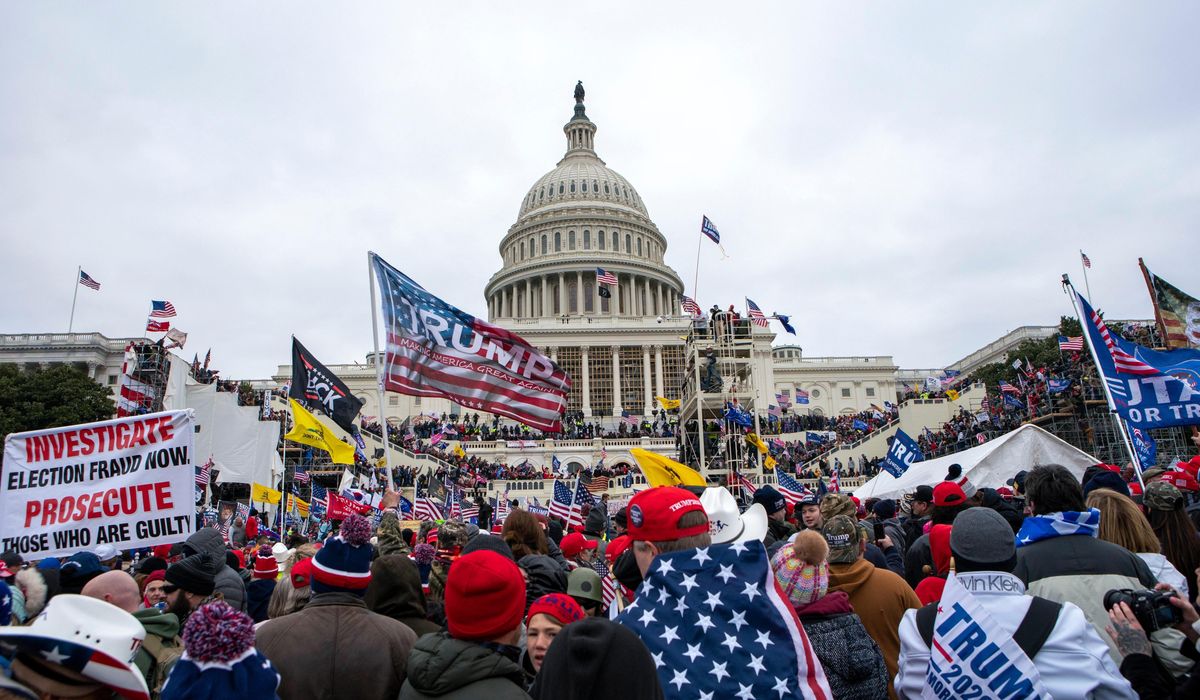
Federal legal fights over Jan. 6 continue to ripple through Washington, with one high-profile defendant drawing attention as he takes his case up the chain and raises broader questions about how the Justice Department is handling January 6 prosecutions.
“Podium Guy,” who was infamously photographed carrying then-House Speaker Nancy Pelosi’s lectern through the U.S. Capitol during the Jan. 6, 2021, riot, has asked the Department of Just
The image of that man carrying the lectern became part of the national conversation about accountability and consequences. Since then, the legal aftermath for many who were at the Capitol has involved months of indictments, plea deals, and contested motions, and this defendant’s recent move is another turn in that long story.
From a Republican perspective, the case highlights persistent concerns about unequal treatment and prosecutorial discretion. Many on the right argue the Justice Department has been inconsistent in deciding who faces harsh charges and who does not, and they view requests like this one as a prompt to ask whether the system is applying the law evenly.
Legal experts on both sides note the Department of Justice has wide authority in how it proceeds, including choices about charging, plea offers, and potential dismissals. Those powers are meant to be used carefully, but critics worry they can be influenced by politics, media attention, or public pressure rather than strictly by legal merit.
That said, defendants at the Capitol have faced a spectrum of outcomes, from acquittals and dropped counts to guilty pleas and sentencing. Courts have had to balance public safety, the need to deter violent conduct, and basic constitutional protections like the presumption of innocence and the right to a fair trial.
For the man pictured with the lectern, the procedural request to the Justice Department opens a new phase: it forces prosecutors to explain their reasoning or reconsider charges, and it could prompt further legal filings from both sides. Republicans who track these cases see each filing as a test of whether the system will show transparency and restraint where appropriate.
Public debate around Jan. 6 prosecutions often mixes legal detail with political messaging, which complicates how these stories are reported and perceived. Conservative commentators argue that selective enforcement erodes trust in institutions, while others insist that accountability for violence and illegal entry into the Capitol is nonnegotiable.
Regardless of where someone stands politically, the courts remain the place where these disputes get hashed out. Judges, not columnists or social media mobs, ultimately decide the legality of charges, the admissibility of evidence, and whether a case should proceed to trial or be resolved another way.
As this particular matter moves forward, look for prosecutorial briefs, defense motions, and possible hearings where each side will lay out legal and factual reasons for their positions. The outcome will matter not only for the individual involved but also for how future Jan. 6-related cases are handled and how public confidence in the justice system holds up.
While the story is ongoing, it underscores familiar themes: the clash between vigorous enforcement and civil liberties, the role of prosecutors in setting priorities, and the political heat that follows high-profile defendants. Republicans will continue to press for clarity and fairness, arguing that the justice system must be blind to politics while still upholding law and order.

