

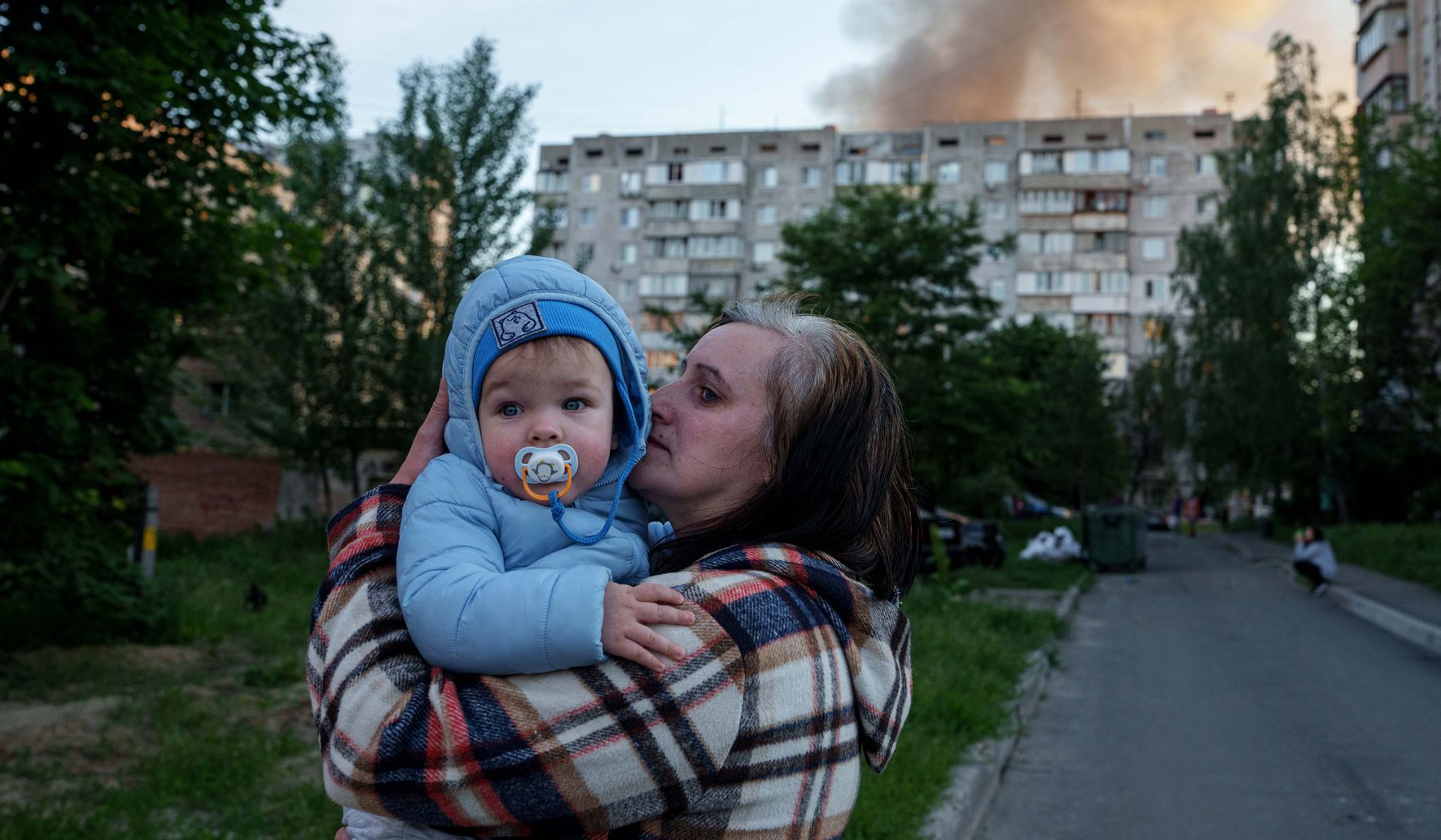
Russia launched hundreds of drones and dozens of missiles against Kyiv and other Ukrainian cities overnight, killing at least 18 civilians and wounding more than 100 others, authorities said Tuesday.
The assault came in the dead of night and left neighborhoods scarred and families grieving, showing once again how this conflict keeps spilling violence into civilian life. Emergency services responded under fire, pulling survivors from rubble and tallying the human cost while hospitals treated the wounded. Local officials gave the casualty figures and described a city that faced waves of strikes in rapid succession.
Witnesses described bright streaks crossing the sky before thunderous impacts shook buildings and shattered windows across Kyiv and surrounding towns. Power outages and fires complicated rescue work, stretching local capacities thin and forcing urgent calls for outside support and equipment. The scale of the attack, with hundreds of drones combined with dozens of missiles, signals a sustained campaign rather than an isolated raid.
From a Republican viewpoint, this is proof of the brutal and indiscriminate nature of the Kremlin’s military strategy, a policy that targets civilians and critical infrastructure without regard. The pattern has hardened the conviction among many conservatives that stronger, more immediate aid to Ukraine is not optional but strategic. That argument centers on denying Russia the ability to keep striking population centers and on maintaining NATO credibility.
Military analysts point out that the mix of drones and missiles complicates air defenses and forces defenders to choose where to allocate scarce interceptors. Ukraine has improved its systems, but gaps remain and attacks like this test them to the limit, exposing vulnerabilities in layered defenses. The result is tragic: civilian casualties rise and the question of how to restore deterrence becomes louder in policy debates.
International reaction has been predictable yet muted in different quarters, with condemnations and expressions of concern from allies but not the immediate battlefield-level reinforcements some Republican voices demand. Critics argue that signaling only disapproval while delaying delivery of advanced air defense systems sends the wrong message to Moscow. The political calculus in capitals now includes the hard fact that these strikes will keep coming until Russia faces prohibitive costs on the ground and in the air.
On the home front in Ukraine, communities rallied to support the injured and displaced even as they feared further strikes, showing resilience that commands respect. Volunteers, medics, and local officials organized shelters and medical triage points while clearing debris from damaged blocks. The human response is strong, but it is not a substitute for hardware that can stop missiles and drones before they hit populated areas.
For policymakers watching from Washington and other allied capitals, this attack sharpens the debate over timing and scale of assistance, and over whether to prioritize longer-range interceptors, ammunition, or training and logistics. Republicans argue for a clear shift toward tools that will blunt future waves of strikes and help Ukraine defend its civilians more effectively. The tragedy here is immediate, but the strategic choices made now will shape whether similar nights repeat themselves.
As recovery begins in the affected neighborhoods, the tally of at least 18 dead and more than 100 wounded will be added to a grim ledger that has defined this war for civilians on both sides. The images of shattered streets and smoke rising over Kyiv are a reminder that conflict still imposes a human price far beyond battlefield lines. Authorities said Tuesday that the assault was one of the most intense in recent weeks, underlining an urgent need to reassess how best to protect noncombatants and deter further attacks.

