

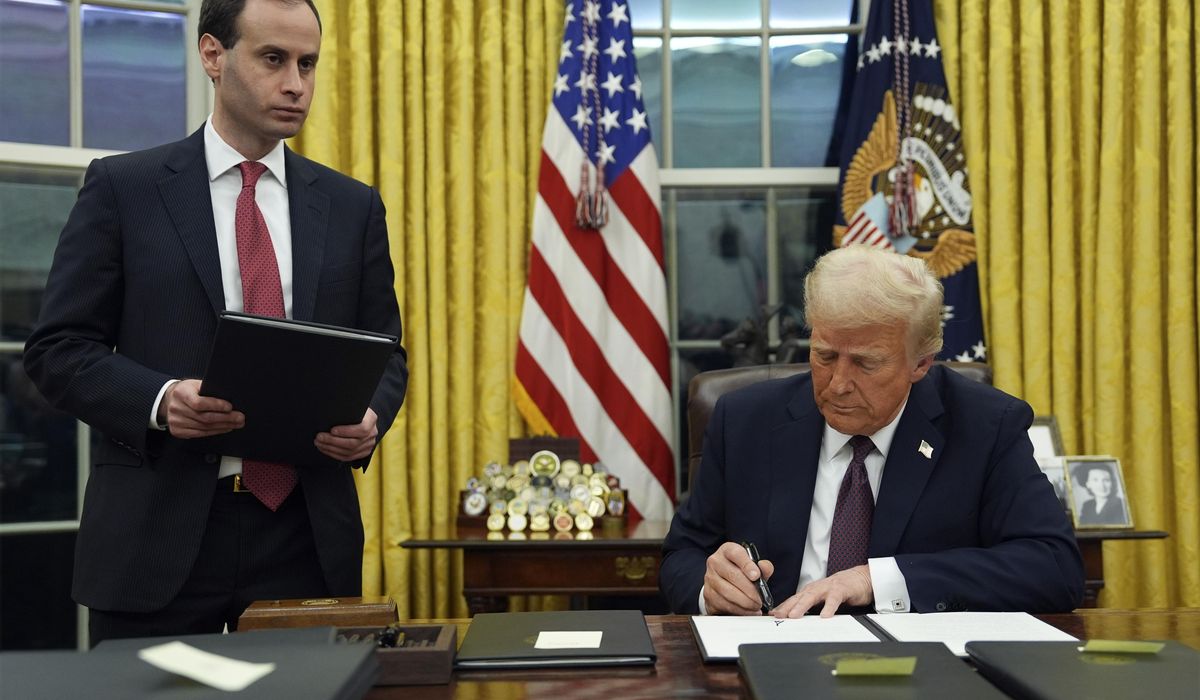
President Trump said Sunday he will promote his staff secretary, Will Scharf, to the role of White House counsel. This move signals a tighter legal team inside the West Wing and a preference for trusted aides to handle pressing legal and political battles.
This is a clear, disciplined staffing choice from a president who values loyalty and competence at the center of his operation. The White House counsel job is about more than paperwork; it shapes how the administration responds to investigations, litigation, and high-stakes decisions. Having someone who already knows the internal rhythm reduces friction and gives the president steadier legal guidance day to day.
Promoting from within sends a message that continuity matters when legal storms appear. Outside critics tend to assume turnover or chaos, but elevating an established aide keeps institutional knowledge where it belongs. For supporters, it means the president trusts someone who already understands his priorities and can translate them into defensible legal positions.
A strong counsel does more than react to problems; they anticipate them and steer the president away from avoidable pitfalls. That preventive role is crucial when political opponents weaponize inquiries or when federal and state authorities overlap. A counsel who knows the team can quickly marshal documents, coordinate with outside lawyers and prepare the administration for hearings without losing strategic focus.
The promotion also recalibrates how the White House will handle communications about legal matters. Public messaging, legal filings and interactions with Congress are all connected, and a unified approach helps keep those lines steady. In practice, that means tighter coordination between communications, policy advisers and the legal team, which is exactly what an administration needs when pressure ramps up.
This personnel move matters for the broader political fight as well. Opponents will look for openings, and a confident, cohesive legal posture makes it harder for them to drive the story. For voters who care about strong leadership, replacing an outsider or interim with a trusted insider is reassurance that the White House is not being driven by panic or turnover.
From a practical standpoint, the counsel must balance legal defense with institutional integrity, and that balance is easier when the person in the role understands the operations and the personalities involved. That helps avoid missteps that could be exploited in court or in the press. Supporters should expect a steady, strategic legal voice from the counsel’s office moving forward.
Finally, this choice reflects the president’s broader approach to staffing: pick people who know the job, stand by the administration’s goals and can act swiftly under pressure. In a polarized environment where every decision is parsed and politicized, having an experienced, trusted legal advisor close at hand is a political and operational advantage. The move underscores the administration’s intent to be organized and proactive when legal challenges arise.

