

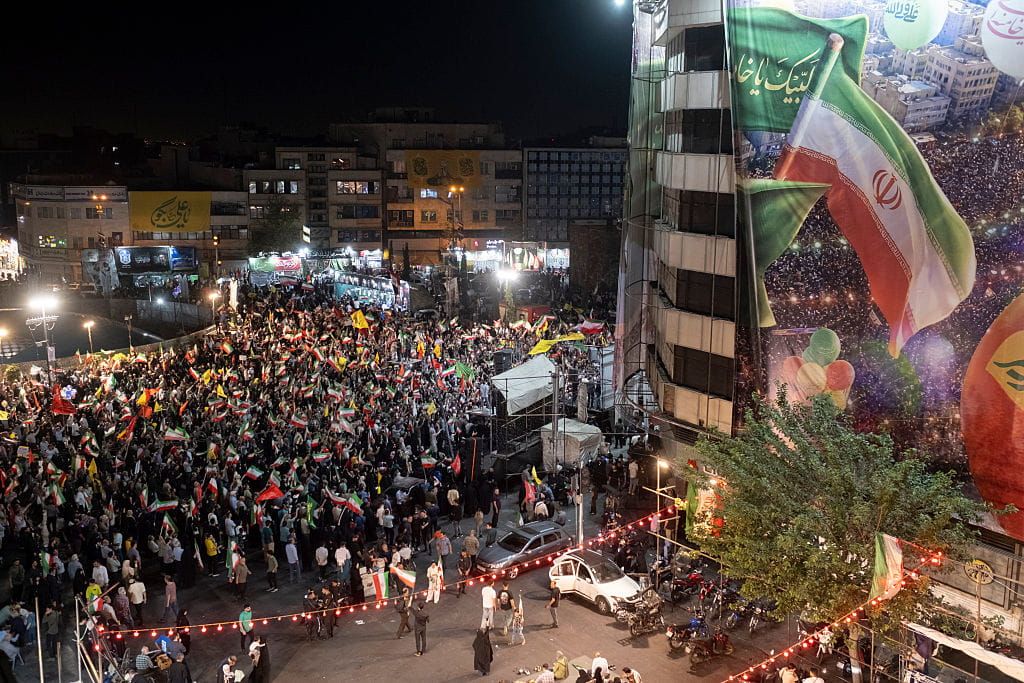
The United States launched strikes against Iranian targets after an American Apache helicopter was shot down, escalating tensions on Jun 11, 2026 and prompting sharp debate over the right balance between deterrence and escalation.
The downing of an Apache and the U.S. strikes that followed have snapped the region into renewed instability, exposing a hard truth about modern deterrence: weakness invites risk. “The conflict has become a battle of fits.” That line captures how reactive postures and tit-for-tat responses now dominate decision making.
From a Republican point of view, the strikes were a necessary demonstration of resolve to punish aggression and protect American personnel and assets. When a nation tolerates attacks on its forces, the risk multiplies; measured, forceful responses are meant to redraw red lines and raise the cost of future attacks for Iran and its proxies.
Officials say the Apache was operating in a contested area when it was hit, and Washington assessed Iranian-linked forces were responsible for the strike. That assessment, whether by direct action or through proxies, points to a pattern of aggression that must be confronted before it becomes routine and emboldens further attacks on coalition and allied forces.
Critics on the left and some foreign commentators will warn that strikes risk a wider war, but deterrence without consequence is no deterrence at all. A posture that favors only words and sanctions invites miscalculation, and a clear, calibrated military response forces adversaries to reconsider opportunistic behavior.
Lawmakers and analysts now face hard questions about how to hold Iran accountable beyond single reprisals, including tighter sanctions enforcement and longer-term strategies to degrade the networks that arm and direct proxy attacks. Republicans argue that pressure should be sustained and coupled with diplomatic isolation; half-measures only signal that the United States blinks under pressure.
At home, messaging matters: leaders must make it clear that defending American lives and interests is not provocative, it is essential. Leadership that projects strength reassures partners and deters rivals, while muddled signals encourage further testing of U.S. commitments across the Middle East.
Regional partners are watching closely, weighing their own security choices as conflicts spill over borders and airspace. The danger is that a cycle of strikes and retaliations creates persistent instability that undermines commerce, energy security, and the safety of civilians, making a robust deterrent posture even more urgent.
Military planners will say the recent strikes were designed to be precise and limited, intended to degrade capabilities tied to the Apache attack while avoiding a runaway escalation. Strategic clarity—what is permitted, what will not be tolerated, and what consequences follow—remains the best tool for preventing further losses and protecting American interests abroad.
As the dust settles, Congress and the administration should consider policy adjustments that harden deterrence and reduce exposure to Iranian proxies, including assistance to partners, improved air defenses, and tighter interdiction efforts. The goal should be to deny adversaries easy gains and to restore a predictable order where aggression carries clear and consistent costs.

