

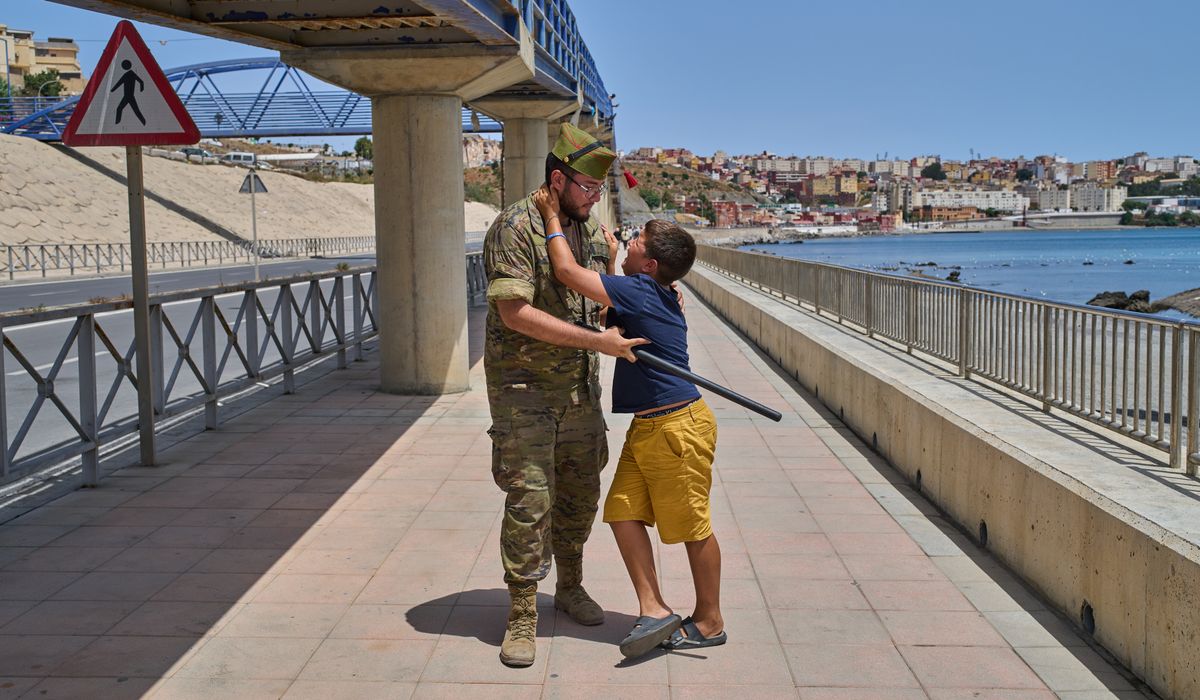
A diplomatic spat between Spain and Italy over the rush of tens of thousands of migrants to the Spanish territory of Ceuta escalated on Saturday after the government in Madrid announced border control.
What we saw in Ceuta is a border crisis that quickly became political. The sudden movement of tens of thousands of migrants into the Spanish territory of Ceuta tested local capacity and pushed Madrid to act. When the government in Madrid announced border control, the situation moved from a humanitarian issue into a diplomatic standoff.
From a conservative viewpoint, the first priority is straightforward: borders and order. Allowing mass, unregulated crossings undermines national sovereignty and strains municipal services that were not built to handle sudden population surges. Spain’s decision to reinforce controls reflects a government’s duty to protect its citizens and maintain lawful entry procedures.
There are practical consequences when thousands arrive in a matter of days. Local hospitals, schools, and housing resources face immediate pressure, and integration plans get thrown off track. Responsible governments should plan for manageable legal migration channels while retaining the ability to close gaps that criminal networks exploit.
Politically, the dispute between capitals highlights a bigger question for Europe about who shoulders responsibility. No single country should be left to bear disproportionate burdens because of geography or temporary policy gaps. A refusal to enforce borders invites irregular movement, and that problem spreads beyond one city or one coast.
Madrid’s move to step up border control is also a message about deterrence. If a country shows it can and will secure its access points, smugglers and traffickers lose their leverage. Deterrence is not about being unkind to people in need, it is about preventing dangerous journeys that end in tragedy and exploitation.
There is also a domestic political angle that cannot be ignored. Governments that tolerate unchecked flows risk fueling populist backlash and empowering hardline voices. Conservatives argue that measured, decisive action on borders reduces polarization by offering clear policy outcomes rather than chaos and rhetoric.
Any diplomatic friction between Spain and Italy should be handled with candor and clear priorities. Both countries have interests in safe, orderly migration policies and in preventing the destabilizing effects of sudden population shocks. Constructive discussion is useful, but it cannot replace the basic duty of a state to secure its frontiers.
Finally, this episode underlines that migration is both an immediate management challenge and a test of long-term policy. European nations need predictable, enforceable rules and cooperative mechanisms that respect sovereignty while sharing responsibility. In the meantime, national leaders must be willing to act when circumstances demand control at the border.

