

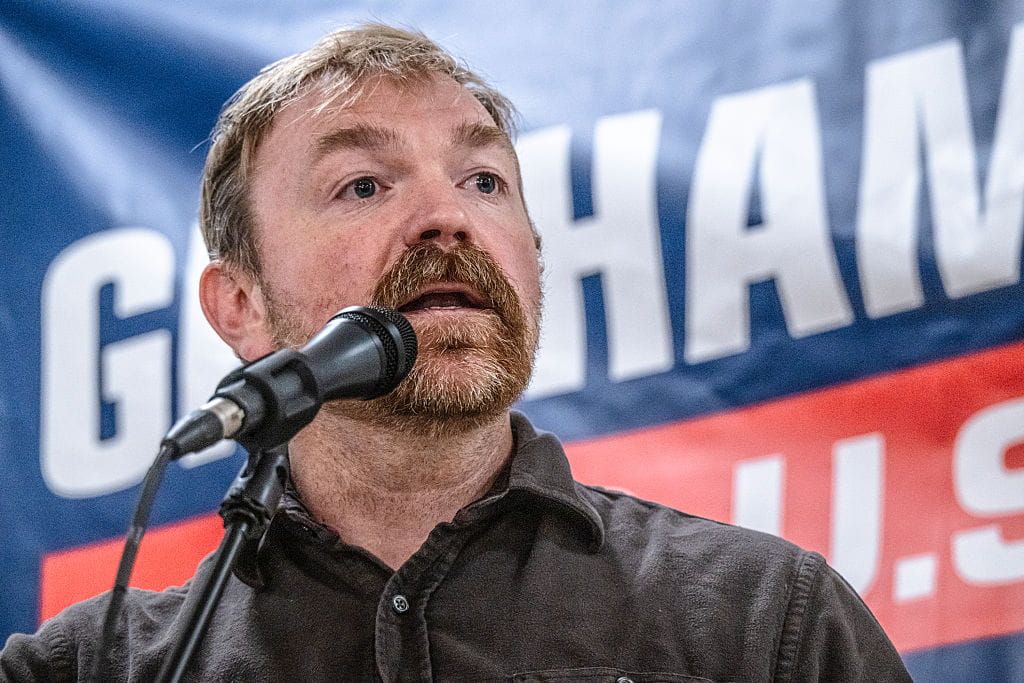
This article examines how Graham Platner confronted several progressive claims and the political response that followed, noting key moments and dates tied to the debate.
Graham Platner has become a focal point for Republicans and conservatives pushing back on mainstream leftist talking points. His interventions have forced public debate on policy and narrative, and stirred reactions across media and political circles on Jun 18, 2026.
Multiple leftist narratives fall by the wayside. Graham Platner — (Photo by Laura Brett/Getty Images. His appearances and arguments have been picked over for weaknesses and strengths alike, and those exchanges have shifted the terms of argument in several arenas.
Platner’s approach mixes data, direct questions, and a tight rhetorical focus aimed at exposing contradictions within progressive positions. He targets what he and many on the right see as overreach and incoherence in areas like public safety, fiscal policy, and cultural messaging.
On public safety, Platner highlights the practical consequences of policy proposals that prioritize theory over results. He presses on outcomes: response times, enforcement, and the real-world safety of neighborhoods, arguing that slogans do not substitute for measured policy.
When it comes to economic claims, Platner pushes back against promises that assume endless government intervention will always produce equitable outcomes. He argues for accountability in spending, realistic assessments of incentive effects, and policies that promote growth rather than dependence.
Platner has also taken aim at energy and environmental claims where he sees alarmist conclusions divorced from technological and economic realities. He stresses the need for reliable power, affordable energy for working families, and a balanced transition that does not punish consumers or national industry.
Cultural issues receive a similar line of attack: Platner insists that civic norms and individual responsibility are indispensable to healthy communities. He frames arguments around consequences for parents, schools, and employers rather than abstract identity narratives.
Critics on the left accuse Platner of oversimplifying complex issues, but his supporters say that blunt questions expose inconsistencies the media and politicians too often ignore. The exchange leaves voters evaluating not just isolated claims but the judgment and priorities of those making them.
Platner’s presence has policy implications beyond sound bites, because sustained pressure can change legislative language and public expectations. Lawmakers respond when narratives shift and voters demand answers rooted in practicality and accountability.
Whether you agree with his conclusions or not, Platner’s interventions have made the debate sharper and forced progressives to defend specifics rather than rely on broad slogans. That dynamic will shape contests and conversations as the political calendar advances from this moment in 2026.

