

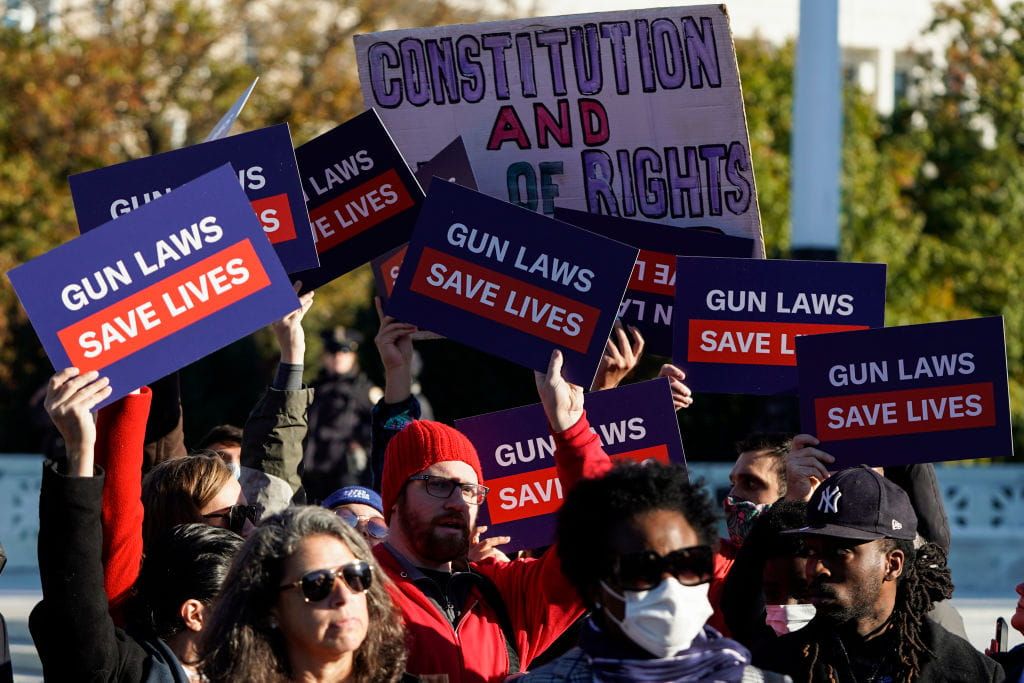
The Supreme Court has stepped back into America’s gun fight, confronting bans on popular handguns and the broader assault weapons debate, and the outcome will shape how the Second Amendment is applied across states and localities.
The court’s renewed involvement arrives as state and local officials test the limits of firearm regulation, and the debate is sharpening on both legal and political fronts. “Glock bans and the coming day of reckoning for assault weapons.” sums up the tension at play: cherished self-defense tools are on the chopping block while courts sort through constitutional claims. This case cycle will force judges to decide whether longstanding gun ownership traditions still matter.
For Republicans and gun owners, the fight is straightforward: the right to keep and bear arms is fundamental and should not be whittled away by novel bans. When cities and some states move to prohibit specific brands or categories of firearms, it raises the question of where restrictions stop. Voters who back the Second Amendment see these measures as an attack on personal safety and an overreach by regulators.
From a legal angle, the contest will pivot on how the judiciary balances historical precedent against modern regulatory aims. Courts are being asked to translate a centuries-old constitutional guarantee into decisions that cover twenty-first-century weapons and mass-produced firearms. That translation matters because judges create the contours of rights through doctrine, and those contours will dictate future legislation.
Supporters of bans argue public safety demands bold action in the face of mass shootings and gun crime, but the counterargument is equally stark: rights do not evaporate because enforcement is hard. If the Supreme Court blesses broad bans, lower courts may follow, inviting more restrictions that chip away at effective self-defense for law-abiding citizens. That slippery slope is the core worry driving conservative and libertarian skepticism.
Political consequences are unavoidable. Decisions that curb gun ownership energize grassroots activists, shift campaign messaging, and can swing turnout in tight races. Republicans tend to frame these rulings as judicial or legislative power grabs that undermine individual liberty, while defenders of stricter controls cast them as commonsense safety measures. The courtroom thus becomes a battleground that feeds back into electoral politics.
For judges who respect textualism and original meaning, the baseline is clear: the government must show a historical tradition supporting any new restriction. Where that tradition is thin or nonexistent, restrictions risk being unconstitutional. Conservative jurists see this approach as restoring constitutional stability rather than inventing ad hoc rules to satisfy current policy preferences.
There’s also a cultural element: firearms are woven into American life for hunting, sport, and defense, and many citizens view bans on specific brands or features as arbitrary. That sense of arbitrariness fuels distrust in institutions that push through regulations without broad public consensus. When the law feels illegitimate to large swaths of the population, compliance and respect for authority suffer.
The coming rulings will shape not just legal doctrine but the practical availability of firearms across the country, and the implications will reach into state legislatures and municipal halls. Lawmakers will watch the court’s language closely as they draft statutes and respond to political pressure. Whatever the Court decides, the debate over guns in America is far from settled and will reverberate for years to come.

