

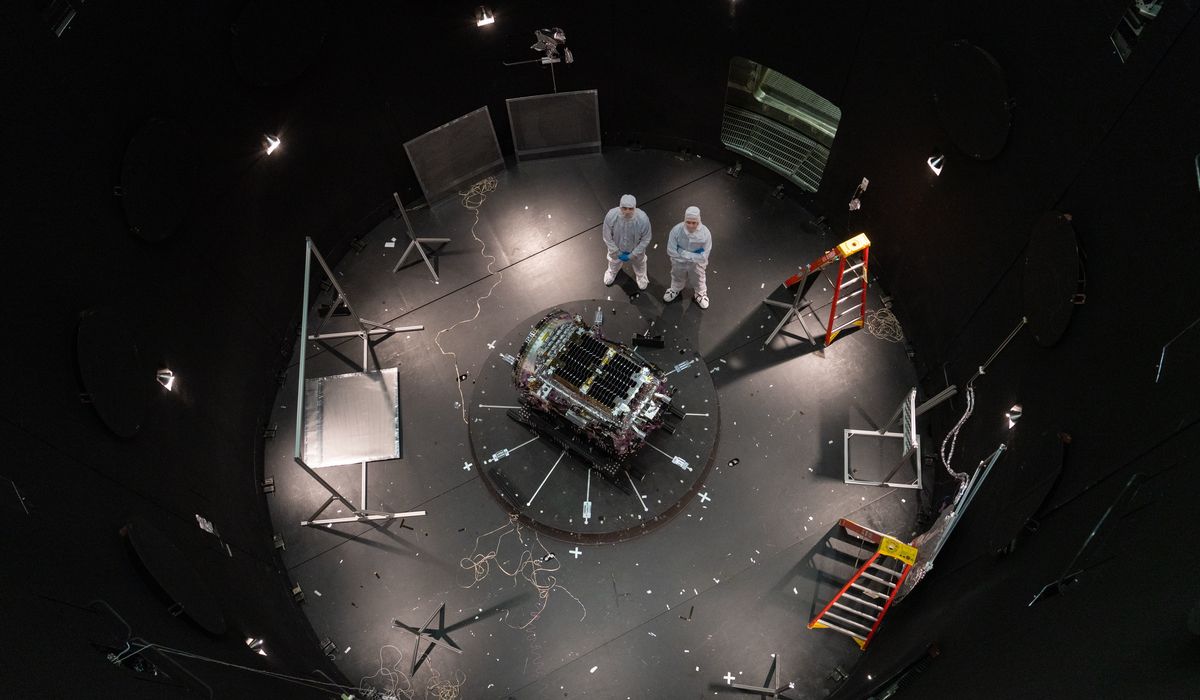
A three-armed spacecraft rocketed into orbit Friday to rescue a NASA telescope that’s in danger of crashing back to Earth.
The spacecraft’s launch marks a clear shift in how agencies plan to protect and extend the life of vital space assets. Engineers built the vehicle with three robotic arms so it can reach, grasp, and stabilize a failing observatory without relying on fragile manual procedures. The mission is designed to buy time and capability for a telescope that otherwise faces an uncontrolled return to Earth.
Once on station, the robotic arms will perform delicate maneuvers to secure the telescope and arrest any destabilizing motion. Those arms combine reach, fine manipulation, and redundancy so one can compensate if another struggles. The operation will be watched closely by mission control, where teams can intervene and re-plan in real time if the hardware encounters unexpected behavior.
The immediate objective is to change the telescope’s trajectory and reduce the chance of debris or uncontrolled reentry. That means grappling with systems that were never intended to be serviced in orbit and handling worn components that could fail under stress. Specialists will try to avoid putting extra strain on fragile structures while achieving the corrections necessary to keep the observatory in a safe orbit.
Beyond the rescue itself, the mission serves as a testbed for a new class of in-orbit servicing capabilities. If successful, it will show that aging or damaged satellites can be refurbished, refueled, or repositioned rather than replaced. That capability could cut costs and reduce waste in Earth orbit while extending the productive lives of expensive instruments.
Technicians rehearsed the capture sequence multiple times in simulators that model the telescope’s exact motion and response to contact. Those rehearsals are crucial because any error during the first physical approach could trigger tumbling or other hazards. Mission planners built conservative windows and staged maneuvers so each step can be assessed before the next is attempted.
This kind of mission also raises complex decision points about liability, debris mitigation, and long-term stewardship of orbital space. Teams must balance the immediate goal of preventing reentry with broader responsibilities to avoid creating more pieces that threaten other spacecraft. International observers will likely study the operation for lessons on how to coordinate future interventions in crowded orbits.
Operationally, the spacecraft will use a mix of sensors—cameras, LIDAR, and telemetry—to judge distance and orientation during the approach. Those inputs feed algorithms that translate human commands into precise arm movements, with safeguards that halt activity if thresholds are exceeded. The combination of automated control and human oversight is intended to lower the risk of accidental impact during the delicate capture.
For NASA and partner organizations, the mission is also a public demonstration that engineering can meet unpredictable challenges. Agencies will publish technical briefings on what worked and what didn’t, which will inform standards for future servicing vehicles. If the rescue succeeds, operators will have a new option for dealing with at-risk assets that otherwise would be written off.
The spacecraft’s arrival in orbit Friday starts a tightly scheduled period of inspection, approach, and capture that could last weeks. Controllers will prioritize safety, choosing maneuvers that preserve both the telescope and the servicer even if the timeline stretches. Whatever the outcome, the operation will expand practical knowledge about how to keep complex machines operating in a harsh, unforgiving environment.

