

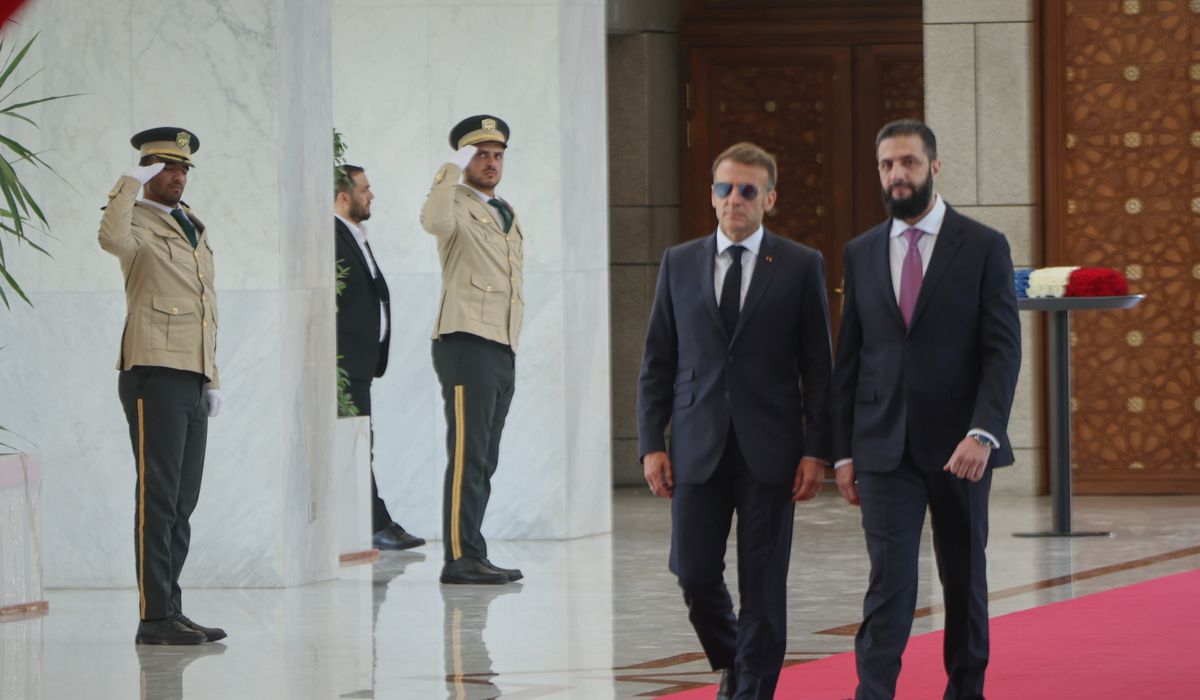
Explosions shook Damascus on Tuesday during a high-profile meeting between France’s president and his Syrian counterpart, injuring at least 18 people, according to Syria’s Interior Ministry.
Damascus was hit by explosions while France’s president met with his Syrian counterpart in what was described as a landmark visit. The blasts wounded at least 18 people, Syria’s Interior Ministry said, and underscored how volatile the capital remains even when diplomats arrive for headline-making talks.
For conservatives watching from abroad, the optics are troubling: a major European leader travels into a tinderbox and violence breaks out. That sequence raises honest questions about timing, security planning, and whether engagement rewards regimes that have long been hostile to Western interests.
Observers will point out that visits like this are complicated and sometimes necessary, but they also carry risks. When explosions occur as dignitaries meet, it sends a message to domestic audiences and foreign backers that the ground is unsettled and that any rapprochement can come with a security price.
Republican-leaning analysts tend to view this through the twin lenses of realpolitik and accountability. Realpolitik acknowledges the strategic calculations behind diplomacy, while accountability insists those calculations must include consequences for behavior that undermines regional stability.
There are practical questions on the table: who benefits from the disruption, whether Iran or its proxies see advantage in destabilizing a rapprochement, and how Russia reads the scene. None of those are easily answered from the outside, but policy should be informed by sober assessment, not merely by the drama of a photo op.
Domestically, U.S. and allied policymakers should demand clear intelligence sharing and contingency plans when leaders engage with regimes that have track records of repression and regional meddling. If a landmark visit is to proceed, it must be backed by comprehensive risk mitigation—diplomatic moves without guardrails invite blowback.
Humanitarian and security concerns must also be front and center. Eighteen wounded is a measurable toll, and even when officials call an incident isolated, the pattern of violence in Syria remains a warning. Any move to normalize relations needs to reckon with the human cost sustained by civilians who continue to live amid uncertainty.
Finally, this episode should remind Western capitals that symbolism and strategy are not interchangeable. High-profile engagements can open doors, but they also offer leverage that should be used to press for concrete reforms, safe zones for civilians, and accountability for actors who fuel instability.

