

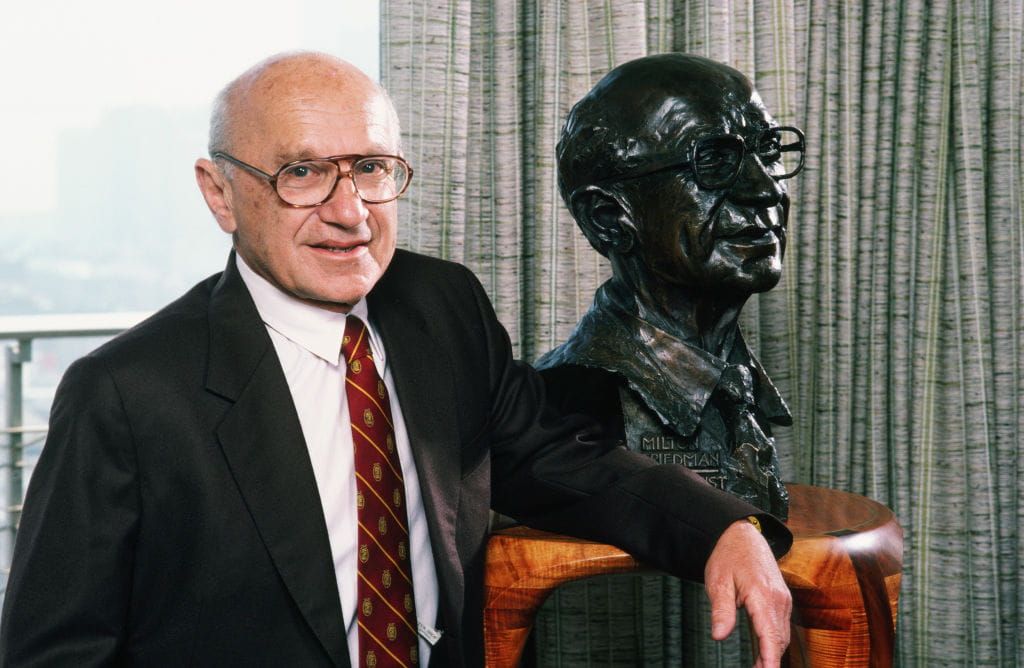
A straightforward look at J.D. Vance’s public break with Milton Friedman’s ideas and why that split matters for the Republican movement and conservative economic policy.
J.D. Vance has pushed a clear critique of Milton Friedman’s free-market orthodoxy, and the exchange has landed loud and messy in conservative circles. Vance frames his arguments around economic nationalism and cultural conservatism, pitching a different set of priorities than classical liberal economists. The debate is about more than theory; it’s about which policies the Republican Party will champion going forward.
Milton Friedman built a reputation as a practical, results-oriented economist whose proposals reshaped policy in the late 20th century. His focus on monetary stability, deregulation, and free markets influenced both academic work and real-world governance. Those ideas helped form the economic backbone of many Republicans who came of political age in the Reagan era.
Vance critiques that backbone by arguing for a politics that puts manufacturing, communities, and cultural cohesion ahead of unfettered globalization. He questions whether the trade and migration patterns endorsed by full-throated market advocates always served working-class Americans. That line of attack aims to reframe what conservatives mean by prosperity and national strength.
From a Republican perspective, the instinct to defend free enterprise runs deep because markets have proven their ability to generate growth, innovation, and individual opportunity. Market-friendly policies lowered barriers for entrepreneurs, encouraged investment, and helped lift millions out of poverty over decades. To many conservatives, letting technocratic disengagement from real communities go unchallenged is what opened room for populist backlash.
But there is a tense, practical question in Vance’s approach: how do you foster local resilience without sacrificing the benefits of broad economic freedom? It is one thing to call for policies that help left-behind towns; it is another to abandon the incentives that produce wealth and productivity. The party risks trading long-term prosperity for short-term political theater if it tears down foundational market norms without clear, evidence-based alternatives.
“This ain’t your grandfather’s Republican Party anymore.” That sentence captures the energy and anxiety in contemporary conservatism, where insurgent voices demand tangible results for voters who feel ignored. Vance represents a faction that prioritizes identity and industrial revival, while others want to preserve a more classical economic program. That split is real and it will shape primary fights, messaging, and the policy menu on offer to voters.
The stakes are policy-deep: on taxes, regulation, trade, and monetary discipline, shifting priorities can change outcomes for inflation, job creation, and international competitiveness. Republicans who move away from Friedman-style commitments need credible plans to replace them—plans that still protect entrepreneurship, property rights, and capital formation. Absent that, the party could win rhetorical points but underperform on the economic bench where voters feel the pinch.
Practical politics calls for reconciling the desire to help struggling communities with the discipline that markets provide. That means targeting bad trade deals, investing in workforce development, and fixing regulatory choke points while keeping intact the incentives that reward risk and innovation. Conservatives who want to keep both their principles and their electoral appeal will need to build policies that do more than criticize; they must deliver measurable improvement to real people’s lives.
The Vance-versus-Friedman argument forces Republican leaders to choose how boldly to remake economic doctrine or how cleverly to repair it. The fight will animate debates over trade, industrial policy, and the role of the federal government in local economies. Expect that tension to drive headlines, primary politics, and policy experiments for the next several election cycles.

