

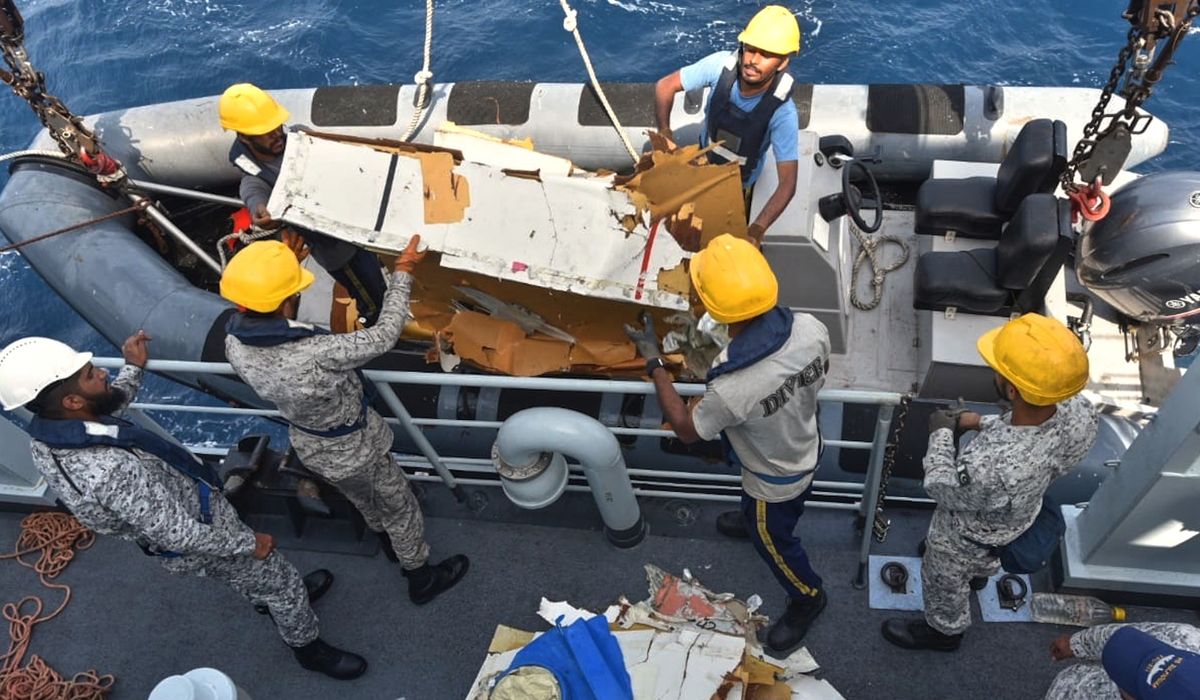
The Pakistan Navy reported recovering more debris from a cargo plane that went down in the Arabian Sea earlier this week; investigators will examine the wreckage as the search effort continues.
Pakistan Navy search teams have recovered additional pieces of wreckage from a cargo plane that crashed into the Arabian Sea earlier this week, and those pieces are now slated for detailed analysis by investigators. The ongoing search and recovery operation is attempting to locate more debris fields and any evidence that could clarify what happened. Authorities are treating the wreckage as critical to understanding the sequence of events leading up to the crash.
Search teams have been combing a wide swath of open water, deploying surface vessels and specialized crews to retrieve whatever they can find. Maritime searches are often complicated by currents, weather, and the breaking up of debris over time, which can scatter parts across a large area. That makes timely recovery vital if investigators are to reconstruct the accident scene accurately.
Once recovered, wreckage is cataloged, photographed, and transported to secure facilities for closer inspection by technical experts. Analysts will examine structural breaks, impact signatures, and any markings or serial numbers that may indicate component failures or maintenance history. Investigators also look for telltale signs of fire, explosion, or progressive structural failure to narrow down possible causes.
Officials typically cross-reference recovered parts against aircraft maintenance logs and manufacturing records to build a timeline of component life and performance. If instrument packages or avionics survive, they can provide immediate clues, but even small fragments can be revealing when matched with engineering databases. The goal is to assemble a factual chain of evidence rather than rush to conclusions.
Search-and-recovery operations at sea often involve multiple agencies working in parallel, including naval units, coast guards, and civil aviation authorities. Coordination aims to keep resources focused on the most promising areas while preserving any evidence found in situ. Teams must balance search priorities with the need to document locations precisely to aid later analysis.
Weather and sea state have a major influence on how quickly wreckage is found and recovered, and rough conditions can delay efforts for days. Strong currents can sweep light debris far from the main impact site, and storms can bury or scatter wreckage further. Because of these variables, investigators work against time to find perishable evidence before the environment alters it beyond recognition.
Forensic examination of recovered material will be methodical, combining visual inspection with laboratory testing when necessary. Metallurgical analyses can show whether parts failed due to fatigue, overload, or corrosion, and chemical tests can detect residues from fuel or explosives. Each test adds a piece to a complex puzzle that investigators must solve to explain the crash.
Although the immediate focus is technical, operational and human factors are also part of standard accident probes. Investigators typically review flight plans, communications, crew records, and air traffic control data to understand the broader operational context. Interviews with maintenance personnel and airline officials can provide background on recent repairs or anomalies reported before the flight.
Authorities often caution that definitive answers will take time, and they resist speculation while evidence is still being collected and compared. The work of piecing together physical evidence and operational records is meticulous, and conclusions generally emerge only after multiple lines of inquiry converge. Families and the public understandably seek clarity quickly, but rigorous investigation demands patience.
Meanwhile, search teams remain active, and recovered pieces will be analyzed as part of a formal investigative process. The data gleaned from those examinations will guide the next steps for investigators and regulators who aim to prevent similar tragedies in the future. Until the analysis is complete, officials say they will continue searching and collecting evidence to build a reliable picture of what happened.

