

Scientists have found complex, sugar-like molecules drifting in cold interstellar clouds, a discovery that shifts how we think about chemical evolution in space and the raw ingredients available during planet formation.
The space between stars just got a little sweeter. New observations reveal molecules with sugar-like structures in dense, icy regions of molecular clouds, and researchers are parsing how these compounds form and survive in such harsh environments.
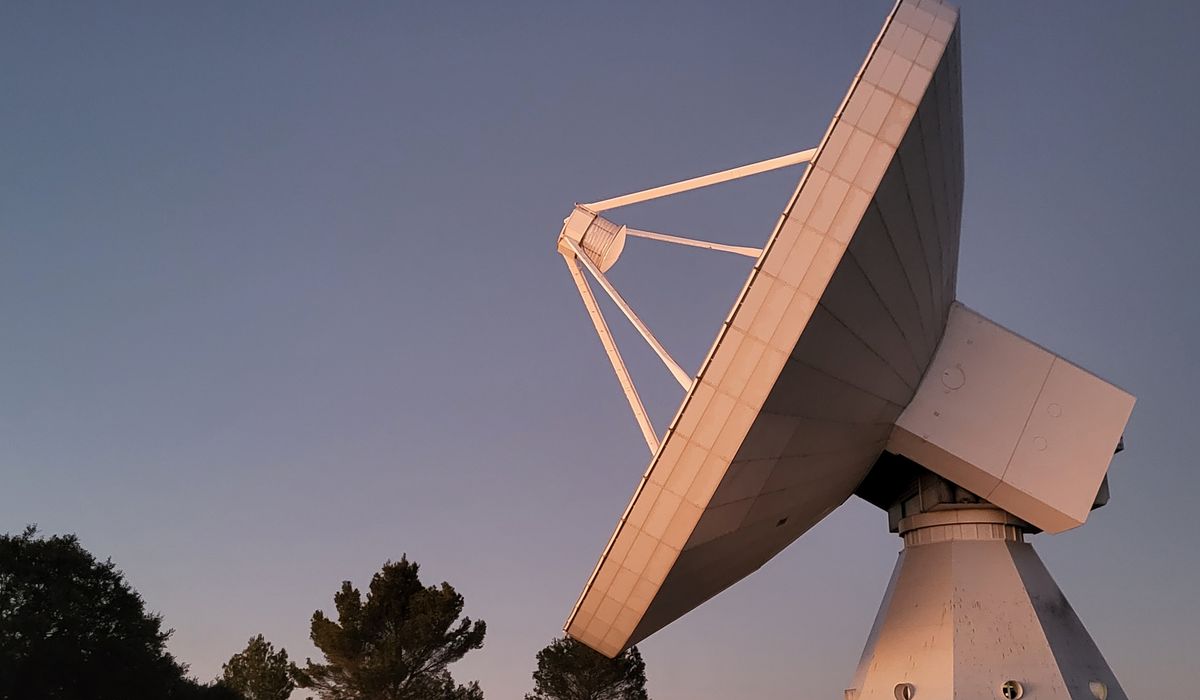
Radio and millimeter-wave telescopes picked up spectral fingerprints that match organic molecules commonly associated with prebiotic chemistry. These detections come from regions where dust and gas are collapsing into new stars and planets, offering a direct link between interstellar chemistry and the material that builds worlds.
Rather than arriving fully formed on planets, these organics appear to build up on icy dust grains through a sequence of simple reactions driven by radiation and low-temperature chemistry. Laboratory analogs demonstrate how energetic particles and ultraviolet light can nudge simple molecules into more complex shapes on ice mantles, and the new observations back up those experimental pathways.
The presence of sugar-like molecules does not mean life is imminent, but it does change the starting lineup for chemistry on young planets. When protoplanetary disks inherit this material, comets and asteroids can trap these organics and deliver them to planetary surfaces during heavy bombardment phases, seeding worlds with a richer chemical toolkit.
One of the surprises is how delicate these species seem to be yet still manage to persist in cold, irradiated space. That resilience suggests they form continuously and are protected within icy layers until warming events or collisions release them into the gas phase, where telescopes can detect them.
These findings also reshape models of chemical complexity across the galaxy, showing that modest conditions can produce surprisingly sophisticated molecules without the need for biological activity. It implies that the ingredients for prebiotic chemistry might be widespread, increasing the odds that planets form with ready-made components for more advanced chemistry.
Future observations will target a broader sample of star-forming regions to see how common these molecules are and how their abundances change with environment. Higher-resolution instruments will map where the organics live inside disks and cores, helping to pinpoint whether they cling to grain surfaces or float free in the gas.
Laboratory work remains vital because spectra can be ambiguous and multiple molecules can produce similar signals. Controlled experiments that simulate interstellar ice chemistry will refine identification and provide reaction rates that feed into astrochemical models, improving our understanding of formation routes and lifetimes.
There are practical implications for missions that will return samples from comets and asteroids, since those bodies may preserve interstellar organics in near-primordial form. Matching remote spectra with returned samples could confirm their interstellar origin and show how those compounds change once locked into solid bodies.
All told, the detection of sugar-like molecules in space nudges the needle on how we view the raw materials of planets and life. It invites a closer look at the subtle chemistry that takes place long before a planet is habitable, and it broadens the scientific conversation about where the building blocks of biology might come from.

