

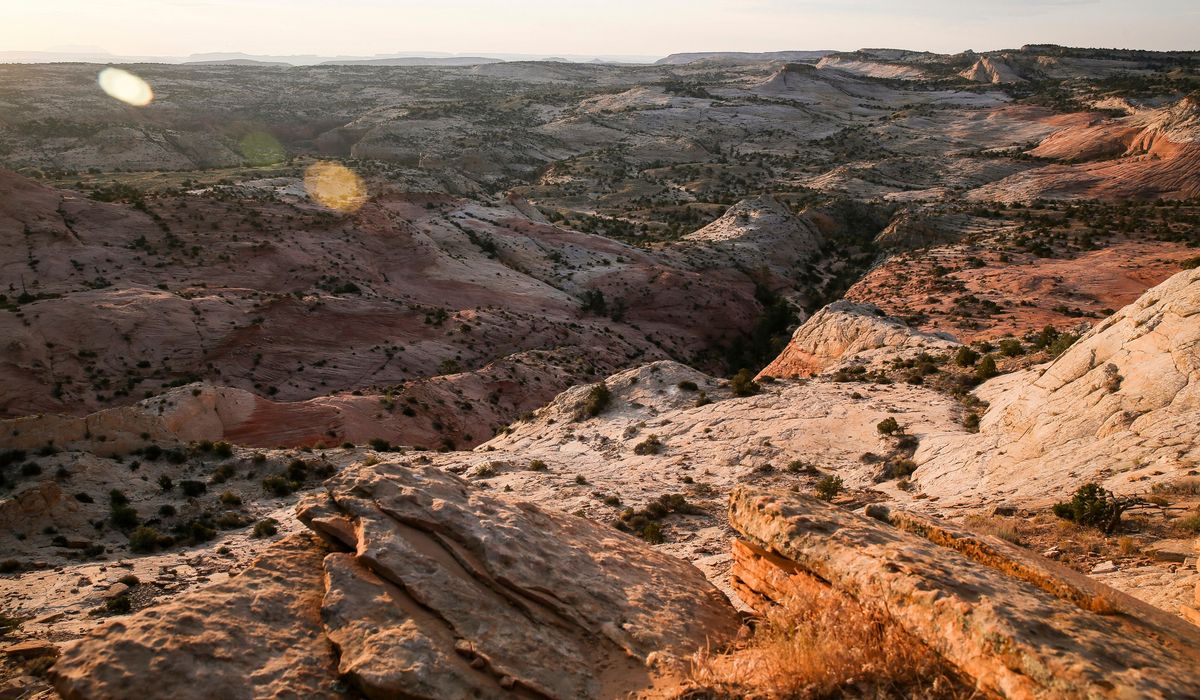
President Trump signed two executive orders Monday slashing nearly 3 million acres from Bears Ears and Grand Staircase-Escalante National Monuments in Utah, reversing Biden-era expansions and reigniti
President Trump moved quickly and decisively, signing two executive orders on a Monday that cut nearly 3 million acres out of Bears Ears and Grand Staircase-Escalante National Monuments in Utah. The actions reverse Biden-era expansions and signal a clear shift in how federal land will be managed. For supporters, this is about restoring balance and returning control to local communities and states.
The basic Republican argument is straightforward: national monument designations under the Antiquities Act have been used to lock up vast swaths of public land without meaningful local input. These executive orders are presented as course corrections meant to reopen lands to multiple uses and traditional local activities. That includes access for ranchers, hunters, fishermen, and outdoor recreation that fuels rural economies.
Backers say the nearly 3 million-acre reduction reflects a practical view of stewardship rather than ideological destruction, arguing the previous expansions ignored on-the-ground realities. They contend that federal overreach had sidelined local voices and choked off economic opportunity in affected counties. The message is that conservation and sensible use can coexist when management decisions are made with local stakeholders at the table.
Administrations of both parties have used the Antiquities Act, but Republicans have increasingly criticized recent large-scale proclamations as attempts to lock up resources permanently. From this perspective, the new orders are an attempt to restore clarity to land use rules and reverse what critics call sweeping, top-down land grabs. The orders also aim to prioritize access and active management over indefinite federal restrictions.
Economically, the argument centers on jobs and sensible development. Supporters point out that careful, limited development of minerals, energy, and grazing can provide steady employment for rural families while federal oversight prevents reckless exploitation. They emphasize that access for recreation and tourism can expand when management shifts away from blanket closures and toward targeted conservation that allows public use.
Critics will call this move reckless and say protections are being stripped away, and legal challenges are likely to follow, but supporters are ready with a counterargument about accountability. Local leaders and many state officials frame the change as restoring the rule of law and respecting property and water rights that matter in everyday life. The dispute will play out in courts and in the court of public opinion, highlighting deeper tensions over who decides how public lands are used.
The real work now will be implementation and possible litigation, with federal courts and Congress likely to see the debate rehashed in legal filings and hearings. Republicans argue that federal agencies should work with states, tribes, and local governments to write rules that protect sensitive areas while allowing reasonable uses elsewhere. That approach is pitched as pragmatic: protect what needs protection, and free the rest for productive uses that sustain communities.
Looking ahead, the orders mark a political and policy inflection point on land management, federal authority, and community control. For advocates of the change, this is about rebalancing priorities so that conservation does not come at the expense of livelihoods and local decision-making. Expect a prolonged battle as opponents challenge the moves and supporters press for clearer, locally informed rules.

