

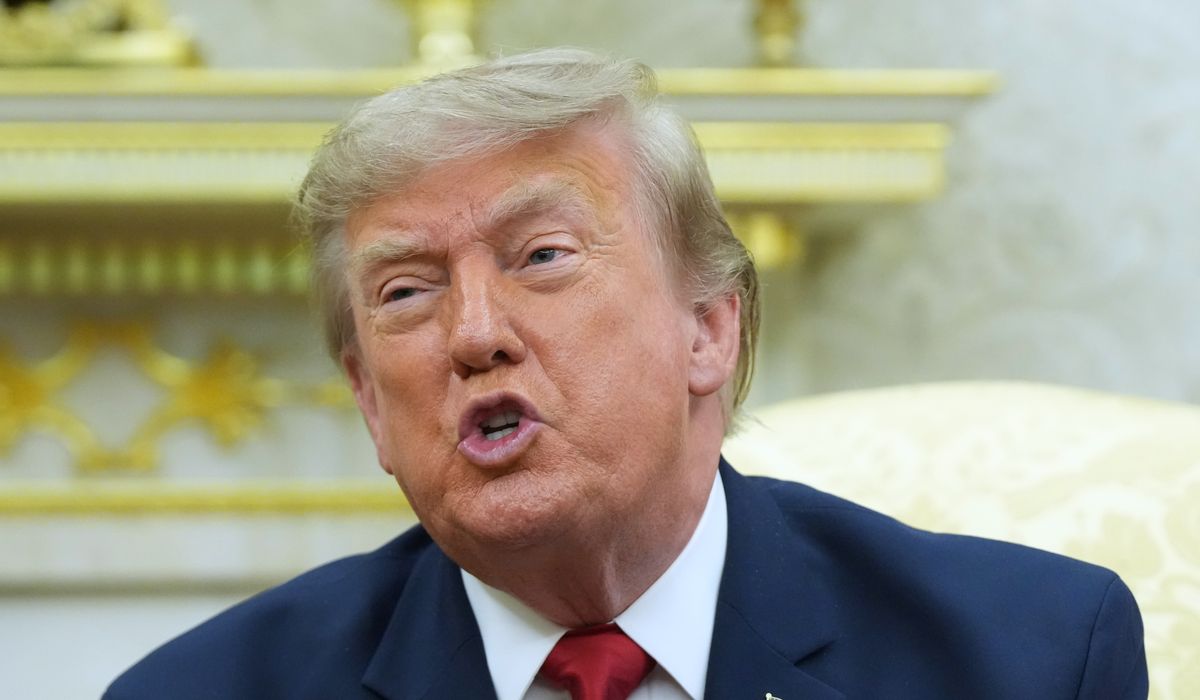
President Trump publicly reinforced U.S. Immigration and Customs Enforcement’s authority to use traffic stops as an enforcement tool after the Department of Homeland Security said its agents would temporarily pause that practice, and he made clear he expects federal law enforcement to prioritize public safety and immigration control.
President Trump pushed back hard, arguing that traffic stops are a legitimate, effective method for finding dangerous individuals and deterring illegal activity, and he framed the DHS pause as a politically motivated retreat that undermines public safety. His comments insisted that federal law enforcement should not be constrained by short-term optics when crime and illegal immigration are ongoing problems communities face every day. The tone was direct and unapologetic, reflecting a Republican view that enforcement matters and that federal agencies should be empowered to act.
Supporters of ICE argue that traffic enforcement has long been a routine, legal tool used to identify fugitives, human traffickers, gang members, and other threats that move on public roads. From this perspective, temporary stops can stop larger crimes before they escalate and give agents opportunities to remove dangerous, removable noncitizens who otherwise blend into communities. Critics say the tactic risks profiling and civil liberties harms, but proponents counter that courts and departmental policies can and should guide lawful, targeted use rather than sweeping moratoria that hamstring agents on the ground.
The debate over policy and practice quickly became political, with Trump framing the DHS decision as a capitulation to pressure rather than a reasoned change in operational doctrine. He emphasized that the job of federal law enforcement is to enforce laws passed by Congress, to protect citizens, and to support state and local partners who often lack the resources to tackle cross-border criminal networks. That argument appeals to voters who prioritize order and who see law enforcement tools as vital levers for national safety and sovereignty.
Legal experts on both sides note that traffic stops can be constitutional when conducted with reasonable suspicion and according to clear guidelines, but that the line between lawful enforcement and abusive tactics can be thin in practice. Advocates for strict oversight call for transparent reporting, body cameras, and clear training benchmarks so stops are tailored and rights are protected. Those who back ICE’s approach say beefed-up oversight should not translate into blanket banishment of effective tactics; instead, it should accompany continued enforcement to maintain public safety.
Practically speaking, ICE agents and DHS officials must balance operational effectiveness and public confidence, and the public wants results that reduce crime and discourage illegal entry. Trump’s message was that accountability should work both ways: agents should operate within the law, but political pressure should not remove the tools that deliver results. Republicans hearing that message tend to support enforcement-first policies, arguing that strong borders and strict immigration enforcement reduce incentives for illicit migration and protect communities from transnational crime.
On the political front, the back-and-forth over traffic stops plays into broader narratives about law and order, immigration policy, and federal control versus local autonomy. Trump’s stance set the tone for Republicans who see pauses or restrictions as concessions to political winds rather than deliberate, necessary reforms. That view positions enforcement as central to a credible immigration policy and frames any limitations as potential encouragement to bad actors who exploit gaps in enforcement.
Even as agencies review tactics and the public asks tough questions about oversight, the practical stakes remain simple: communities want to be safe and expect government to act decisively when laws are broken. The president’s response signaled an insistence that federal agents should keep relevant tools at their disposal while operating under clear rules and supervision. For a base that cares about security, that message lands as a promise of firmness — that enforcement will not be gutted for the sake of political convenience or short-term appearances.

