

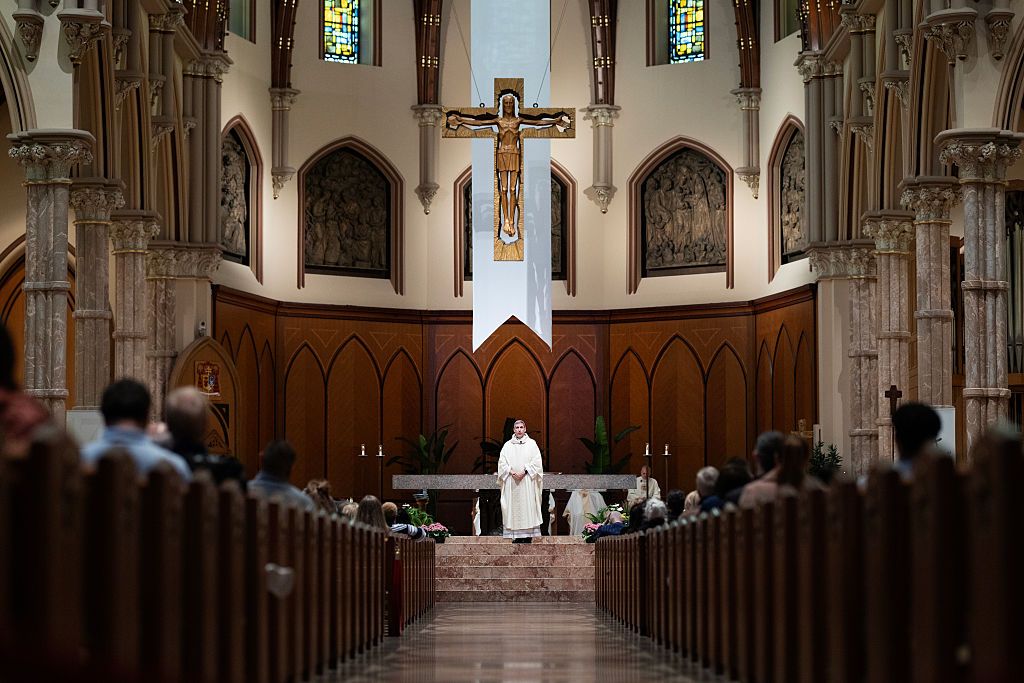
Catholic Nuns Battle in Court to Serve the Poor and Keep the Faith — a legal fight over conscience, care, and who gets to set the rules for religious charities.
The story of Catholic Nuns Battle in Court to Serve the Poor and Keep the Faith is about more than one order of sisters; it’s a test of whether faith-based charities can operate by their beliefs while delivering real help to vulnerable people. Courts and state officials are pushing rules that force religious ministries to choose between violating conscience or closing programs that serve the needy. The dispute raises big questions about free exercise, equal treatment, and the limits of government power.
<p”Extremist judges and states infringe on faith and conscience.” That line captures how many conservatives see the recent legal moves against religious providers, where technical regulations are used to dictate doctrine and personnel decisions. When a government demands compliance with policies that contradict a faith’s core teachings, it does not just regulate activity – it reshapes religious practice itself. For Catholic sisters running shelters and outreach, those changes are not theoretical; they threaten livelihoods and the people who depend on them.
Those who support strong religious liberty argue that faith-driven groups have unique moral missions that benefit communities and save taxpayer dollars by meeting needs the state cannot. Courts historically protected that space by recognizing exemptions and accommodation for religious organizations, especially where hiring and doctrinal integrity are concerned. Now some state agencies and judges are narrowing those protections, insisting that uniformity in policy trumps conscience every time. Conservatives see that as a hard line that punishes difference instead of fostering pluralism.
The practical fallout is immediate: programs that shelter the homeless, feed children, or provide counseling risk closure if administrators must violate their beliefs to keep funding or licenses. That forces a lose-lose choice – either pay fines and bend doctrine, or stop serving the poor. For Republican-minded observers the key point is simple: government should not make service conditional on abandoning faith. If the goal is to help people, officials should respect the variety of providers that achieve it.
Legal battles of this kind are unfolding across multiple courts, where judges interpret statutes and constitutional protections in ways that matter for every nonprofit with a religious identity. Litigation becomes the battlefield where broader cultural disputes about identity and authority play out in legal language. Conservatives warn that when judges substitute policy preferences for settled principles of free exercise, the consequences ripple far beyond a single order of nuns or a single shelter.
There are sound conservative arguments for targeted accommodations that allow faith-based organizations to operate according to their beliefs while still meeting basic nondiscrimination obligations in services. That balance protects communities and preserves competitive charity markets where faith groups, secular nonprofits, and government agencies can coexist. The push to eliminate religious exemptions risks shutting out faith groups from public partnerships and removes a trusted source of compassionate care from the mix.
Republican voters and many lawmakers respond by defending religious autonomy as a core liberty that undergirds civic life, not a special privilege. They point out that faith communities often serve the hardest-to-reach people with limited resources and deep commitment, and that stripping protections undermines civil society. The political angle is about who has the authority to set moral parameters in public service – voters and religious institutions, or an expanding array of regulatory bodies and activist judges.
What’s at stake is how the country balances competing interests: anti-discrimination goals, religious freedom, and the practical need to deliver services efficiently. Conservatives push for clear rules that prevent mission-driven charities from being coerced into violating beliefs, while still ensuring clients receive care. That approach seeks to keep faith-based providers in the field where they are often most effective, rather than forcing them to fold or abandon their identity.
The case of Catholic Nuns Battle in Court to Serve the Poor and Keep the Faith stands as a rallying point for a broader argument: protecting conscience rights sustains the pluralistic ecosystem of charities that strengthens communities. If the courts side with heavy-handed state control, the result could be fewer options for people in need and a narrower public square. The legal process will continue to sort these tensions, but the political stakes are clear and demand attention from those who care about both faith and service.

