

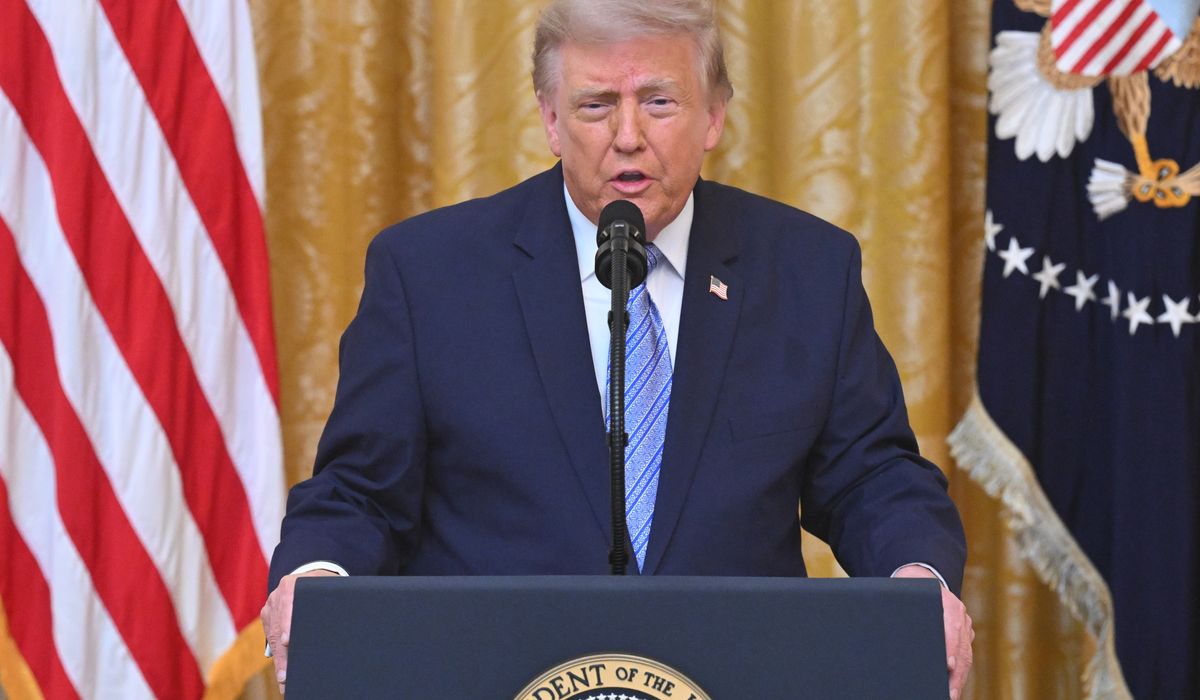
President Trump scheduled a Thursday night speech focused on election security pitfalls but opened by laying out and praising the priorities he would pursue in a second term.
President Trump used the lead-in to a promised Thursday night address to make a strong case for the agenda he says a second term would deliver. He framed those priorities as practical fixes and big-picture wins, pitching them as straightforward answers to what he calls failures in the current system. The tone was confident and unapologetic, aimed at voters who want decisive action and clear results.
The heart of his message was twofold: first, warn about vulnerabilities in how elections are run, and second, explain how his broader policy plan would strengthen the country. From a Republican perspective, those two goals are connected; secure voting builds legitimacy for fast economic growth, firm borders, and conservative judicial picks. He presented the agenda as the solution set that will follow from restoring public trust in the process.
On election security, Mr. Trump pointed to technological weakness, inconsistent state rules, and the absence of universal standards as central problems. He argued that paper ballots, transparent audits, and strict voter ID requirements are common-sense measures that would reduce doubt and stop disputed outcomes. His rhetoric framed these fixes not as partisan power grabs but as necessary steps to protect citizens’ confidence in democratic institutions.
He also emphasized accountability for local election officials when irregularities occur, saying responsibility must be clear and consequences enforced. That argument resonates with voters who view opaque procedures and conflicting counting rules as a root cause of post-election turmoil. From this viewpoint, clear lines of authority and legal certainty prevent chaos and ensure a swift, accepted result.
The second-term agenda he praised was broad and unapologetically conservative: economic growth through tax and regulatory policy, tighter border control, energy independence, and a continued reshaping of the federal judiciary. He claimed these policies would produce immediate benefits for working families and long-term gains for national security. The pitch was simple: secure elections create stability, and stability lets these policies take hold.
He was direct about tradeoffs, saying strong security and conservative governance require making firm choices and sticking to them. That includes resisting federal overreach while pushing states to adopt tighter election rules, and balancing technology with paper-based verification. His outlook assumes that decentralizing certain powers while imposing minimum national standards is the right mix for reliability and fairness.
Trump also suggested building a coalition of state officials, lawmakers, and private-sector partners to upgrade election systems and infrastructure. In his telling, improved cyber defenses and better-trained local staff would cut down on mistakes and vulnerabilities. This approach leans on local implementation with national coordination, a model Republicans often favor for preserving state authority while ensuring baseline protections.
Critics predict legal fights and partisan pushback around these proposals, but his supporters see that resistance as predictable and surmountable. The Republican argument is that defensive measures to protect ballot integrity are non-negotiable, even if some opponents label them restrictive. For his base, the priority is restoring faith in outcomes, not placating political rivals.
He framed judicial appointments as a complementary element of his plan, arguing that judges who respect election law and federalism will help sustain reforms. By stacking courts with reliable jurists, the administration would aim to lock in rules that favor clarity and enforcement. That strategy underscores the broader goal of making election structures durable beyond any single cycle.
Throughout the remarks, he kept returning to the theme of practical results: fewer disputed tallies, more rapid resolution of close races, and a public that trusts the outcome. The message is oriented toward voters who want order and predictability, and who see tightened procedures as the path there. It’s a case built on certainty rather than nuance, presented in plain terms that appeal to a base hungry for action.
Whether the proposed changes would pass political muster remains an open question, but the speech made clear where Trump wants the conversation to go. He seeks to link election integrity directly to his policy ambitions, arguing that one cannot thrive without the other. That coupling is central to his pitch and to the Republican framing he used throughout the address.

