

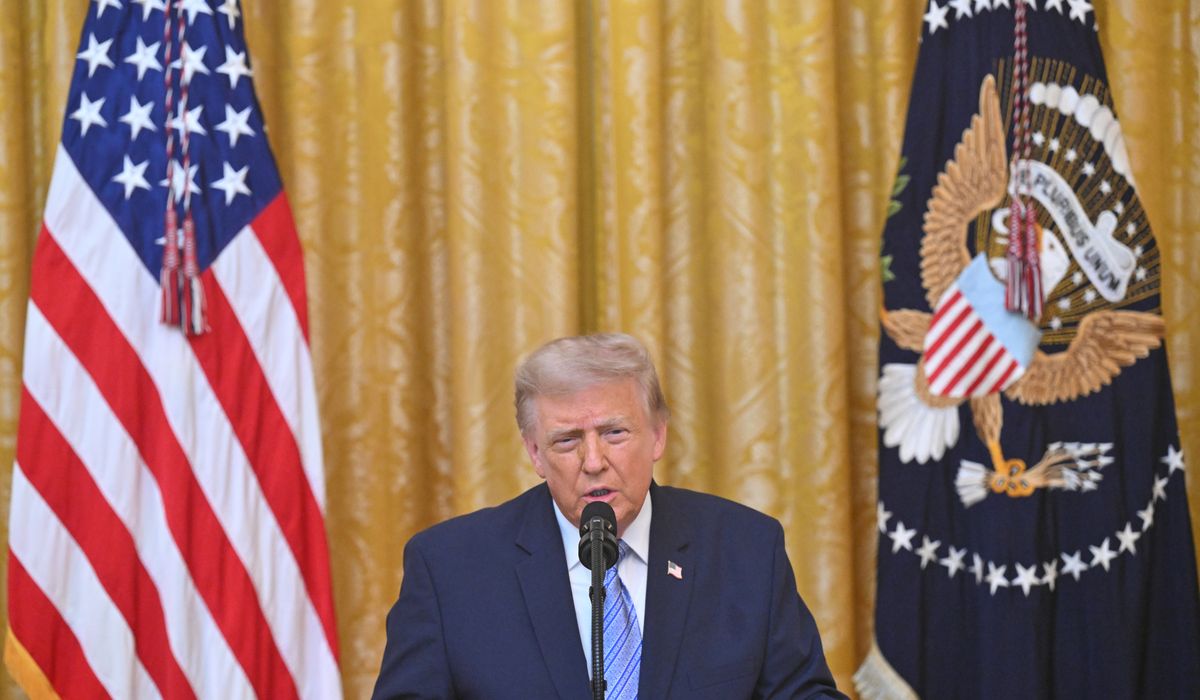
NBC chose not to carry President Trump’s Thursday night speech and stuck with regular programming, a move that sharpened questions about mainstream media priorities and fairness.
NBC’s decision to keep its usual lineup while other outlets aired President Trump’s speech Thursday night drew immediate attention and frustration from viewers expecting live coverage. For many conservatives the silence felt deliberate, not accidental, and fed into a larger narrative about media bias against Republican leaders. Audiences who wanted to hear from the president were pushed to alternative platforms or to clips later in the night.
This choice by one of the biggest networks matters because television still shapes what millions see and think about in prime time. When a major news event involving the president is available to the country, skipping live coverage sends a message about what editors value. That message can be interpreted as editorial judgment or as political posture, and Republicans are likely to read it as the latter.
Critics point out that presidential speeches are part of civic life and deserve straightforward coverage, even if anchors and producers disagree with the content. Viewers count on mainstream outlets to present the events and let the public decide, not the gatekeepers. When networks opt out, they break an implicit contract with their audience and push people toward partisan corner solutions for basic information.
Networks have always made choices about what to run, but the consistency of decisions that disadvantage conservative voices is what makes this instance notable. Over time that pattern erodes trust among viewers who feel their perspectives are routinely sidelined or caricatured. Trust doesn’t get rebuilt by lectures about standards; it gets rebuilt by consistent, even-handed editorial choices.
There are also practical consequences: advertisers, affiliates, and ratings are all affected when networks ignore a high-profile address. Some viewers simply change the channel; others migrate to streaming services or platforms where they believe the presentation will be fairer. As audiences fragment, the leverage once held by legacy networks dwindles and political communication shifts to places with fewer editorial filters.
From a Republican standpoint this episode is a reminder that controlling a message means controlling access, and that access can be restricted by cultural institutions just as effectively as by policy. The speech itself, whatever one thinks of its substance, was an event that deserved real-time availability on major outlets. Not airing it looks less like neutral programming and more like a choice with political consequences.
Journalistic freedom allows networks to make calls about programming, but freedom carries responsibilities when it comes to national discourse. Choosing not to air an address from the president in prime time raises the stakes of those responsibilities and invites scrutiny about editorial balance. If the goal is credibility, networks need to show they can provide full access to big events without turning coverage into censorship by omission.
There are practical ways for viewers to respond: demand accountability, shift viewing habits, and reward outlets that treat events evenhandedly. Those reactions will shape future editorial decisions as markets respond to audience preferences. Media companies that ignore large segments of the public do so at their own commercial and reputational risk.
At the end of the day, this incident is less about one speech and more about how media institutions choose to function in a divided country. When a major network sidesteps a presidential address, it signals priorities and values, and those signals have consequences beyond a single night of programming. Viewers will remember, and the marketplace of ideas will adapt.

