

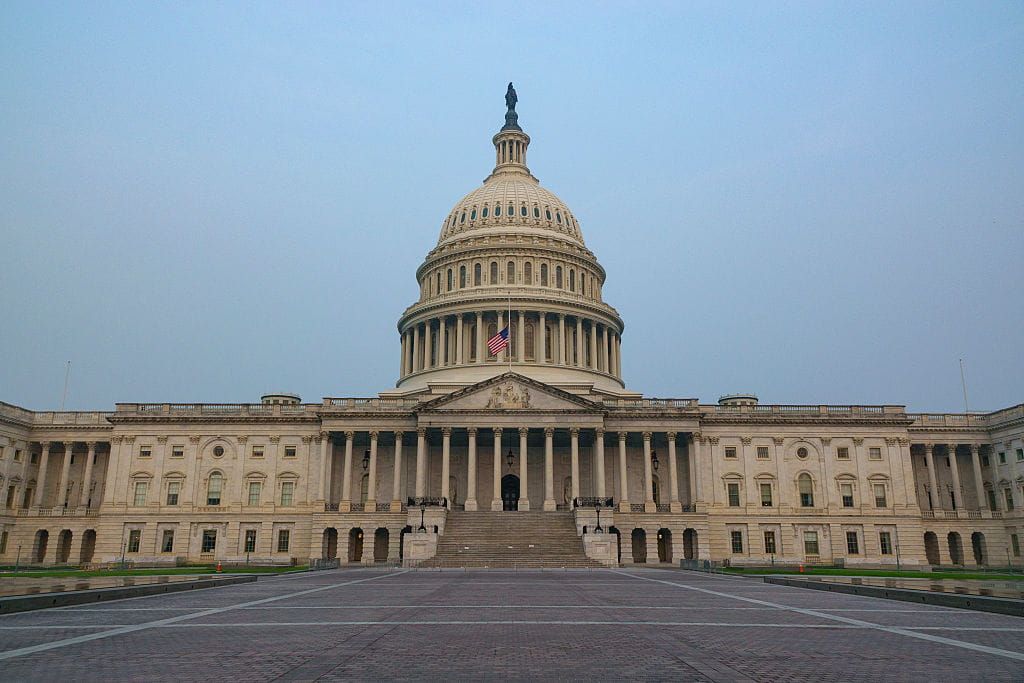
Congress faces a ticking funding deadline as President Trump and GOP allies push the SAVE Act while Senate Democrats and some Republicans resist, forcing lawmakers to weigh a clean continuing resolution, reconciliation maneuvers, and a new $10 billion incentive plan to steer state voting rules.
It feels like Groundhog Day in Washington as lawmakers return with the same stalemates and shrinking calendar. The fiscal year end of September 30 is the hard stop everyone keeps mentioning, and time is not on the GOP’s side. House leaders offered a clean continuing resolution through December 4, but that paper doesn’t settle the deeper fight over election rules.
President Donald Trump and his closest legislative backers remain focused on the SAVE Act as the test of conservative will. Many Republicans in the House want to attach the SAVE Act to the funding measure, but doing so would likely ensure failure in the Senate. The practical math in the upper chamber simply does not favor a stand-alone SAVE Act right now.
A critical problem is votes in the Senate: every Senate Democrat opposes the proposal and Republicans are not inclined to abandon the filibuster to force it through. Conventional routes, including reconciliation in current form or posting the provisions as riders, have been tried and hit dead ends. That reality has driven GOP strategists to pivot toward incentive-based offers instead of mandates.
“November 3 is 120 days away – 17 weeks and a day – so why can’t Congress get it all done by then? Because of those 17 weeks, the House will only be in session for six and the Senate for seven – with only four of those weeks seeing both chambers in session at the same time.”
With the calendar shrinking, the House Appropriations chairman introduced a clean CR on July 17 to keep funding at current levels through December 4. Freedom Caucus members have pushed to attach the SAVE Act to that CR, a move that would doom the proposal in a Senate where Democrats uniformly oppose it. That choice forces Republicans to decide whether to play for principle or for passage.
Republican leaders have explored other angles because the traditional path won’t work without 60 votes or a filibuster break. None of the usual workarounds have succeeded so far, which is why House conservatives and the White House are looking at reconciliation-style moves and financial incentives. The new plan reimagines a mandate as a carrot instead of a stick.
On July 16, House Budget Committee Chairman Jodey Arrington advanced the FY 2027 Concurrent Budget Resolution, often called Reconciliation 3.0, and it carries the pivot. Rather than imposing a federal requirement for photo ID or proof of citizenship, the proposal would offer $10 billion in federal grants over ten years to states that voluntarily adopt those measures. That shifts policy from coercion to conditional funding and might survive budget-process rules in Congress.
History shows federal grants changing state behavior without formal mandates, and conservative advocates argue that approach respects state choice while still incentivizing better rules. Examples invoked include federal leverage on seat belt laws in 1987, the drinking age in the 1980s, and the 55 MPH speed limit in the 1970s. Those precedents demonstrate how targeted funding can produce nationwide effects without direct federal command.
The reconciliation route has one major caveat: it needs unified Republican support in the Senate to get across the finish line. Senators such as Lisa Murkowski have publicly resisted the SAVE Act, and her July 18 comments underscore the unpredictability of the GOP’s margin. If even a few Republicans balk, reconciliation may stall or force a different compromise.
Meanwhile, the continuing resolution must be resolved first to avoid a shutdown, and momentum for tackling either the SAVE Act or reconciliation specifics remains limited. The House planned committee business and the Senate planned confirmations and other bills, so the CR’s immediate movement is uncertain. That leaves the clock running as both sides posture and measure leverage.
Conservative lawmakers argue the SAVE Act is about election integrity and restoring confidence, and they see reconciliation incentives as a realistic path to deliver meaningful change. Opponents counter that the provisions are partisan or overreaching, and Senate Democrats uniformly oppose any version that could limit access. The split guarantees a bruising debate if the Senate takes it up in any form.
The money-based plan also raises constitutional and political questions about federal influence on state-run elections, but proponents insist the approach simply rewards states that choose tougher standards. Ten billion dollars across a decade is a significant inducement that many state legislatures would weigh seriously. That dynamic could produce nationwide shifts without the need to override state sovereignty directly.
At the same time, sticking SAVE Act language onto a must-pass funding bill risks losing the broader coalition needed for a sustained majority. House leaders face a hard decision: hold firm for full measures tied to principle, or accept a scaled-back, incentive-based compromise to secure a legislative win. Either way, the political stakes are high for Republican messaging ahead of the next election cycle.
For now, neither the funding measure nor any definitive version of the SAVE Act appears likely to be resolved immediately. The practical playbook in the coming weeks will be a mix of leverage, procedural maneuvers, and careful vote counting in the Senate. Republican strategists will be watching which senators line up for reconciliation and which insist on preserving the filibuster.
The debate reflects larger fights over federal reach, state authority, and how to protect election integrity without alienating swing voters. That balance is the core dilemma as the GOP tries to convert policy goals into durable law. Lawmakers will keep testing whether incentives can move states where mandates could not.
Congressional maneuvering will continue under the shadow of the calendar, and the choices Republicans make now could define their credibility on governing versus campaigning. If the reconciliation incentive wins enough support, it could offer a route to results that withstand Senate rules. If not, the effort risks becoming another stalled chapter in Washington’s familiar funding and policy gridlock.

