

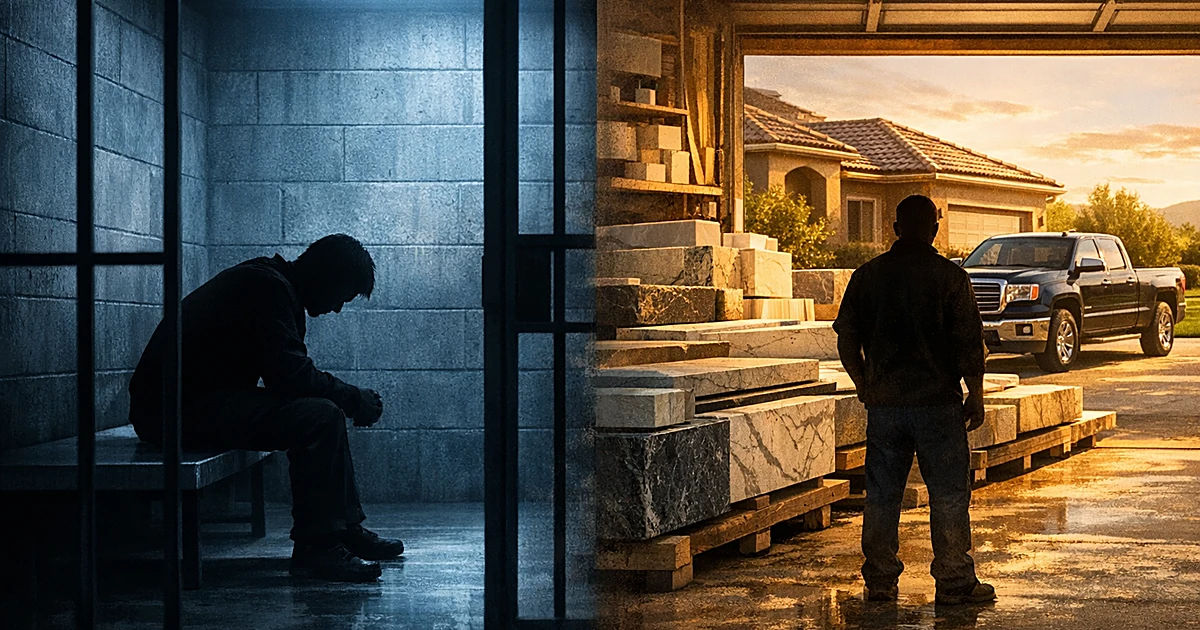
Utah’s case against the accused shooter of Charlie Kirk raises big questions about indigency, evidence, and who ends up paying for a multimillion-dollar defense.
Tyler Robinson is jailed in Utah, accused of killing Turning Point USA founder Charlie Kirk, and a judge has declared him indigent. That ruling means Utah taxpayers could face as much as $10 million to cover a high-profile public defense, even though his father runs a successful masonry business and lives in a $600,000 home.
Local reporting shows Matthew Robinson back at work, driving a GMC pickup and tending a stone and marble shop that seems to rely on repeat clients and word of mouth. The contrast between a publicly funded defense and a seemingly comfortable family situation is fueling scrutiny over the court’s financial finding.
Defense attorneys already requested $2 million in extra state funding, and unnamed experts cited by press accounts estimate total costs could balloon to $10 million before the case concludes. That figure would make this one of the most expensive public defense efforts Utah has seen, and it has taxpayers asking hard questions.
The family’s past also drew attention during reporting. In 2014, Matthew’s brother and business partner, Clint Robinson, filed a civil suit alleging Matthew embezzled $100,000 over nearly two years and exchanged work for personal favors. That lawsuit quoted Matthew as saying “they would go to jail if authorities ever saw their books,” and the brothers later settled confidentially.
While prior civil disputes don’t determine criminal guilt, they add context when a judge’s indigency ruling shifts a massive bill to the public. Observers want to know whether the court applied the indigency standard with full visibility into the family’s finances or just a narrow legal definition.
The preliminary hearing in early July lasted five days and gave the public its first detailed look at the prosecution’s case. Prosecutors showed surveillance video placing Robinson on the Utah Valley University campus before, during, and after the shooting, roughly 200 yards from where Kirk was speaking.
Fox News host Will Cain broke down the timeline for viewers, and forensic evidence drew particular attention: DNA recovered from the rifle was reported to match Robinson at odds described as at least one trillion times more likely to have come from him than from some unknown person. Those numbers have been central to the prosecution’s narrative.
A written confession allegedly sent to Robinson’s former roommate and romantic partner, Lance Twiggs, also featured in testimony. Twiggs said he confronted Robinson in person about the message, and what followed was a dramatic, emotional exchange in court.
“He just, I just asked him in person if what he said was true the night before, and he said it was. He started crying a little bit and said he wishes he hadn’t done it.”
Press reports say the letter itself contained an admission: “I had the opportunity to take out Charlie Kirk, and I took it.” That line was presented by prosecutors as a clear direct statement tied to the shooting and addressed to Twiggs.
Judge Tony Graf had ordered the confession letter kept from public view before a jury was selected, but during the court livestream someone accidentally displayed it to viewers. Former federal prosecutor Neama Rahmani noted, “None of this is being shown to a jury. We don’t even have a jury yet,” yet the disclosure still offered the public a glimpse at evidence prosecutors deem pivotal.
Twiggs also testified that Robinson expressed regret and said he intended to surrender, testimony that, when combined with video and DNA, led Donald Trump Jr. to declare the case appeared “way beyond a reasonable doubt.” Legal analyst Wendy Patrick described the footage of the killing as “explosive in nature” and called it “one of the most damning pieces of evidence,” adding, “I hope it’s a wake-up call.”
Prosecutors have made clear they are pursuing the death penalty, and a prior defense motion to remove capital punishment from the case was denied. Judge Graf set the next hearing for September 1, when the court will hear oral arguments and decide whether probable cause exists to move to a full trial.
The killing last September sent shockwaves through the conservative movement and prompted broad comparisons to past political violence, while Turning Point USA continues grappling with fallout and disputes involving Charlie Kirk’s widow, Erika Kirk. Those political reverberations feed public interest in the legal process and the cost of defending the accused.
At the center of the controversy is an indigency determination that triggered appointment of high-performance defense counsel whose fees the state now advances. The Sixth Amendment ensures counsel for defendants who cannot afford it, a principle broadly respected, but observers want clarity that the court’s ruling reflects reality.
When a defendant’s father appears to live in a $600,000 home, runs a prosperous business, and drives to work daily, reasonable people ask whether the legal finding of indigency mirrors the full financial picture or simply meets a narrow threshold. Those doubts fuel calls for transparency about who is billing the state and at what rates.
Public questions remain: Which attorneys are charging the state and what are their hourly rates? What criteria did the court use to declare indigency? Could the family contribute at all to legal costs, and what oversight prevents a $10 million estimate from growing even larger? The decision to allow courtroom cameras has at least given taxpayers a window into the proceedings.
Charlie Kirk’s death prompted a major criminal case with video, DNA, and a written confession forming the backbone of the prosecution’s claims. The accused deserves his day in court, and the right to counsel is sacred. The obligation to make sure taxpayers aren’t played for suckers is pretty important, too.

