

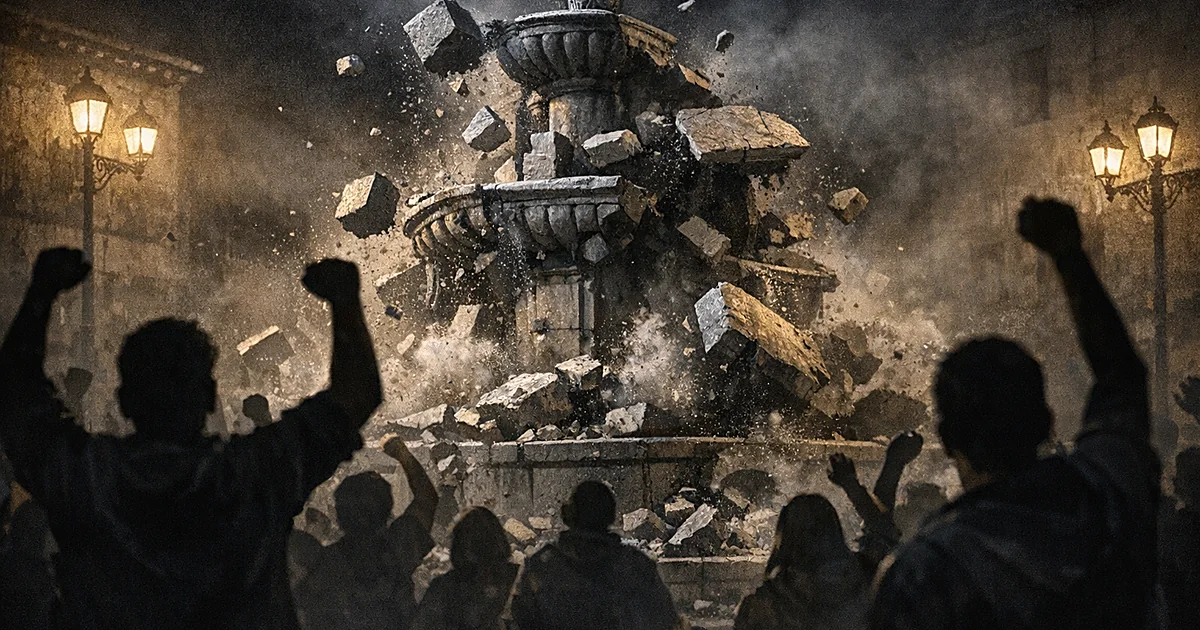
A tragic collapse at Ciudad Rodrigo’s Árbol Gordo fountain during Spain’s World Cup celebrations left a 13-year-old boy dead and several others injured amid chaotic late-night scenes of joy turned to disaster.
Crowds in Ciudad Rodrigo poured into the streets after Spain beat Argentina in the World Cup final, celebrating Ferran Torres’ decisive goal when people climbed onto the town’s landmark fountain. The upper part of the stone structure gave way under the weight and toppled onto bystanders, instantly turning celebration into calamity. Emergency services were alerted just after midnight and raced to the scene as chaos unfolded.
Euronews reported that the region’s 112 Emergency Centre received the first emergency call at 12:33 a.m. local time, with multiple callers reporting the same collapse at once. Local police, the Salamanca Civil Guard, a provincial fire brigade, and several units from Sacyl, the regional emergency medical service, were dispatched to respond. The 13-year-old boy was taken to a health center in Ciudad Rodrigo and later died there despite medical attention.
Accounts of the injured varied in early reports, with some references in headlines indicating three people were seriously hurt in addition to the boy, while the body of reporting described “at least two other people” injured, one with a broken leg. That discrepancy left the exact toll uncertain in the immediate aftermath, and officials were still piecing together who had been affected. Medical teams continued to treat those hurt at the scene and at nearby facilities.
Authorities secured the fountain and cordoned off the area while investigators worked at the site, with police tape surrounding the crumbled stonework. Spain’s Psychological Intervention in Disasters and Emergencies Group was activated to offer crisis counseling and support to the boy’s family and others impacted by the incident. No arrests or detentions were reported in the early phase of the response, and no formal criminal or administrative inquiry had been publicly announced although the guarded scene implied an investigation was likely.
Whether the collapse resulted from a latent structural fault or simply the force of a crowd standing on an old monument remains an open question. Stone fountains, statues, and historic monuments in many European plazas were not designed to hold dozens of people climbing or standing on them, and their load limits are rarely posted or enforced. Local officials and engineers will have to establish the fountain’s maintenance history and whether any prior warnings or repairs were outstanding.
The wider picture is that major public celebrations can quickly overwhelm small-town infrastructure when thousands of people gather in confined squares after a big victory. Crowd-management planning, temporary barriers, and clear signage can reduce risk, but those measures are not always in place for spontaneous or predictable post-match gatherings. Residents and local authorities alike will face tough questions about preparedness on a night when emotions ran very high.
A grieving family has been left without a child and a town has been left with a scar where a familiar landmark once stood intact, both physically and emotionally. The fountain is now treated as a secured scene as inquiries continue, and the community has been offered state-provided counseling. Many will expect transparent answers: who maintained the structure, what inspections were recent, and who decided crowd control was unnecessary that night.
For towns that host big public viewings or that lie along popular celebratory routes, the Ciudad Rodrigo event is a warning about how quickly joy can turn dangerous when historic fabric meets modern crowds. Officials will need to balance preserving heritage with ensuring public safety in plazas that draw people during national moments of triumph. The families, neighbors, and first responders now face a long haul through questions, investigations, and recovery efforts as the town seeks accountability and closure.

