

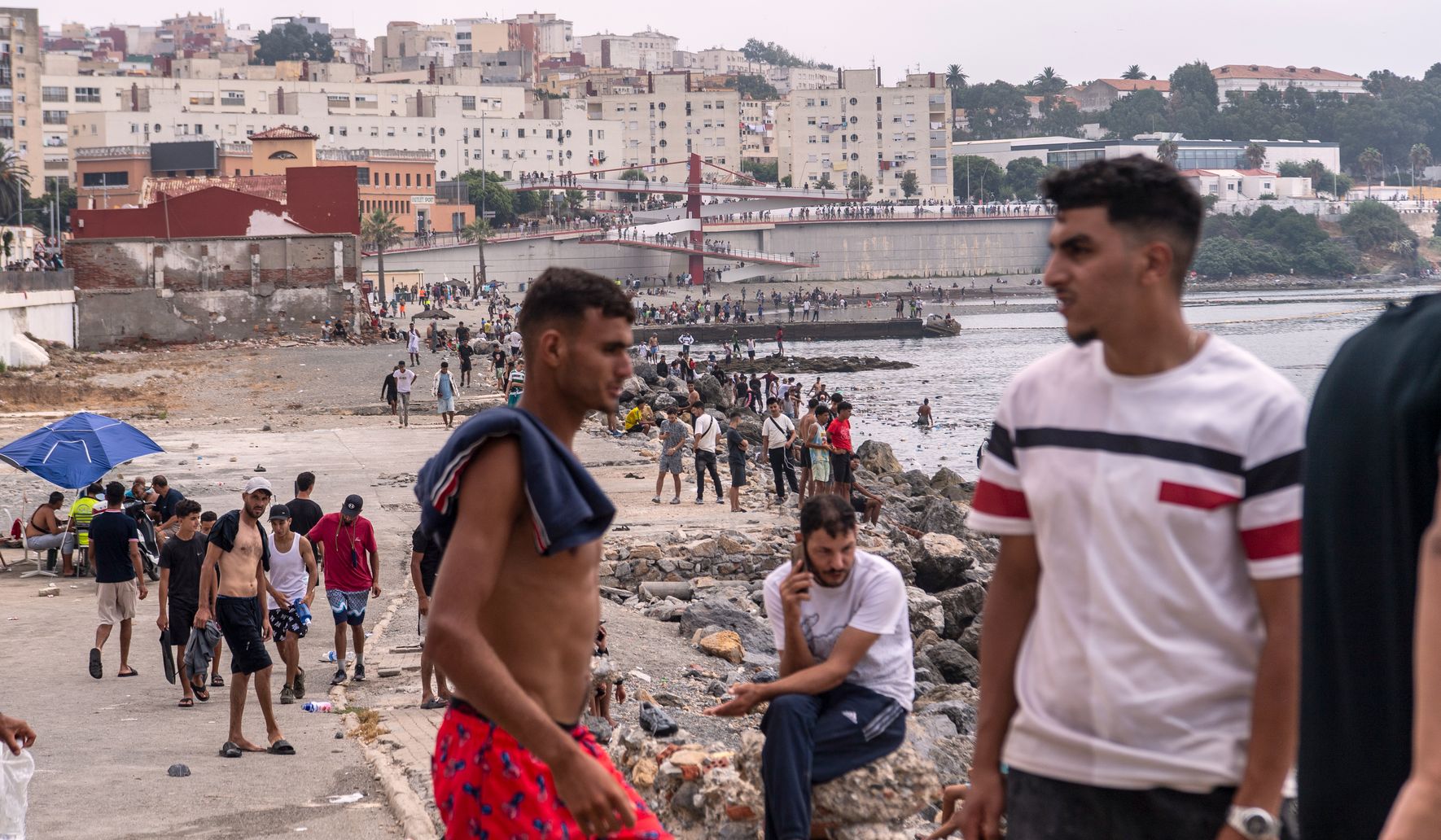
When news spread that the border had been breached, one man sped toward Ceuta and joined a mass movement of people trying to reach the Spanish enclave from northern Morocco.
When he heard the border had been breached, Abdulah Buji jumped on his motorbike and raced from his home in northern Morocco toward Ceuta. He found himself among tens of thousands of people who converged on the coast, attempting to swim into the Spanish territory. The scene was chaotic, driven by a mix of hope and desperation.
Many of those who arrived at the shoreline were young men traveling in groups, looking for any opening to cross the barrier. Some tried to climb fences, others plunged into the water despite strong currents and crowded conditions. Local authorities and volunteers scrambled to respond as the numbers swelled.
Ceuta sits on the Mediterranean edge of Morocco but is Spanish soil, making it a focal point for people aiming to reach Europe. Its small size and hard border make any sudden surge immediately visible and difficult to manage. The enclave’s geography funnels people into tight, dangerous crossing points.
Witnesses described scenes of confusion and urgency as families and individuals pushed toward the water and the border installations. Many had traveled long distances to reach Morocco and saw Ceuta as the last step before Europe. The crossing attempts ranged from tenacious swims to risky climbs over fences and into unguarded stretches of shoreline.
Health and safety officials expressed concern about the risks in such mass movements, including drownings, injuries from barbed wire, and heat-related problems. Medical teams and non-governmental groups often arrive afterward to treat the injured and document conditions. The immediate needs—shelter, water, and basic care—become acute during sudden surges.
Local residents reacted in mixed ways, some offering food and water while others complained about the strain on services. Businesses and daily life can be interrupted when large numbers arrive at once, and municipal services are tested. For many locals, the arrival is both a humanitarian call and an administrative problem.
Authorities of both Spain and Morocco have to balance security with humanitarian obligations when these events occur. Patrols, border fencing, and diplomatic talks often follow waves of crossings, while emergency responders focus on rescues and medical care. The operational challenge is to restore order without worsening the human toll.
People on the move cite a range of push factors, from economic hardship to conflict and instability in their home regions. For some, reaching a place like Ceuta represents the only realistic chance at work or asylum in Europe. The journey itself can take months and involve multiple smugglers and transit points.
Images and reports of mass crossings draw international attention, prompting statements from governments and sometimes calls for increased aid or stricter border control. Media coverage tends to focus on dramatic moments at the waterline or fence, but the broader story includes long migration routes and the decisions families make along the way. Public debate often centers on how best to prevent tragedies while respecting national borders.
Humanitarian groups emphasize the need for safer, legal pathways and better reception conditions to reduce the pressure that drives dangerous crossings. They document cases of injury and detention and press for access to vulnerable people. At the same time, governments point to the need for controlled borders and coordinated enforcement to manage irregular migration.
Local authorities said operations to process arrivals and provide temporary shelter were underway, but capacity was quickly strained by the sheer number of people. Transport, registration, and basic logistics become immediate challenges when thousands arrive in days. The response timeline is crucial for preventing further harm and ensuring legal processing.
Beyond the immediate response, longer-term questions persist about regional cooperation and migration policy across North Africa and Europe. Bilateral agreements, development assistance, and joint patrols are part of the toolbox some governments use to address flows. But political will and resources vary, leaving gaps in coordination when sudden surges occur.
For those who made the attempt, the crossing moment is a mix of relief, fear, and uncertainty about what comes next. Names like Abdulah Buji remind us these are individual stories inside a larger movement. The situation in Ceuta underlines the human scale of migration challenges at Europe’s borders.

