

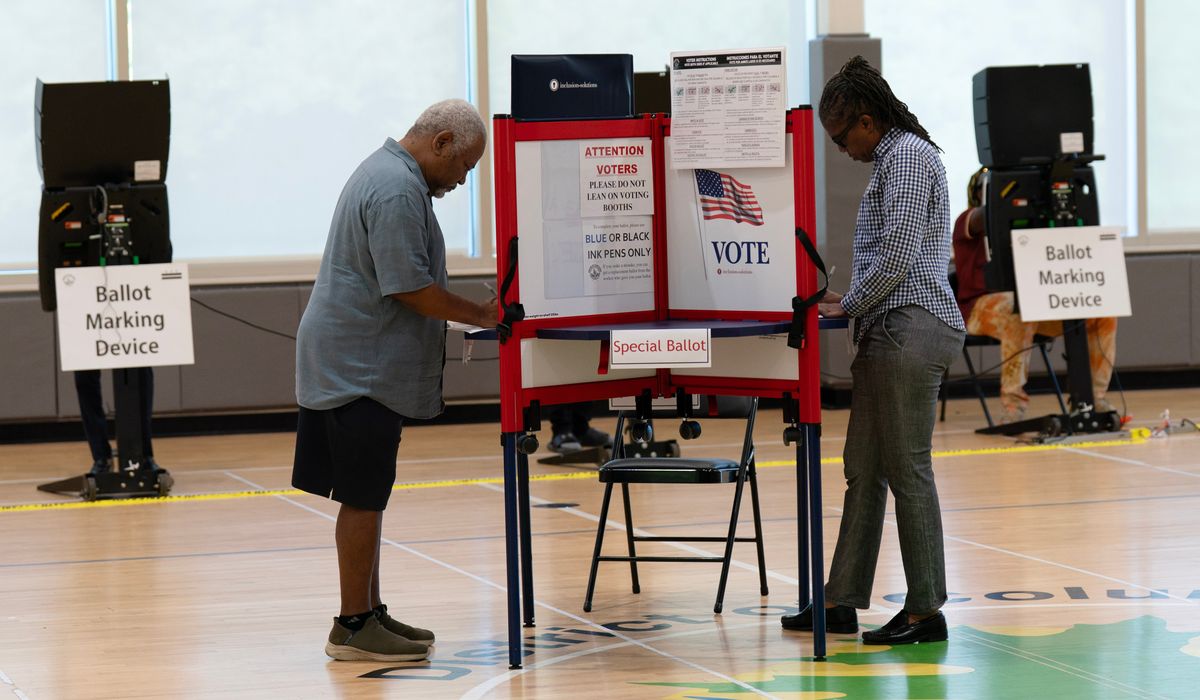
A federal judge rejected a Justice Department effort to inspect the District’s full voter list, finding the administration lacked the authority to compel the city to hand it over. The ruling raises immediate questions about the federal role in local election records and the limits of investigatory power. Republicans see it as a win for voter privacy and for clear lines between federal enforcement and local governance.
A federal judge on Thursday rejected the Justice Department’s attempt to get a look at the District’s full voter list, ruling that the administration lacked the legal power to force the city. That single line captures the court’s blunt check on federal overreach. The decision stops a high profile demand that had alarmed local officials and privacy advocates alike.
The case centered on whether the federal government can demand comprehensive voter data from a jurisdiction without a clear statutory hook. Republicans have argued for strict adherence to statutory limits so federal agencies cannot expand power by fiat. The judge sided with that conservative approach, emphasizing that investigators must show explicit legal authority before taking broad steps into local records.
Local leaders in the District pushed back hard, saying handing over a full voter roll would risk personal data and create a chilling effect on civic participation. The court accepted those concerns as part of its reasoning, noting real privacy stakes for registrants. That outcome reflects a common Republican concern: protect citizens from unnecessary federal data grabs while keeping elections secure.
The ruling also underscores the importance of federalism as a practical check on administrative ambition. When agencies run too far ahead of Congress, courts can and should step in. This decision reiterates that the proper fix for policy disagreements is legislative action, not agency muscle.
For DOJ officials, the loss is a reminder that investigatory power is not limitless. The department has tools for targeted inquiries, but courts will scrutinize any attempt to sweep up entire local databases without clear authorization. It is an outcome that encourages agencies to stick to narrowly tailored requests backed by law.
Republican lawmakers are likely to frame the ruling as confirmation that safeguards still exist against bureaucratic overreach. They will point to the decision as evidence that judges will protect individual privacy and local control. That political messaging will matter in debates over how far federal agencies should go when probing state and municipal election practices.
Legal experts on both sides expect the case will reverberate beyond the immediate parties, because it touches on the boundaries of investigative authority. Future disputes over access to voter rolls could follow similar lines, with courts weighing statutory text and constitutional limits. This ruling sets a precedent that other judges may cite when similar demands surface.
Election transparency advocates warn that too much secrecy can hinder accountability, but the court made clear that transparency must be balanced against legal limits and privacy risks. Republicans generally accept transparency but insist it must come through lawful channels. The ruling encourages policymakers to craft clearer statutes that reconcile those competing concerns.
The decision sends a straightforward message to the Justice Department: if you want broader access, take your case to Congress. That is the constitutionally correct route and the one consistent with conservative principles about the separation of powers. For now, local election data remains under the control of the District, and the legal boundaries around federal demands are a bit sharper.

