

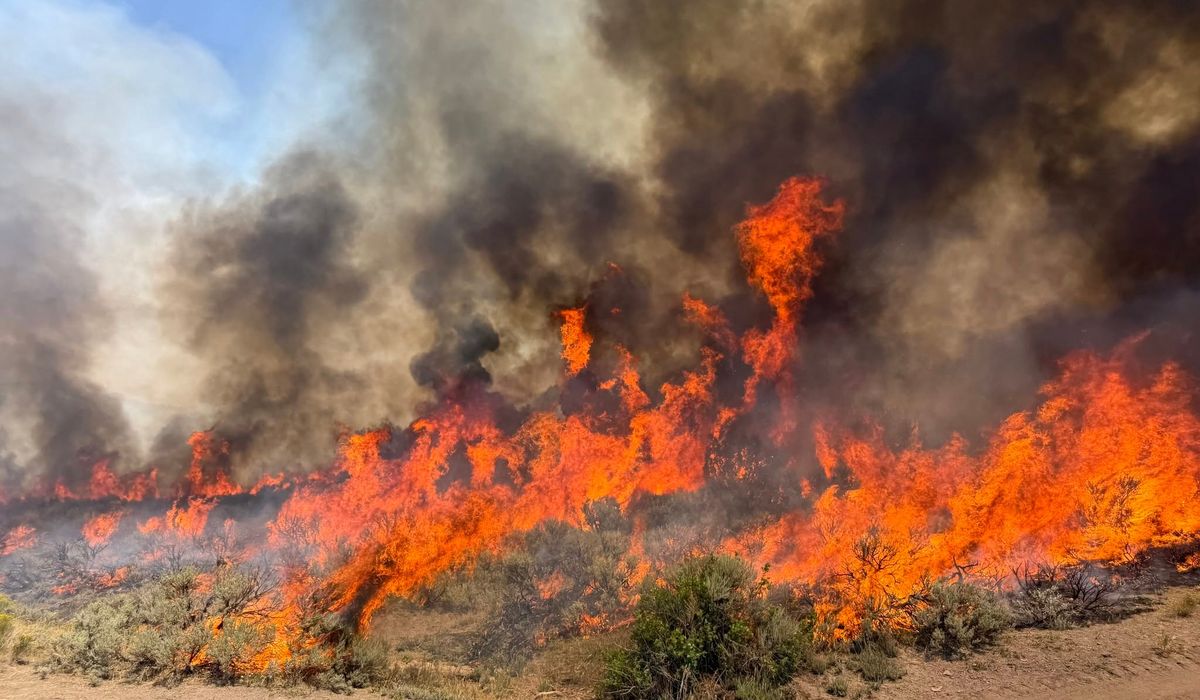
A helicopter involved in fighting a major Utah wildfire crashed Friday, and officials had not immediately reported the condition of the two people on board.
A helicopter helping battle a large Utah wildfire crashed Friday with no immediate word on the conditions of the two people aboard, federal officials said. The aircraft was part of the aerial effort against fast-moving flames that have threatened homes and forced evacuations. Local agencies scrambled ground crews and air units to support search and rescue while conditions remained uncertain.
Aircrews are a vital part of wildfire response, dropping water and retardant and moving crews into difficult terrain. Helicopters often fly low and slow during these missions, putting pilots and support personnel in harm’s way when fires behave unpredictably. Smoke, erratic winds, and poor visibility can all turn routine sorties into dangerous situations in minutes.
Witnesses reported seeing the bird in distress, and nearby firefighting teams immediately switched from suppression to rescue mode. Ground crews coordinated with county and federal dispatch to track the last known position and initiate a rapid response. The priority was locating the occupants and stabilizing anyone injured while keeping crews safe from active fire lines.
Federal and local agencies typically open investigations after any aircraft accident to determine cause and possible safety improvements. Those probes look at maintenance records, weather, crew experience, and mission planning to understand contributing factors. Findings can shape operational changes, from flight corridors to load limits and pilot rest requirements.
Helicopter operations during wildfires balance speed and precision under stressful conditions, and crews train continuously for emergency scenarios. Pilots practice hoist operations, sling-load maneuvers, and low-altitude flying to support both suppression and rescues. Even with training, every incident prompts a fresh look at procedures and equipment to reduce future risks.
Local residents watched as smoke columns and aircraft movements marked the skyline, anxious for news about both the fire and the crash. Evacuation centers and emergency hotlines stood ready as authorities assessed hazards and prioritized public safety. Officials urged people to stay clear of staging areas and follow evacuation orders to avoid complicating response efforts.
Wildfire season has intensified in many western states, stretching aerial resources and increasing operational tempo for crews. Agencies often coordinate across jurisdictions to move aircraft where they are most needed, and mutual aid agreements allow rapid reallocation. That complexity means investigators will consider not just the crash itself but the broader strain on resources and scheduling.
Safety officers on the ground and in command posts review flight manifests, maintenance logs, and weather briefings from the day of the mission. Any lapse in communication, unexpected gusts, or mechanical anomaly can point investigators toward a likely sequence of events. Transparency in those reviews helps crews learn and adapt faster after high-risk missions.
Training, technology, and maintenance all play roles in minimizing accidents, but unpredictable wildfire behavior remains a core hazard. Innovations like improved real-time mapping, thermal imaging, and enhanced pilot weather briefings aim to reduce surprises in the air. Agencies also assess fatigue management and crew pairing to ensure decisions under pressure are sound.
Airspace coordination is another key element when many aircraft operate over the same fire, and temporary flight restrictions are often used to manage traffic. Incident commanders and aviation officers deconflict routes and assign altitudes to prevent midair conflicts. Maintaining clear radio protocols and disciplined flight patterns is essential when the tempo ramps up.
Community leaders and emergency managers track both the human and environmental toll of large wildfires, including impacts on infrastructure and local economies. Power lines, roads, and critical facilities can all be at risk, complicating response and recovery. Planners increasingly factor in long-term resilience as well as immediate firefighting needs.
After crashes, families and coworkers seek timely, accurate information from officials as they await confirmations about those involved. Agencies balance the need for thorough investigation with compassionate communication to affected families and the public. Support systems, including counseling and peer resources, are often mobilized to help crews process the stress of loss or injury.
Public safety messaging stresses patience and cooperation while responders work under difficult conditions to secure scenes and gather facts. Officials remind residents that on-the-ground priorities include both saving lives and preserving evidence for the investigation. Clear, calm updates help communities stay informed without adding confusion to an already chaotic situation.
As investigators piece together what happened, operational leaders will likely review lessons learned and adjust procedures where needed to protect aircrews and the public. Wildfire response will continue to rely on courageous pilots and support staff, and each incident drives efforts to reduce risk in the next mission. The focus remains on restoring safety for crews and stabilizing the fire situation for impacted communities.

