

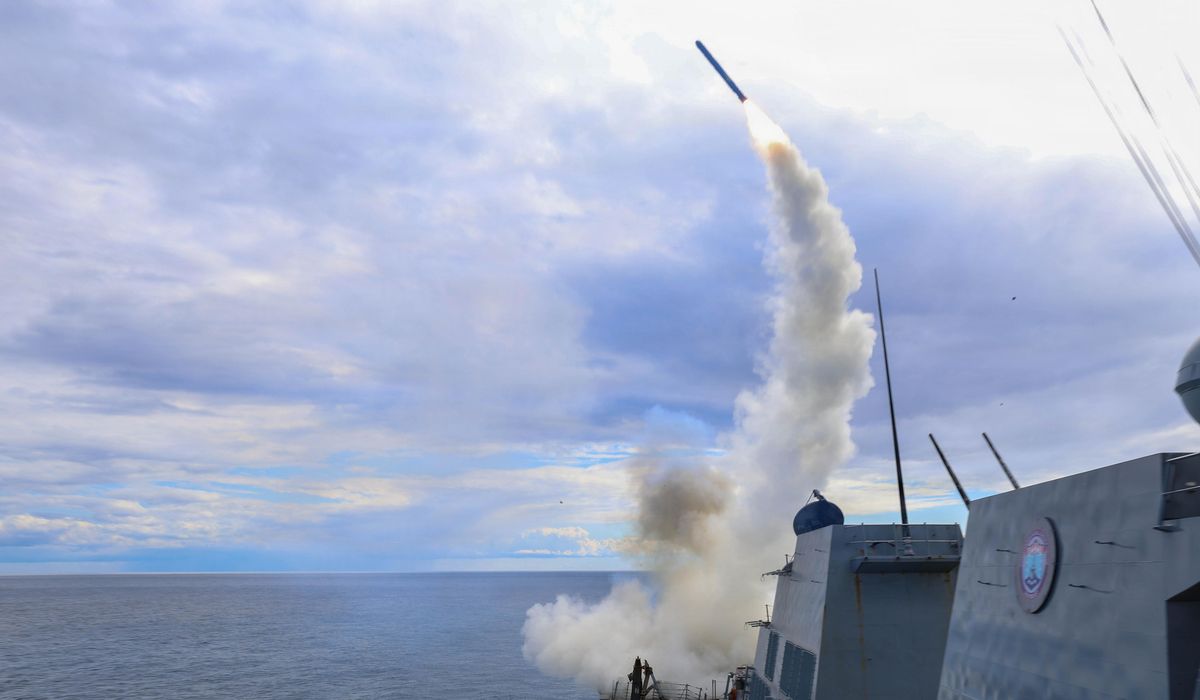
U.S. forces have used Tomahawk cruise missiles against Iran more extensively than in any other conflict, a fact that reshapes how we think about deterrence, operational risk, and the political choices that follow military action.
The U.S. has fired more Tomahawk cruise missiles in military operations against Iran than during any other conflict. That single line sums up a shift in American posture: precision standoff strikes are now central to how policymakers choose to act when Iranian provocations cross red lines. For Republicans, this shows both the willingness to use capable tools and the need to pair force with clear purpose.
Tomahawks offer a way to hit targets at distance without putting American pilots directly in harm’s way, and they’ve been used repeatedly to punish or deter behavior Tehran sponsors. Using those missiles sends a precise, hard message without the optics of a broad bombing campaign. Still, repeated use raises questions about escalation control, cost, and how success is measured beyond immediate damage.
From a defense-first Republican perspective, hitting back decisively preserves deterrence and protects U.S. interests and allies in the region. Iran tests limits through proxies and direct attacks on shipping, bases, and partners, and failing to respond credibly only invites more testing. Effective deterrence requires both the capabilities to strike and the political will to use them when necessary.
That political will has to be matched with clear strategy. Precision strikes can be useful tools, but they are not a substitute for a coherent long-term plan to degrade Iran’s ability to conduct hostile operations. Military action should be part of a broader effort that includes sanctions enforcement, intelligence cooperation, and support for regional partners that face the brunt of Iranian aggression.
There’s also the practical side: reliance on cruise missiles is expensive and logistically taxing, and adversaries learn fast. Repeated employment of the same methods invites countermeasures and tactical adaptation from Iran and its proxies. Republicans should insist on balancing kinetic options with investments in electronic warfare, missile defense, and intelligence to keep the United States ahead of the curve.
Congressional oversight matters here. Authorizing force and funding capabilities are core legislative responsibilities, and clear guidance from elected officials strengthens the credibility of any military response. Republicans who prioritize a strong national defense should push for timely, robust debate in Congress when strikes escalate beyond isolated, limited actions.
On allies, the message is straightforward: a posture that credibly holds Tehran accountable reassures partners such as Israel and Gulf states. Deterrence multiplies when the U.S. coordinates strikes, intelligence sharing, and defensive systems with regional partners. That kind of cooperation turns tactical strikes into strategic advantage without committing to open-ended occupation or nation-building.
Still, the risk of miscalculation is real. Precision strikes reduce exposure but do not eliminate the possibility of wider conflict. Leaders must weigh the immediate tactical gains against longer-term political fallout inside Iran and around the region. Responsible use of force means preparing for contingencies while keeping escalation under tight control.
Ultimately, the heavy use of Tomahawks against Iran underscores a basic Republican principle: strength prevents worse outcomes. If Washington wants to deter aggression effectively, it must combine ready capabilities, clear political objectives, and a willingness to hold adversaries accountable. That approach keeps Americans, their interests, and regional partners safer without slipping into indefinite entanglement.

