

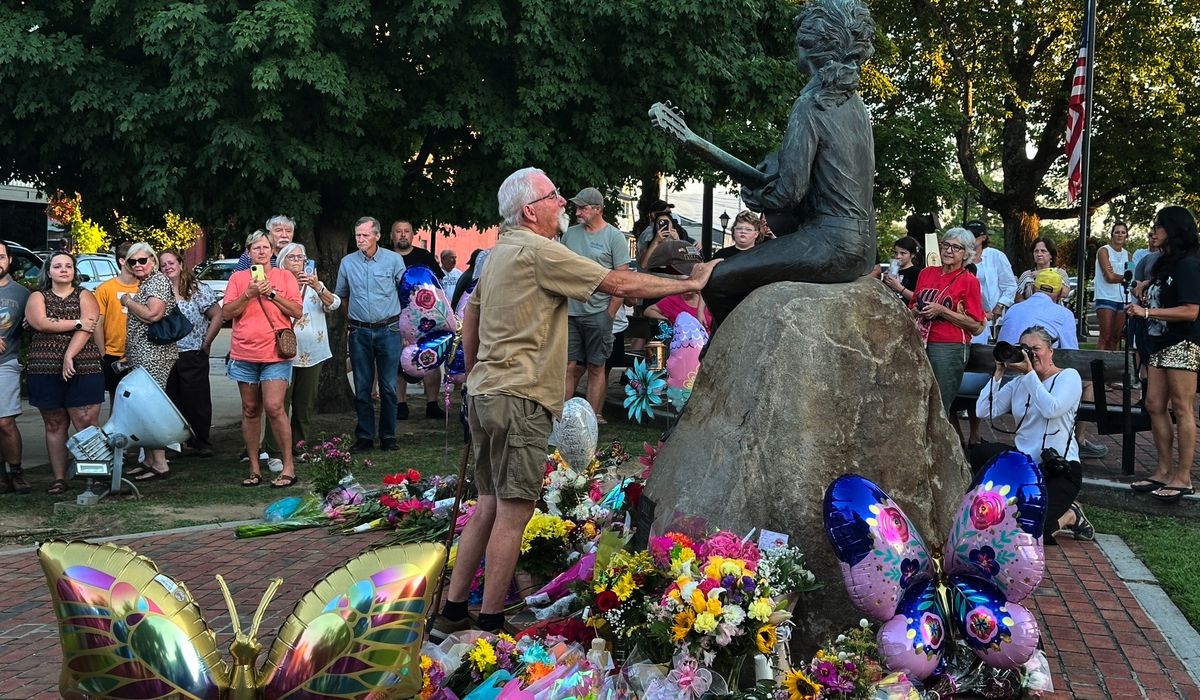
Fans poured into Dollywood and its surrounding town, meeting the news with quiet shock, flowers, and shared stories as the park and community absorbed the loss of Dolly Parton at 80. The scene in Pigeon Forge reflected a deep, personal connection between a performer and the place she helped shape, with visitors and staff responding in real time to the news. For many, the day felt like a farewell from a local daughter who grew into an international icon.
Fans visiting Dollywood in Pigeon Forge, Tennessee, reacted Wednesday to the death of country music icon Dolly Parton at 80. That single line summed up a scene where tourists and locals alike paused their plans, checked their phones, and gathered in small clusters to talk about memories and milestones tied to Parton’s long career. The park itself — an attraction born from her vision — became a spontaneous meeting place for people processing the news.
Visitors described mixed emotions: stunned silence, laughter through tears, and a steady stream of stories about a song that meant something to them. Some people drifted toward familiar landmarks within the park, taking a moment in places she had helped design or inspired. The atmosphere was both solemn and celebratory, the kind of public private moment that happens when a figure touches lives across generations.
Dollywood employees were on the front lines of those reactions, greeting guests while also feeling the loss themselves. Staff members who had worked at the park for years spoke about how Parton’s presence — even in spirit — influenced daily life and the park’s mission. For many employees, the news of her death turned a normal shift into a shared experience of remembering and passing along stories to visitors.
The surrounding businesses in Pigeon Forge also noticed a shift. Restaurants, shops, and tour guides heard the same anecdotes repeated: when someone first saw Dolly live, how a song became a soundtrack to a life, or a childhood trip to Dollywood that marked a family tradition. Travelers who might have come for the roller coasters or the scenery found themselves lingering, swapping memories with strangers who suddenly felt like old friends.
On social media, tributes poured in alongside photos taken inside the park across decades, though this piece does not present links or embed those posts. The online response mirrored the face-to-face emotions at Dollywood: fans posted photos, shared personal stories, and noted how Parton’s work had been a steady presence in their lives. Those posts turned the theme park into a kind of physical extension of those digital memorials.
Parton’s impact extended beyond music and entertainment, and that breadth was visible in how people spoke about her. Conversations at the park didn’t just mention songs and shows; they touched on her charitable work, her business acumen, and the way she used her platform to support causes like literacy and health research. Visitors recalled how her generosity had ripple effects across the region she called home.
For some guests, the reaction was personal: they had met Parton, seen her perform, or worked with her affiliates. Those encounters are the kinds of tiny, human moments that become vivid memories, and people shared them freely on benches, by fountains, and along walkways. Others spoke in more general terms about how her music connected to key moments in their lives, turning personal playlists into communal stories.
Park operations continued amid the emotional scene, balancing service for guests with space for commemorations to arise organically. Employees managed lines and attractions while also answering questions and listening to visitors who needed to share a memory. The result was a day that felt orderly but earnest, a public place quietly honoring a private kind of grief.
As day turned toward evening in Pigeon Forge, small groups remained, holding on to the last bits of daylight and to the stories they had just told one another. People left with hugs, nods, and the sense that they had been part of something larger than a visit to a theme park. For many, Dollywood served that day as a crossroads of memory, music, and community.

