

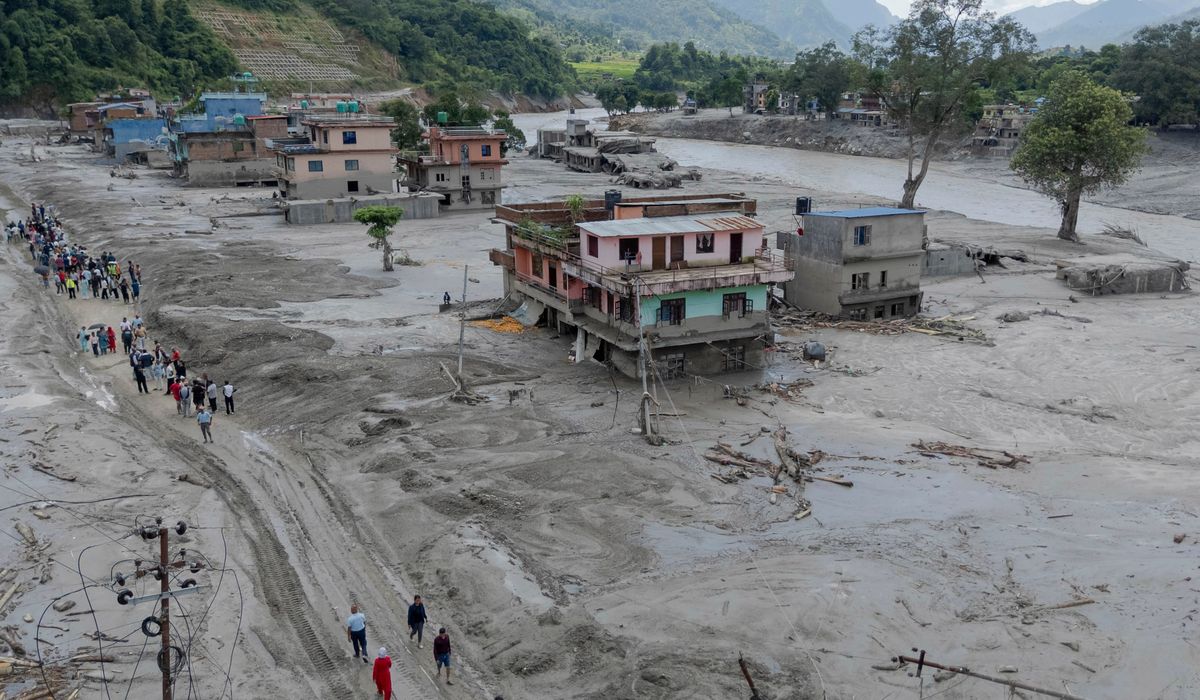
Nepal is reeling after massive flash floods on the border with China left at least 469 people dead and hundreds unaccounted for, while rescue teams race against time and weather to reach isolated communities.
The death toll from massive flash floods has risen to 469 in Nepal, police said Friday, as rescuers work to find hundreds of people still missing in the area on the Nepal-China border. Teams on the ground describe scenes of crushed homes, uprooted roads and bridges swept away, complicating efforts to reach survivors. Local authorities say many villages remain cut off by mud and debris, making every hour critical for those trapped or injured.
Rescue crews from multiple districts have been mobilized, combining trained personnel, volunteers and local officials to search ravines, riverbanks and flooded settlements. Heavy equipment is being used where it can get through, while searchers on foot and by boat push into narrower channels and side valleys. Coordinating those efforts is a challenge because communications networks are patchy and some roads are entirely gone.
Medical facilities nearby are under pressure as hundreds of injured people arrive needing immediate care, stabilization and transport to larger hospitals. Field triage points have been set up in safer clearings to prioritize the most seriously hurt until ambulances or helicopters can move them. Local clinics report shortages of medicines, dressings and blood, and health workers are working long shifts amid difficult conditions.
Many families remain separated, and local officials emphasize the urgency of locating the missing before conditions worsen or evidence is washed downstream. Authorities are compiling lists of the missing from village registers and family reports, while teams try to verify sightings and matches at temporary shelters and collection points. Identifying the dead is also a task, as many bodies have been carried away or are buried under mud and wreckage.
Infrastructure damage is severe across the affected corridor, with key mountain roads and footpaths rendered impassable by landslides and floodwater. Power and water services have been disrupted in several communities, forcing survivors to rely on emergency supplies. Repair crews are prioritizing routes that will enable aid convoys to reach the most isolated settlements first.
Relief operations face logistical bottlenecks because the terrain is steep and weather remains unpredictable, with rain and the risk of further flash floods still on the horizon. Helicopter sorties are being used where they can operate safely, but payload limits and airspace conditions slow the pace of deliveries. Local responders warn that clearing debris and stabilizing riverbanks will be necessary to reduce the immediate risk to downstream villages.
Humanitarian need is growing, with many families having lost homes, livestock and vital stores of food and fuel in the floods. Temporary shelters are being established in safer areas, and emergency teams are prioritizing clean water, shelter materials and basic food to prevent disease and further hardship. Community leaders and volunteers are also organizing food distribution and checking on elderly residents who may be unable to move quickly.
Communications teams are working to reestablish phone and internet links so families can connect and authorities can coordinate more efficiently, but those systems will take time to restore across the worst-hit valleys. Local police and civil defense officials continue to advise people to avoid crossing swollen rivers and to stay away from unstable slopes. Officials say recovery will be lengthy and that restoring basic services and safe access to isolated villages is the immediate priority.
Authorities have appealed for patience and accurate information as they verify casualty lists and search reports, asking communities to use official channels to report missing people and sightings. Volunteers and local groups remain a crucial part of the response, helping to clear paths, move patients and distribute supplies. As the operation continues, the focus remains on getting help into the worst-hit areas and accounting for those still missing after this devastating event.

