

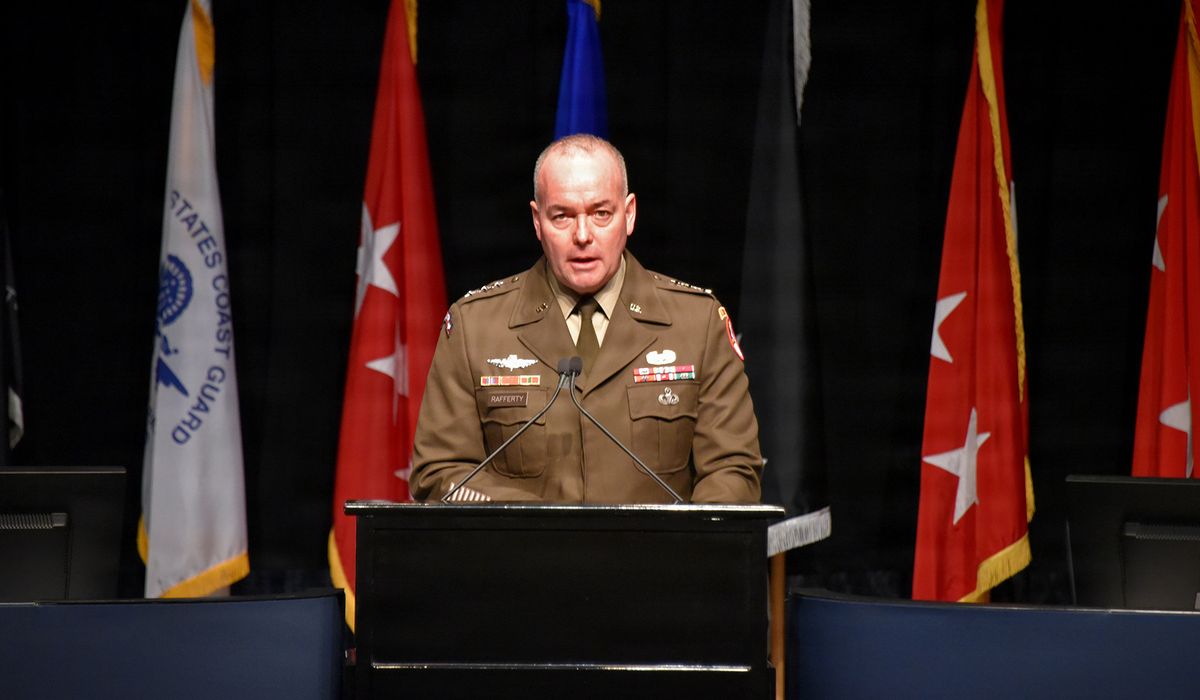
Lt. Gen. John Rafferty discusses how the Army is strengthening space and missile defenses, the challenges from peer rivals, and the need to speed up modern systems to protect the homeland and forces abroad.
“Lt. Gen. John Rafferty, the commander of U.S. Army Space and Missile Defense Command, joins the show from the recent Space and Missile Defense Symposium in Alabama.” He spoke directly about the operational demands piling up as peer adversaries expand their space and missile capabilities. His presence at the symposium underscored how the Army is treating space and missile defense as an integrated, urgent mission set.
Rafferty’s role spans both planning and delivering defenses that can deter attacks and protect our troops and citizens. He emphasized the need for resilient architectures that can survive conflict, adapt quickly, and keep responding under pressure. The rhetoric was clear: we must field capabilities that change the calculus for any adversary considering aggression against the United States or its partners.
From a Republican perspective, the priority is simple: maintain overwhelming advantage to deter wars before they start. That means accelerating procurement, cutting red tape where it slows fielding of proven systems, and holding contractors and program managers accountable for results. Rafferty noted how competition with strategic rivals isn’t theoretical; it’s a race to ensure our satellites, sensors, and interceptors keep Americans safe.
Space is no longer a rear-echelon support function — it is a contested warfighting domain that demands distributed, layered defenses. Missiles and counterspace tools from rivals complicate operations and threaten critical infrastructure on orbit and on the ground. The Army’s approach favors depth: multiple layers of detection, tracking, and defeat so a single failure doesn’t cascade into strategic surprise.
Industry partnerships showed up repeatedly in the discussion as a necessary engine for innovation and scale. The military can set requirements and test concepts, but private firms provide rapid prototyping, production capacity, and commercial space services that the force can leverage. Rafferty pushed for flexible contracting and clearer pathways to deliver capability faster while preserving rigorous testing to ensure systems perform when they count.
Testing and realistic training were framed as nonnegotiable, not optional add-ons. Systems must be exercised under stress and in environments that mimic adversary behaviors, including jamming, cyber probes, and kinetic threats to space assets. Budget lines matter here: steady, predictable funding lets programs mature and avoids the false economy of late fixes and urgent patchwork.
Congressional oversight and the armed services need to work together to clear choke points that slow upgrades and force tradeoffs between readiness and modernization. Rafferty emphasized that accountability is about outcomes — delivering capabilities that deter and, if required, defeat threats — rather than theater bureaucracy. From a policy standpoint, that aligns with a conservative push to prioritize defense where failure risks lives and strategic loss of advantage.
Ultimately, the tone coming out of the symposium was pragmatic and unsweetened: rivals are improving, and the U.S. must respond with speed, redundancy, and resolve. The Army’s investments aim to combine sensors, shooters, and command networks to outmatch opponents across domains. That approach favors deterrence through strength and readiness, not wishful thinking or hollow promises.

