

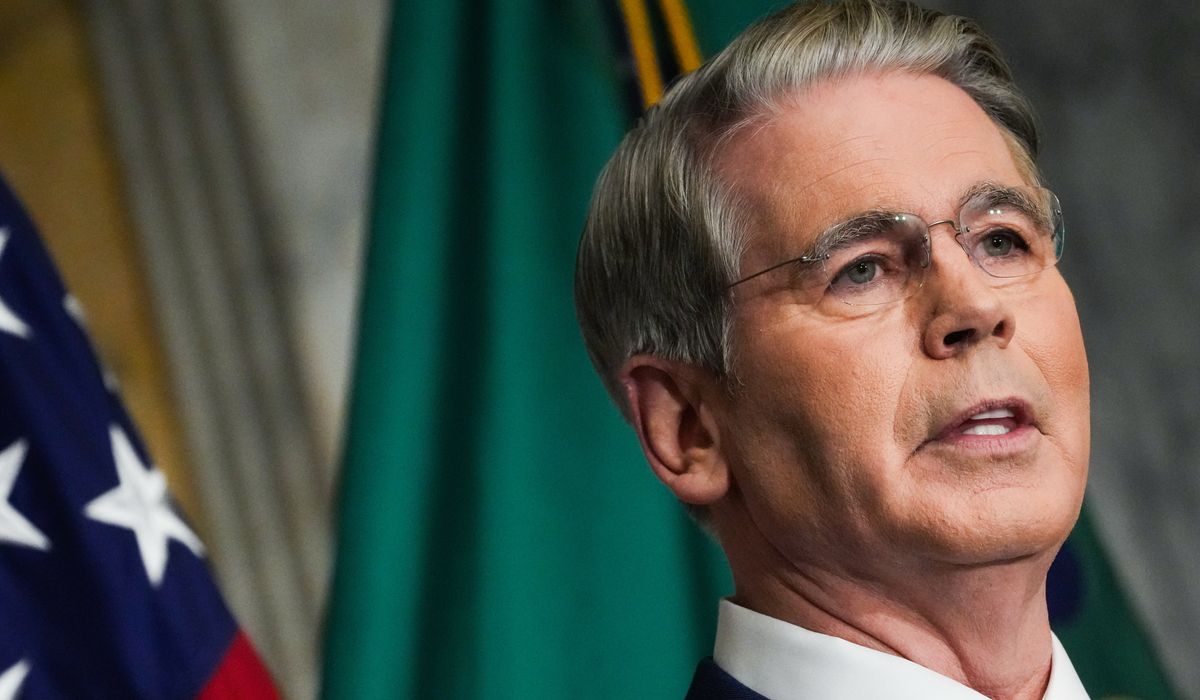
The Trump administration is moving to tighten financial pressure on Iran by targeting another bank this week, a step designed to choke off illicit transactions and reduce Tehran’s ability to fund destabilizing activity, Treasury Secretary Scott Bessent said Sunday.
“The Trump administration plans to impose sanctions on another bank this week in an effort to clamp down on Iran transactions, Treasury Secretary Scott Bessent said Sunday.” That announcement underlines a broader push from Washington to make clear that financial systems must not be used to bankroll regimes that threaten regional stability. The move is meant to be decisive and aimed at institutions that facilitate trade and transfers tied to prohibited activities. Supporters see this as consistent, necessary pressure that complements other policy tools.
Under this approach, the Treasury is signaling that tolerance for banks that turn a blind eye to Iran-linked activity is coming to an end. Enforcement will likely focus on both primary targets inside Iran and on foreign financial intermediaries that enable sanctions evasion. The strategy relies on a rule set where access to the U.S. financial system is the chief leverage point, and losing it is an outcome firms want to avoid. That threat is intended to reshape behavior quickly without committing U.S. troops or resources overseas.
Republicans favor strong economic measures against hostile regimes because they are scalable, hard to reverse, and directly hit revenue streams used for aggression. Sanctions can be tailored to choke off specific sectors such as petrochemical trade, shipping, or correspondent banking relationships. When applied consistently, those tools raise the cost of bad behavior for state actors without broad collateral damage that comes from other types of confrontation. The goal is to force bargaining leverage back to Washington and our allies.
Diplomacy and enforcement work hand in hand in this model, and Treasury officials often coordinate with partners to ensure sanctions bite. When major foreign banks choose compliance over risk, the network for illicit finance thins substantially. That cooperation also provides clear compliance signals to smaller institutions that might otherwise be tempted to process banned transactions. The administration’s message is that compliance is enforceable and that the U.S. will follow suspicious flows across borders.
Sanctions also serve a deterrent function, making clear that there are predictable consequences for those who assist prohibited networks. Financial penalties, asset freezes, and exclusion from dollar clearing are practical tools that translate into real costs for state sponsors of terrorism and their enablers. Those measures are not punitive for the sake of punishment; they are targeted to prevent money from fueling proxy violence, missile programs, or illicit procurement. For policymakers who prioritize security, that precision matters.
Critics often argue sanctions can be blunt or counterproductive, but the administration frames this as a calibrated campaign that minimizes harm to civilians while cutting off regime financing. The legal architecture used by Treasury gives agencies the ability to name-and-shame as well as sanction, which creates reputational consequences that can be as powerful as fines. For Washington, the calculus is straightforward: choke off the cash that funds malign activity and reduce the appetite for further aggression. That pragmatic approach is what drives continued action in this space.

