

Parents in Nebraska sued, arguing that state policy funnels taxpayer dollars only into public schools and, paired with compulsory attendance and threatened penalties, effectively forces children into government messaging that conflicts with family values.
A pair of Nebraska families, backed by the New Civil Liberties Alliance, say the state violates free-speech rights by limiting education funding to public schools and by enforcing compulsory-education laws that carry penalties. Their claim is simple: when parents who can’t afford alternatives must place children in public schools, the state imposes speech and values on those kids and their families. This legal fight is pushing school choice from theory into courtroom reality.
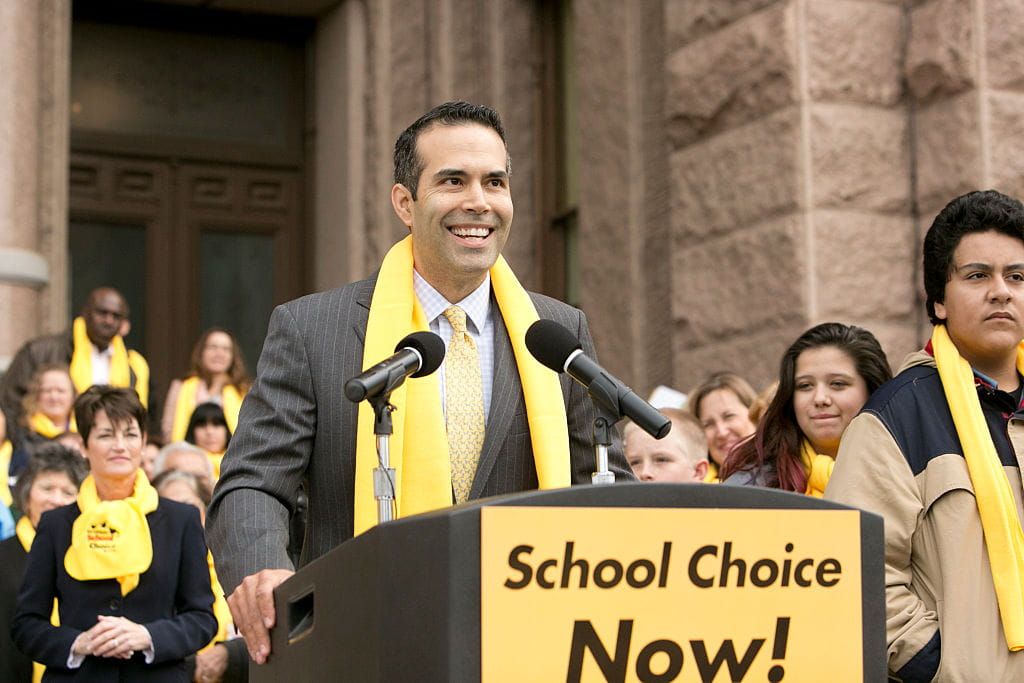
School-choice advocates point to a straightforward fix: let funding follow the child so parents can pick the school that matches their convictions. As Corey DeAngelis told The Washington Post, “Funding would follow the child rather than force every family to be indoctrinated in a single government viewpoint.” That encapsulates the Republican case for putting parents back in the driver’s seat on education.
The modern American public-school model didn’t just appear overnight; it grew out of 19th-century reforms inspired by foreign examples. Horace Mann, after visiting Prussia in 1843, returned with ideas he promoted in Massachusetts and beyond, arguing for universal, taxpayer-funded schooling as a way to shape future citizens. Mann’s cadence and certainty lingered in the system he helped popularize; as he put it, “Men are cast-iron,” but children are malleable clay for civic formation.
Mann’s critics were not wrong to point out the darker uses of such systems. Prussian schooling had been designed to produce obedient soldiers and compliant workers, and some feared a similar effect in America if centralized schooling went unchecked. Mann nonetheless insisted the mechanism could be used for democratic ends, separating the machinery of schooling from the politics of power.
Those ideas turned into law quickly. Massachusetts enacted the first mandatory attendance statute in 1852, requiring children ages 8 to 14 to attend at least twelve weeks a year, backed by penalties for noncompliance. Within decades states followed, and by 1918 mandatory schooling existed across the country, making state-managed education the default for generations.
Not everyone agreed that compulsory, centralized education was consistent with American liberty. Thomas Jefferson warned against forcing a child’s education on a family and wrote, “It is better to tolerate the rare instance of a parent refusing to let his child be educated, than to shock the common feelings and ideas by the forcible asportation and education of the infant against the will of the father.” That line still resonates with parents who want authority over how and what their children learn.
School choice offers a range of practical alternatives to the one-size-fits-all public model, from vouchers and Education Savings Accounts to charter schools, microschools, and expanded homeschooling options. Financial mechanisms can redirect the per-child taxpayer dollars so families can choose a private school or other arrangements that align with their values and their child’s needs. Today, 35 states offer some form of choice, with several allowing universal eligibility regardless of income, and most gains have come in Republican-led states.
The push for choice has met powerful resistance, chiefly from teachers unions and allied groups that have long defended the status quo. Unions poured money into an Arizona ballot measure aiming to limit ESAs, and the National Education Association and others reportedly spent $7 million to push rules and restrictions. They needed 255,949 signatures for the 2026 ballot; legal challenges and investigative reporting forced courts to toss entire sheets of signatures after problems surfaced. “According to court filings,” explained Deseret News, “the campaign paid a convicted sex offender, a human trafficker, and other offenders to collect signatures across the state.”
At the national level, lawmakers tucked the first federal K–12 school-choice tax credit into the One Big Beautiful Bill Act, effective January 2027, offering up to a $1,700 dollar-for-dollar federal credit for donations to qualifying scholarship-granting organizations. The administration estimated the provision could mobilize up to $24 billion if 30% of eligible taxpayers participate, and a costly marketing push—estimated at more than $4 billion—was planned to raise awareness. Governor Jim Pillen opted Nebraska into the program, a move favored by choice proponents, though critics note the credit mostly encourages modest donations and may not by itself expand opportunities for the poorest families.
The Nebraska lawsuit could change the terrain if the courts agree that forcing families into a single government-funded classroom amounts to compelled speech. If that legal argument succeeds, expect more challenges and a renewed debate over whether the Horace Mann model still deserves its near-monopoly on K–12 public funding. For now, the fight over who controls children’s education—parents or state institutions—remains unresolved and intensely political.

